Thank you for writing to us. One of our executive will reach back to you through your submitted medium. In case there’s an urgency, feel free to connect over WhatsApp for faster response.
Prefer calling? Dial +919405982683 (International callers) or +919405982683 (Indian callers).
A sewage treatment plant (STP) is a facility that treats wastewater, primarily from domestic and commercial sources, to remove contaminants and pollutants before releasing it back into the environment. These plants play a crucial role in public health, water quality, and ecosystem preservation by ensuring wastewater is treated and purified.
How STPs work: 'a multi-stage process'
STPs employ a combination of physical, biological, and sometimes chemical processes, typically involving three main stages:
Preliminary Treatment: This initial stage focuses on removing large debris and heavy solids that could damage equipment or obstruct the flow. This is achieved through screening (using bar screens) and grit removal in grit chambers.
Primary Treatment: In this stage, wastewater flows into large sedimentation tanks where heavier solids settle to the bottom, forming primary sludge, while lighter materials like grease and oil float to the surface and are skimmed off. This stage removes a significant portion of suspended solids and organic matter.
Secondary Treatment: This involves biological processes, primarily using microorganisms (bacteria and protozoa) to break down dissolved and suspended organic matter that remained after primary treatment. This is often carried out in aeration tanks where air is introduced to promote the growth of these microorganisms, creating activated sludge, which then settles out in a secondary clarifier. This process can significantly reduce organic matter and pathogens.
Tertiary Treatment: This advanced stage, often optional but crucial for specific applications or sensitive environments, aims for further purification. It may involve filtration to remove finer particles, disinfection (using chlorine, ultraviolet light, or ozone) to eliminate remaining pathogens, and nutrient removal (nitrogen and phosphorus) to prevent eutrophication.
Sludge Treatment:
The sludge generated from primary and secondary treatment undergoes further processing, such as dewatering and drying, and may be used as fertilizer after undergoing stabilization processes
Importance and benefits of sewage treatment
Environmental Protection: STPs prevent water pollution by removing harmful contaminants from wastewater before it's discharged into rivers, lakes, and oceans, protecting aquatic life and maintaining ecosystem balance.
Public Health Protection: By eliminating pathogens and toxins, STPs reduce the risk of waterborne diseases like cholera, typhoid, and dysentery.
Water Reuse and Conservation: Treated wastewater can be safely reused for various non-potable purposes such as irrigation, industrial cooling, toilet flushing, and groundwater recharge, reducing the reliance on freshwater resources.
Resource Recovery: Some STPs can recover valuable resources like biogas (a renewable energy source) from sludge digestion, and nutrients like nitrogen and phosphorus, which can be used as fertilizers.
Regulatory Compliance: STPs help industries and municipalities meet strict wastewater discharge regulations, avoiding fines and legal issues.
Our Expertise:
- Customized STP design and installation
- Advanced treatment technologies: physical, chemical, and biological processes
- Effective removal of pollutants and contaminants: BOD, COD, TSS, pH, etc.
- Compliance with environmental regulations: CPCB, MPCB, etc.
- Regular maintenance and operation support
Benefits of Our STP Solutions:
- Reduced environmental impact
- Compliance with regulatory requirements
- Cost savings through water reuse and recycling
- Improved public health and hygiene
- Enhanced community reputation and social responsibility
Specifications
Sewage treatment plants: a vital link in water management Sewage treatment plants (STPs) are essential facilities designed to purify wastewater from residential, commercial, and industrial sources before it's released back into the environment or reused. Their primary function is to remove harmful contaminants and pathogens, thereby safeguarding public health and protecting ecosystems.
Decentralized treatment systems: Small-scale plants for rural and semi-urban areas.
Smart water management: Utilizing AI and IoT to optimize operations.
Circular economy principles: Focusing on resource recovery and minimizing waste.
Zero Liquid Discharge (ZLD): Achieving complete wastewater treatment and reuse.
Advanced technologies: Including Membrane Bioreactors (MBRs), Reverse Osmosis (RO), and Advanced Oxidation Processes (AOPs) for higher treatment efficiency and water quality.
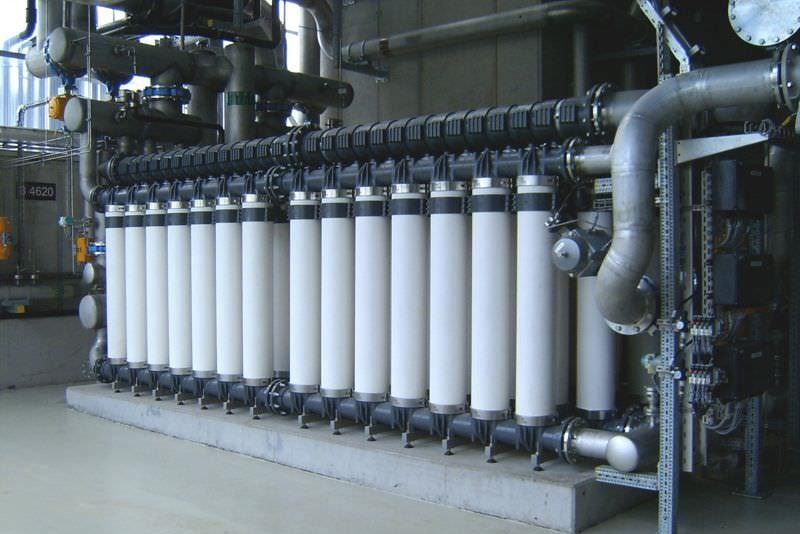
An Ultrafiltration (UF) plant process is a pressure-driven, membrane-based separation technique (pore sizes 0.01–0.1 microns) that removes suspended solids, bacteria, and viruses from water. It involves pre-treatment, pressure-driven filtration, permeate collection, and periodic backwashing to maintain membrane efficiency without chemical additives.
Key Stages of the UF Plant Process
Pre-Treatment: Raw water is passed through filters to remove large debris and sediments that could damage or clog the membrane.
Filtration Process (Separation): Under pressure, the water is forced through hollow fiber or flat sheet membranes. Suspended solids, pathogens, and macromolecules are trapped on the membrane surface (retentate), while clean water (permeate) passes through.
Permeate Collection: The purified, bacteria-free water is collected for consumption or further treatment (like RO pre-treatment).
Backwashing and Cleaning: To prevent membrane fouling, the system periodically reverses the flow (backwash) or uses air scouring to flush out trapped contaminants.
Key Features and Applications
Operating Principle: Mechanical sieving using low-pressure, high-efficiency membranes.
Advantages: High removal efficiency, compact design, and environmentally friendly, often used for water recycling and, in the food/beverage industry.
Membrane Types: Commonly uses hollow fiber membranes for high-volume filtration and resistance to fouling.
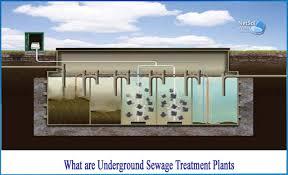
An Underground Sewage Treatment Plant (USTP) is a compact sewage treatment system designed to be installed underground, offering a space-saving solution for managing wastewater in areas where above-ground space is limited.
An Underground Sewage Treatment Plant (USTP) is a hidden, compact system that treats wastewater beneath the ground, saving valuable surface land for other uses like parks or buildings, controlling odors, and allowing treated water reuse for irrigation or flushing. These facilities use similar biological/chemical processes (like MBBR, SBR, FAB) as traditional plants but in sealed, underground tanks, often featuring automation, reduced sludge, and lower power needs, making them ideal for urban areas, complexes, and resorts.
Space Saving: Frees up land for green spaces, parking, or buildings.
Odor Control: Enclosed systems prevent foul smells.
Aesthetics: Maintains natural landscapes and urban appearance.
Water Conservation: Treated water can be recycled.
Environmentally Friendly: Discreet handling of waste, minimal discharge.
Automation: Often fully automated with monitoring.
Applications
Apartment complexes, Commercial buildings & offices, Hotels & resorts, Hospitals, and Small communities.
Design
Often uses a double-layer underground design: one for treatment tanks (pool layer) and one for operations/management.
Can be built under gardens, parking lots, or even buildings.
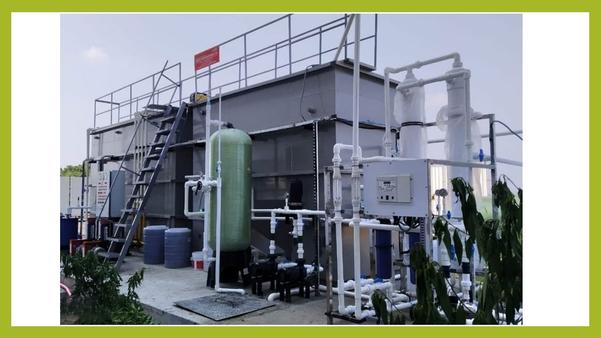
A commercial sewage treatment plant (STP) treats wastewater from businesses, industries, and commercial buildings to meet environmental regulations and protect public health. These systems handle high volumes of effluent from sources like hotels, factories, and shopping malls, processing it through various stages of primary, secondary, and tertiary treatment before safe discharge. Key components include buffer tanks, clarifiers, and advanced technologies like the activated sludge process to remove pollutants effectively.
A commercial sewage treatment plant (STP) is an industrial-scale facility designed to treat wastewater from non-residential buildings like hotels, hospitals, shopping malls, and office complexes. These systems ensure compliance with environmental regulations and allow for the reuse of treated water for non-potable purposes like landscaping and flushing.
Core Treatment Technologies
Commercial facilities typically employ one of several specialized biological treatment methods:
MBBR (Moving Bed Biofilm Reactor): A compact, low-maintenance system using plastic media to grow bacteria that break down pollutants. It is ideal for facilities with limited space.
SBR (Sequential Batch Reactor): Processes wastewater in timed batches within a single tank. It is highly flexible for commercial sites with fluctuating occupancy, such as resorts.
MBR (Membrane Bioreactor): Combines biological treatment with membrane filtration. It produces the highest quality water, suitable for direct reuse in cooling towers and HVAC systems.
ASP (Activated Sludge Process): A traditional, effective method for large stable loads, though it generally requires more land and continuous monitoring.
Key Features & Benefits
Water Recycling: Modern plants can recover up to 85% of wastewater, significantly reducing municipal water bills.
Compact & Modular: Many systems are “Plug & Play” containerized units or designed for underground installation to save valuable urban land.
Automation: Integrated smart controls and IoT sensors allow for remote monitoring and minimal manual intervention.
Odor & Noise Control: Advanced filtration and acoustic enclosures ensure the plant does not disturb guests or employees.
SEWAGE TREATMENT PLANT
product-detail-entry-exit
Plot no 125, sudarshan colony, New Subhedar Layout, lay out,
 Chat with us
 Chat with us