Nagpur
08042757117
+919405982683

sewage treatment plant

6814772a5d263414004dd4a4 Card 2

product image
SEWAGE TREATMENT PLANT

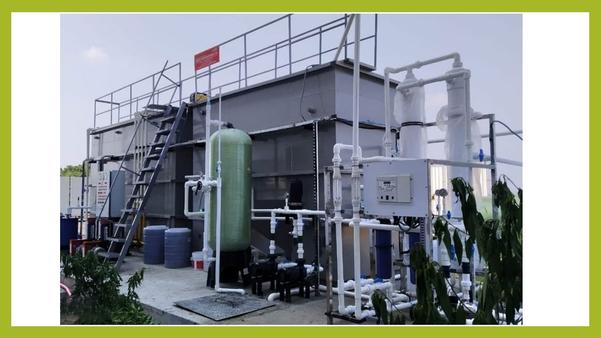
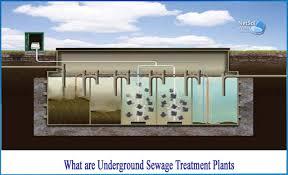
An Underground Sewage Treatment Plant (USTP) is a compact sewage treatment system designed to be installed underground, offering a space-saving solution for managing wastewater in areas where above-ground space is limited. An Underground Sewage Treatment Plant (USTP) is a hidden, compact system that treats wastewater beneath the ground, saving valuable surface land for other uses like parks or buildings, controlling odors, and allowing treated water reuse for irrigation or flushing. These facilities use similar biological/chemical processes (like MBBR, SBR, FAB) as traditional plants but in sealed, underground tanks, often featuring automation, reduced sludge, and lower power needs, making them ideal for urban areas, complexes, and resorts. Space Saving: Frees up land for green spaces, parking, or buildings. Odor Control: Enclosed systems prevent foul smells. Aesthetics: Maintains natural landscapes and urban appearance. Water Conservation: Treated water can be recycled. Environmentally Friendly: Discreet handling of waste, minimal discharge. Automation: Often fully automated with monitoring. Applications Apartment complexes, Commercial buildings & offices, Hotels & resorts, Hospitals, and Small communities. Design Often uses a double-layer underground design: one for treatment tanks (pool layer) and one for operations/management. Can be built under gardens, parking lots, or even buildings.

6814772a5d263414004dd4a4 Card 2

product image
SEWAGE TREATMENT PLANT

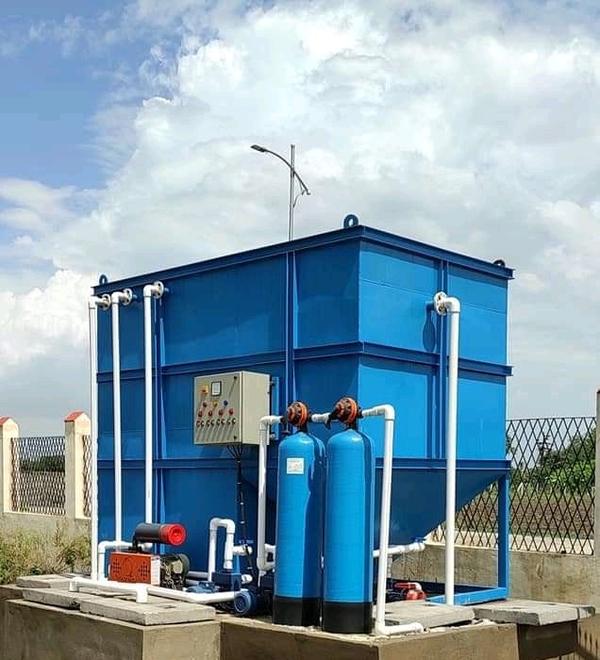
A commercial sewage treatment plant (STP) treats wastewater from businesses, industries, and commercial buildings to meet environmental regulations and protect public health. These systems handle high volumes of effluent from sources like hotels, factories, and shopping malls, processing it through various stages of primary, secondary, and tertiary treatment before safe discharge. Key components include buffer tanks, clarifiers, and advanced technologies like the activated sludge process to remove pollutants effectively. A commercial sewage treatment plant (STP) is an industrial-scale facility designed to treat wastewater from non-residential buildings like hotels, hospitals, shopping malls, and office complexes. These systems ensure compliance with environmental regulations and allow for the reuse of treated water for non-potable purposes like landscaping and flushing. Core Treatment Technologies Commercial facilities typically employ one of several specialized biological treatment methods: MBBR (Moving Bed Biofilm Reactor): A compact, low-maintenance system using plastic media to grow bacteria that break down pollutants. It is ideal for facilities with limited space. SBR (Sequential Batch Reactor): Processes wastewater in timed batches within a single tank. It is highly flexible for commercial sites with fluctuating occupancy, such as resorts. MBR (Membrane Bioreactor): Combines biological treatment with membrane filtration. It produces the highest quality water, suitable for direct reuse in cooling towers and HVAC systems. ASP (Activated Sludge Process): A traditional, effective method for large stable loads, though it generally requires more land and continuous monitoring. Key Features & Benefits Water Recycling: Modern plants can recover up to 85% of wastewater, significantly reducing municipal water bills. Compact & Modular: Many systems are “Plug & Play” containerized units or designed for underground installation to save valuable urban land. Automation: Integrated smart controls and IoT sensors allow for remote monitoring and minimal manual intervention. Odor & Noise Control: Advanced filtration and acoustic enclosures ensure the plant does not disturb guests or employees.

6814772a5d263414004dd4a4 Card 2

product image
SEWAGE TREATMENT PLANT

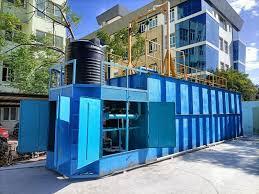
A compact sewage treatment plant (STP) is a small, self-contained unit that purifies wastewater in a small footprint, using physical, biological, and chemical processes (like filtration, aeration, UV) for effective treatment where space is limited, ideal for homes, apartments, hotels, or remote areas without central sewers, offering easy installation and lower energy use than large facilities. Space-Saving: Designed for small areas, saving space compared to traditional plants. Self-Contained: Pre-fabricated, often in a single tank, for easy transport and “plug-and-play” installation. Efficient Treatment: Uses methods like aeration, filtration, sedimentation, and disinfection (UV) to meet discharge standards. Versatile: Suitable for residences, hotels, hospitals, schools, commercial buildings, or small communities. Low Maintenance: Generally requires lower energy and maintenance costs. Modular Options: Can be scaled up by combining units for larger needs.

6814772a5d263414004dd4a4 Card 2

product image
SEWAGE TREATMENT PLANT

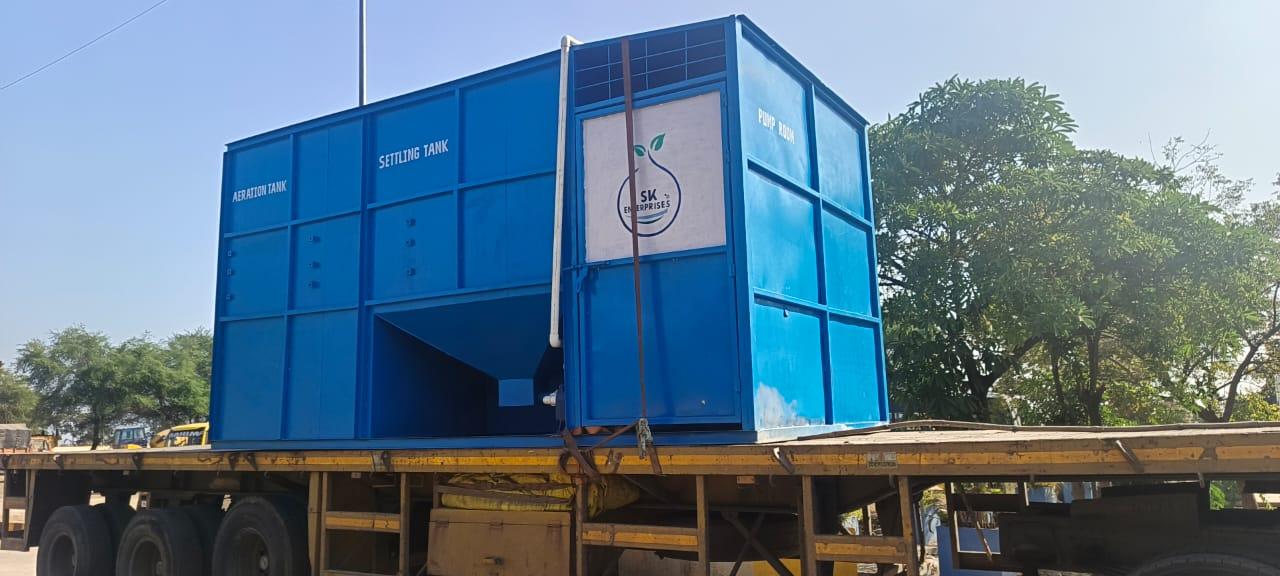
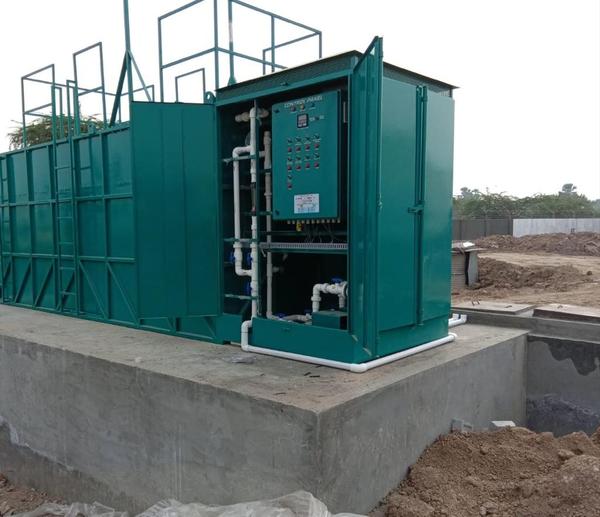
Containerized sewage treatment plants are emerging as a sustainable, adaptable, and efficient solution for wastewater management. Their mobility, cost-effectiveness, and scalability make them an asset in addressing the ever-growing challenges of sewage treatment. A containerized STP is a portable, factory-built sewage treatment plant fully enclosed within one or more shipping containers. It is designed as a modular, “plug-and-play” system for rapid deployment and easy relocation, making it ideal for temporary or remote locations where a traditional, fixed STP is not feasible. Key advantages Portability and rapid deployment: Since the system is pre-assembled and factory-tested, it can be quickly transported and set up, often requiring only simple connections and a flat foundation. This makes it suitable for emergency relief, construction sites, and remote areas. Cost-effectiveness: Containerized STPs have lower capital expenditure because they require minimal civil construction. They also have lower operational expenditure due to automation and energy-efficient designs. Space efficiency: Their compact design requires a much smaller footprint compared to traditional STPs, making them ideal for urban areas, campuses, and hotels with limited space. Modularity and scalability: Capacity can be easily increased or decreased by adding or removing modular units, allowing the system to adapt to changing wastewater volumes. High-quality effluent: Advanced treatment technologies, like MBR, can produce high-quality treated water that can be reused for non-potable purposes such as irrigation, reducing freshwater consumption. Automation and low maintenance: Many systems feature automated controls, requiring minimal operator intervention and oversight by unskilled staff. Uses and applications Containerized STPs are highly versatile and used across many sectors, including: -Construction and mining sites with temporary worker camps. -Remote communities and villages that lack a centralized sewage system. -Disaster and emergency response efforts. -Military and refugee camps. -Urban areas for decentralized treatment or to supplement municipal systems during peak demand. -Commercial and hospitality sectors like hotels, resorts, and restaurants. -Industrial facilities for treating small to medium volumes of wastewater. -Real estate developments such as residential complexes, townships, and schools.

6814772a5d263414004dd4a4 Card 2

product image
SEWAGE TREATMENT PLANT

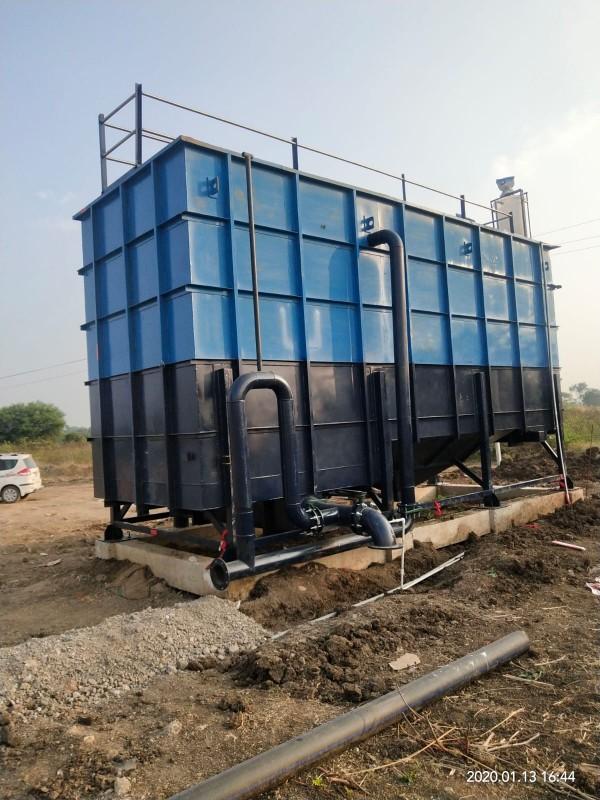
Modular sewage treatment plants are transforming the wastewater treatment industry by providing a flexible and efficient alternative to conventional STPs. These systems are pre-engineered, factory-built, and ready for on-site installation, reducing construction time and cost. A modular STP plant is a compact, prefabricated, and scalable sewage treatment system that is built in a factory and then transported to the desired site for quick installation. Key advantages of a modular STP Quick installation: Since they are factory-built, modular units can be installed and commissioned in a matter of weeks, in contrast to the months required for conventional plants. Space efficiency: Their compact footprint makes them ideal for locations with limited land, such as urban commercial buildings, hotels, and residential complexes. Scalability: Modular designs allow for easy expansion by adding more units as wastewater treatment needs increase. Cost-effectiveness: While the initial cost per unit may seem higher, modular STPs offer lower overall project costs due to reduced civil work, faster installation, and lower maintenance. Portability: The units can be easily relocated, making them suitable for temporary projects or changing site requirements. High reliability: Factory testing and standardized manufacturing ensure consistent and reliable performance. Ease of operation: Many modular STPs feature automated control panels and remote monitoring, which simplifies operation and minimizes the need for on-site personnel. Modular STPs are an excellent solution for a wide range of applications, including: -Hotels, resorts, and hospitals -Housing societies and residential complexes -Small and medium-sized industrial units -Schools and educational institutions -Smart cities and temporary construction sites -Decentralized wastewater treatment for smaller communities

6814772a5d263414004dd4a4 Card 2

product image
SEWAGE TREATMENT PLANT

A packaged sewage treatment plant (PSTP) is a compact, pre-engineered, and self-contained system designed to treat wastewater from domestic or industrial sources. It arrives pre-assembled and ready for installation, offering an efficient and more space-saving alternative to large, conventional treatment facilities. Advantages Packaged STPs are a modern wastewater management solution with many key benefits: Compact design: Their small footprint makes them suitable for sites with limited space, such as residential complexes, hotels, and schools. Rapid and easy installation: Since units are pre-fabricated and delivered ready-to-use, they can be installed and commissioned much faster than traditional plants. Cost-effectiveness: PSTPs often have lower installation, operational, and maintenance costs due to their factory-built nature and advanced automated controls. High efficiency: Many modern systems are designed for high treatment efficiency, often using a combination of anaerobic and aerobic processes to produce a high-quality effluent. Environmental compliance: They help property owners and businesses meet strict environmental regulations and prevent the pollution of water bodies. Water reuse: The treated water can often be reused for non-potable purposes like landscaping, flushing, or industrial processes, promoting water conservation. Scalability: Their modular design allows for easy expansion or modification to accommodate increased wastewater volume in the future. Common applications PSTPs are a versatile solution for a wide range of decentralized wastewater needs: -Residential complexes, townships, and housing societies -Commercial buildings, hotels, and resorts -Hospitals, schools, and other institutions -Small-to-medium-scale industrial facilities -Remote locations like villages, construction sites, and military bases -Temporary installations for events or camps -On-site treatment for properties not connected to a municipal sewer system

6814772a5d263414004dd4a4 Card 2

product image
SEWAGE TREATMENT PLANT

An MBR STP plant is a Sewage Treatment Plant that uses Membrane Bioreactor (MBR) technology to combine biological treatment with membrane filtration, producing high-quality, reusable treated water. The process involves microorganisms breaking down waste in a bioreactor and then passing the mixture through microfiltration or ultrafiltration membranes, which physically block suspended solids, bacteria, and pathogens, leaving behind clean water. MBR STPs are known for their compact design, ability to treat challenging wastewater, and production of high-quality effluent suitable for sensitive discharge or reuse applications. Key advantages of MBR technology Superior effluent quality: The membrane filtration produces very clean, clear, and virtually pathogen-free water that meets stringent environmental discharge standards. This high-quality water is also ideal for reuse in non-potable applications like irrigation, toilet flushing, and cooling towers. Reduced footprint: MBR plants are significantly more compact, requiring 50–70% less space than conventional STPs because they eliminate the need for large, secondary clarifier tanks. This makes them ideal for urban areas with limited space. Less sludge production: Due to the system's long sludge retention time, MBRs generate less excess sludge, which reduces disposal costs and handling requirements. Modular and scalable design: The plants are modular, allowing for easy expansion as treatment capacity needs increase. Automated operation: Advanced automation and monitoring reduce the need for constant on-site operator supervision, which lowers labor costs and ensures consistent performance.

6814772a5d263414004dd4a4 Card 2

product image
SEWAGE TREATMENT PLANT

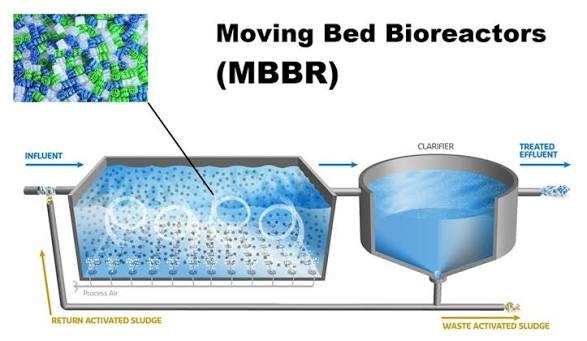
An MBBR STP is a Moving Bed Biofilm Reactor (MBBR) based Sewage Treatment Plant. This system uses a biological wastewater treatment process where microorganisms, which break down pollutants, grow on free-floating plastic carriers called bio-media. How an MBBR STP works Pre-treatment: Before entering the MBBR tank, wastewater goes through pre-treatment steps like screening and grit removal to protect downstream equipment. MBBR biological treatment: Wastewater flows into an aeration tank filled with thousands of small, free-floating plastic media. An aeration grid supplies oxygen, which keeps the media in constant motion and provides oxygen for microbial growth. Biofilm activity: Microorganisms attach to the surface of the bio-media and form a biofilm. This dense biofilm breaks down organic matter and other pollutants in the wastewater. Clarification: After biological treatment, the water passes through a clarifier or settling tank. Retention screens at the tank outlet prevent the carrier media from leaving while allowing the treated water to pass. Any remaining solids are removed during this stage. Disinfection: The final effluent may undergo additional polishing or disinfection before being discharged or reused. Key components Aeration tank/reactor: The primary basin where the biological treatment takes place and the carriers are suspended. Bio-carrier media: Small, specifically designed plastic carriers, usually made from high-density polyethylene (HDPE), that provide a large surface area for biofilm growth. Aeration system: Fine or coarse bubble diffusers supply oxygen to the microbes and keep the carriers moving within the tank. Retention screens: Screens at the tank's outlet prevent the carrier media from escaping while allowing treated water to pass. Clarifier: A tank for settling and removing any residual suspended solids after biological treatment.

Phone Number

08042757117

Please keep 0 before dialling the number.

Mon-Thu: 10 AM - 2 PM • Fri: 3 PM - 7AM

Other Website Visit our other website
Address Plot no 125, sudarshan colony, New Subhedar Layout, lay out,

Nagpur, India, 440024