
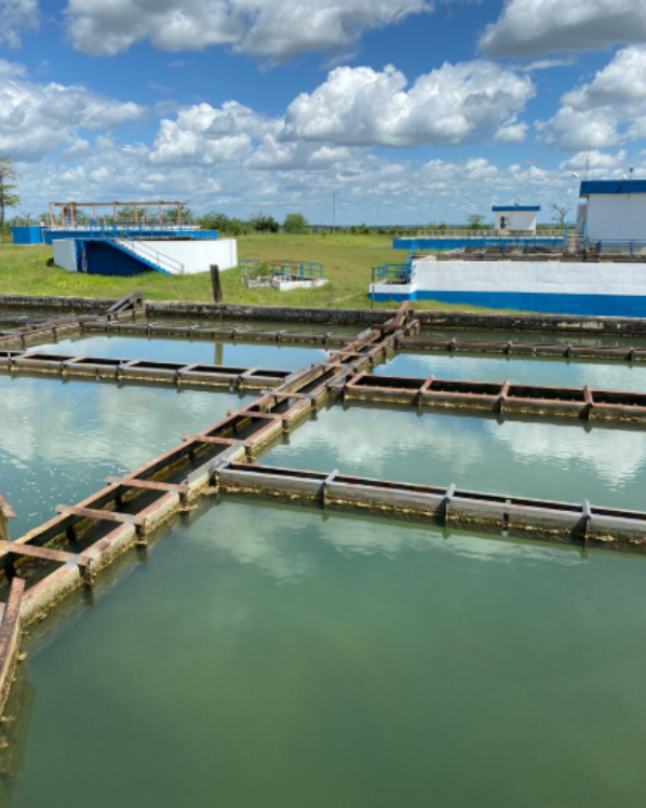
Wastewater that has completed primary and secondary treatment may appear considerably cleaner, but it may still contain fine suspended matter, residual organic material, microorganisms, colour, and other contaminants.
When that treated water is intended for reuse, additional polishing may be required.
This is where Tertiary Treatment for Water Recycling becomes important.
SK Enterprises provides water and wastewater treatment solutions in Nagpur for industries, commercial properties, residential developments, hospitals, hotels, and institutions exploring suitable water-reuse opportunities.
What Is Tertiary Treatment
Tertiary treatment is an advanced polishing stage performed after earlier wastewater-treatment processes.
Its purpose is to improve treated-water quality according to a specific end-use requirement.
Processes can be selected to address remaining suspended matter, microorganisms, colour, odour, and other residual contaminants.
There is no single tertiary-treatment configuration suitable for every project.
Start With the Intended Reuse
One of the most important questions is not which technology should be installed.
It is where the treated water will be used.
Depending on applicable quality requirements, potential non-potable applications may include:
- Landscaping
- Toilet flushing
- Floor cleaning
- Cooling applications
- Selected industrial uses
Different applications can require different water quality.
The treatment process should therefore be designed backward from the intended use.
Why Water Quality Testing Matters
The quality of water entering the tertiary stage determines how much additional treatment is necessary.
Regular testing helps identify whether the previous treatment stages are performing properly and what remaining contaminants need attention.
Without this information, facilities may either install unnecessary equipment or fail to provide sufficient polishing.
Storage and Distribution Are Equally Important
Treating water is only one part of recycling.
A practical reuse system may also require:
- Treated-water storage
- Dedicated pumping
- Separate distribution pipelines
- Appropriate identification
- Routine monitoring
- Maintenance procedures
Poorly planned distribution can reduce the value of an otherwise effective treatment system.
Match Production With Reuse Demand
Facilities should estimate how much recycled water they can realistically use.
A property may produce a large quantity of treated water but have only limited demand for landscaping or flushing.
Understanding this balance helps determine appropriate treatment and storage capacity.
Consider Long Term Operating Requirements
Advanced polishing can require electricity, consumables, cleaning, chemicals, testing, and maintenance.
These costs should be evaluated before finalizing the system.
For projects in Nagpur, seasonal water demand and local site conditions can also influence the practicality of recycling.
SK Enterprises works with customers across Maharashtra to assess wastewater-treatment and reuse requirements according to the nature of the facility and the intended application.
Effective Tertiary Treatment for Water Recycling connects water quality with a clearly defined reuse purpose.
When treatment, storage, distribution, monitoring, and actual demand are considered as parts of the same system, wastewater recycling can become a practical component of a facility's long-term water-management strategy.