A biological effluent treatment plant can remove pollutants without achieving zero liquid discharge. To reach ZLD, you must connect the ETP to membrane and thermal concentration equipment, account for every liquid stream, and prove that the complete system handles your actual wastewater chemistry.
Key takeaways
- Add RO, brine concentration and salt recovery to make an ETP a ZLD system.
- Test representative effluent before selecting membranes, evaporators or recovery targets.
- Match the ZLD architecture to flow, salinity, land, energy and maintenance capacity.
- Require mass balances, pilot results, guarantees and compliance documents before approval.
When does a modular ETP become a ZLD system?
A modular ETP becomes a ZLD system only when its modules form a complete concentrate-management train. Biological treatment, clarification and filtration remove biodegradable pollutants and suspended solids, but they do not remove dissolved salts; that plant remains an ETP with liquid discharge.
| Plant configuration | What it achieves | Why it is or is not ZLD |
|---|---|---|
| Biological treatment, clarification and filtration | Reduces BOD, COD and suspended solids | Not ZLD because dissolved salts and treated effluent still leave the site |
| RO-based reuse plant | Recovers water and concentrates salts in RO reject | Not ZLD unless the reject receives further treatment with no routine liquid discharge |
| Modular ETP zero liquid discharge train | Treats wastewater, recovers water and converts concentrate into brine, wet solids or dry salt | ZLD when every routine liquid stream is contained, reused, evaporated or solidified |
ZLD is measured at the site boundary, not by RO recovery alone. Recovered water must return to approved uses, while dissolved salts and contaminants leave as concentrated brine, wet solids or dry salt. Include RO reject, evaporator blowdown, spent regenerant, sludge liquor and cleaning chemicals in the site-wide water and salt balance.
A high-recovery RO system still fails the ZLD claim if any of those streams reaches a drain, sewer or receiving water. Condensate also needs checking for ammonia, volatile organics and other contaminants before reuse.
What process flow connects the ETP to zero liquid discharge?
A modular ETP zero liquid discharge train connects wastewater receipt to recovered water and solid residue through staged separation. An etp plant for wastewater reuse must also define the intended reuse point, because cooling-tower makeup, boiler-feed pretreatment and toilet flushing require different conductivity, hardness, silica and microbiological limits.
1. Equalize incoming flow and control pH. This dampens shock loads and prevents a sudden acidic or alkaline stream from damaging downstream membranes.
2. Apply pollutant-specific pretreatment. Use oil removal, coagulation and clarification for oil and suspended solids; softening or chemical precipitation for hardness and metals; and stripping or oxidation for ammonia, volatile compounds and colour.
3. Treat biodegradable COD biologically, then remove residual solids through clarification, filtration and tertiary treatment. Use ultrafiltration or an MBR when low suspended solids are needed before RO; neither process removes dissolved salts.
4. Send clarified water to RO. RO reduces the volume entering thermal equipment, but concentrates calcium sulphate, silica, calcium carbonate, barium, strontium, iron and organic scaling risks. Control these with feed clarification, softening and an appropriate antiscalant programme.
5. Treat RO reject in a brine concentrator or multiple-effect evaporator. Add mechanical vapour recompression where its energy and steam balance suit the site, then send the concentrated brine to a crystallizer.
6. Polish condensate with activated carbon, stripping, polishing RO, ion exchange or disinfection before reuse. Manage the final residue as wet solids or dry salt through characterised, authorised storage and disposal.
How do you prove the modular plant can handle your effluent?
Prove it with wastewater data from your site, not a generic influent specification. A design basis must state average flow in kilolitres per day, peak flow, seasonal variation, and the intended reuse point, because cooling-tower makeup and boiler-feed pretreatment demand different water quality.
- Test TDS, chlorides, hardness, silica, COD, BOD, oil and grease, suspended solids, ammonia, colour and temperature.
- Identify toxic constituents such as heavy metals, solvents, biocides and compounds that could inhibit biology or damage membranes.
- Calculate scaling tendency from calcium, sulphate, carbonate, silica, barium, strontium and alkalinity, not from TDS alone.
- Collect flow-weighted composite samples across production cycles, then add grab samples during cleaning, shutdown, batch changeover and other shock loads.
- Run treatability trials and shock-load tests covering equalization, biological treatment, MBR, RO and reject treatment.
- Require guaranteed performance at stated feed chemistry, including recovery, permeate quality, cleaning frequency, chemical consumption, operating pressure, conductivity and membrane flux.
An MBR can produce low-suspended-solids water suitable for reuse or RO and reduce carryover into downstream membranes. It does not remove dissolved salts and does not deliver ZLD by itself; RO concentrate and thermal reject still need management.
An etp plant for wastewater reuse must therefore specify acceptance limits for the actual reuse point, alongside feed-envelope limits, online pH, flow, pressure and conductivity monitoring, and performance testing with representative wastewater. Without this evidence, unstable pretreatment can turn oil carryover, fouling or scaling into lost recovery and unplanned shutdowns.
Which modular ZLD architecture and recovery route fits the site?
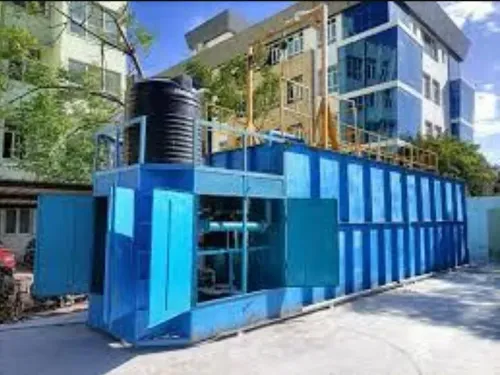
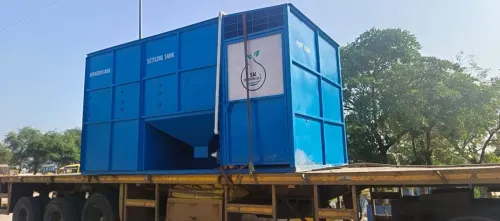
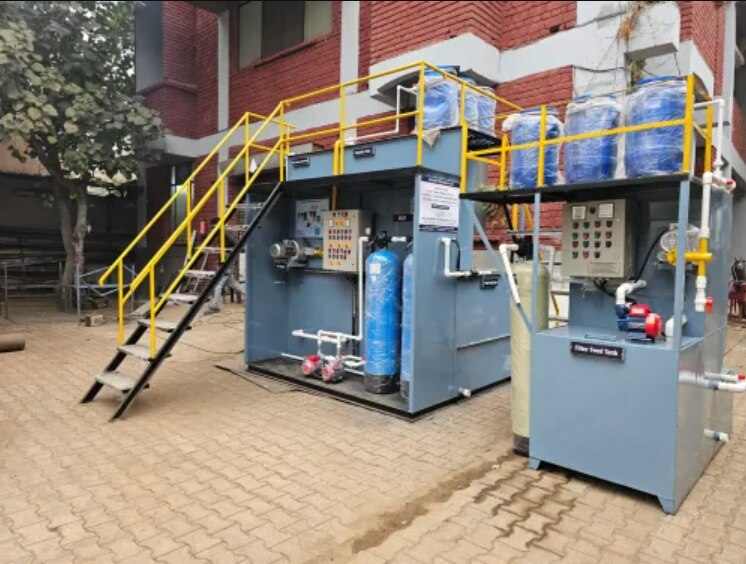
Factory fabrication separates a modular ETP from a site-independent plant. A package ETP usually arrives as a standard treatment unit; a containerized ETP adds transportable enclosure and services. A modular ZLD system links factory-built biological, membrane and thermal trains, but these site elements remain engineered around the plot:
- Equalization volume, civil foundations and utility connections
- Chemical storage, sludge handling and corrosion protection
- Final reject management, access, drainage and emergency storage
Tanks, pumps, membrane skids, control panels, parallel treatment trains and selected evaporator modules can be fabricated off-site. Confirm skid dimensions before transport; oversized modules can erase the installation advantage.
| Route | Energy and footprint | Reject responsibility | Maintenance and complexity |
|---|---|---|---|
| Membrane-only reuse | Lowest energy and compactest | RO reject still needs an approved outlet | Lowest; fouling control remains critical |
| RO with brine disposal | Moderate energy and footprint | Buyer retains responsibility for concentrated brine | Moderate; simpler than thermal ZLD |
| Evaporator-based ZLD | High steam or electricity demand; larger thermal area | Produces concentrated brine or wet solids | High scaling, corrosion and cleaning burden |
| Crystallizer-based ZLD | Highest energy and equipment duty | Converts residual concentrate to dry salt or solids | Highest controls, maintenance and disposal complexity |
The modular effluent treatment plant benefits are staged capital spending, repeatable fabrication, capacity expansion and maintenance bypass through parallel trains. They weaken when standard modules meet variable or toxic wastewater, vendor-specific controls restrict integration, or limited footprint and transport access force compromises.
Size thermal equipment only after confirming the water balance, feed chemistry and disposal route.
What should a Nagpur buyer require before approving the project?
A modular ETP plant for zero liquid discharge in Nagpur should not be approved from a catalogue specification. Approve it only after a site-specific water balance accounts for municipal or borewell intake, process use, washdown, cooling-tower blowdown, domestic sewage, evaporation losses, recovered water, reject, sludge moisture and seasonal conditions.
1. Reconcile every stream in kilolitres per day for summer, monsoon and winter. State the intended reuse point—cooling-tower makeup, process wash water, toilet flushing or gardening—and its limits for conductivity, silica, hardness, microbiological quality and residual disinfectant.
2. Attach the Maharashtra Pollution Control Board Consent to Establish and Consent to Operate conditions to the purchase specification. Check the named limits and obligations for effluent quality, reuse, sludge handling, online monitoring, records and reporting; do not accept “compliant” as a generic promise.
3. Require online flow, pH, conductivity and pressure monitoring, standby pumps, adequate equalization and storage, defined cleaning protocols, and feed-envelope limits for TDS, COD, oil, suspended solids, temperature and scaling constituents. Require guaranteed recovery and permeate quality at that stated chemistry.
4. Make acceptance testing use representative wastewater, including shock-load conditions. Require salt and sludge characterisation, covered residue storage, sampling records and an authorised off-site disposal or end-use route; RO reject, cleaning liquor and sludge liquor must not disappear from the balance.
S K ENTERPRISES helps Nagpur buyers connect design, reuse planning, installation, operation and compliance, so a commercial ETP plant in Nagpur is judged against the site and consent conditions rather than treated as a standard package.
Related products
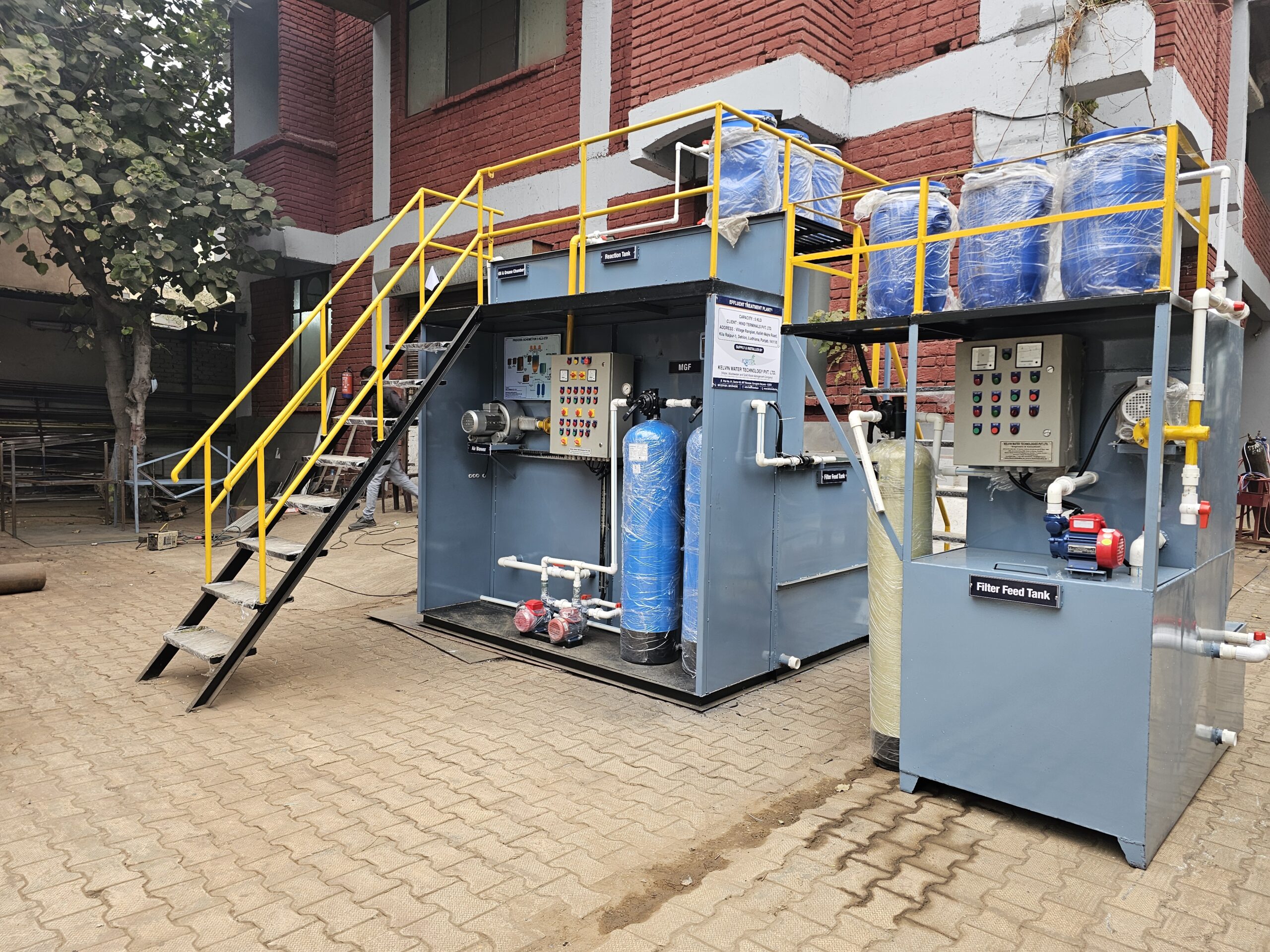 | EFFLUENT TREATMENT PLANTS A modular ETP can be configured to include multiple treatment stages, with each module handling a specific function. View product → |
 | EFFLUENT TREATMENT PLANTS MBR ETP (MEMBRANE BIO REACTOR) PLANT An MBR ETP is a Membrane Bioreactor Effluent Treatment Plant. View product → |
Frequently asked questions
When does a modular ETP become a ZLD system?
It becomes ZLD only when the treatment train manages RO reject and other concentrates through recovery, evaporation, crystallisation or another route that leaves no liquid discharge.
What process flow connects an ETP to zero liquid discharge?
A typical flow moves from pretreatment and biological treatment to clarification, filtration, RO, reject concentration, evaporation and crystallisation, with recovered water returned for reuse.
How do you prove a modular plant can handle your effluent?
Use representative sampling, laboratory treatability tests, a full water and salt mass balance, pilot trials where needed, and performance guarantees tied to flow and contaminant limits.
What should a Nagpur buyer require before approving the project?
Require the process design basis, equipment specifications, energy and chemical consumption, reject-handling plan, commissioning tests, operating documents and evidence of Maharashtra regulatory compliance.
Keywords