A biological sewage treatment plant with an RO unit does not automatically achieve zero liquid discharge. You need a defined process train, a written equipment and installation scope, site-specific design data, and acceptance tests that prove every liquid stream is recovered, reused or converted into a managed solid residue.
Key takeaways
- Confirm recovered-water reuse, reject concentration and solids disposal routes.
- Separate blackwater, greywater, kitchen wastewater and chemical streams before sizing.
- Write civil works, utilities, commissioning and operator training into the quotation.
- Demand flow, recovery, salt-balance and treated-water test records before acceptance.
What zero liquid discharge means in a modular STP
Zero liquid discharge (ZLD) means routine prevention of liquid effluent discharge from the defined battery limits. The plant must recover or reuse treated water, concentrate or evaporate RO reject, and provide a documented route for salts and sludge. ZLD changes liquid discharge into recovered water, solids and energy use; it does not eliminate waste.
A representative modular stp plant for zero liquid discharge inclusions checklist is:
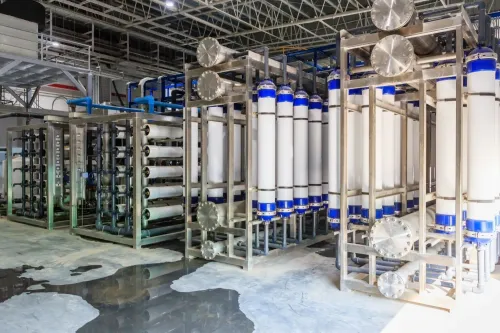
- Inlet screen and grit removal; equalisation tank; biological reactor; secondary clarifier or membrane separation; pressure sand filter; activated-carbon filter; ultrafiltration; RO; reject tank; evaporator or brine concentrator; crystalliser or dryer; condensate polishing; product-water storage; sludge dewatering and solid handling.
- Require a mass balance showing treated water, RO permeate, evaporator condensate, reject, recovered water, salts, sludge and unrecovered losses, with disposal or reuse routes for every stream.
- Do not call an MBR or RO system alone ZLD. An MBR can produce reusable water, and RO can polish and recover water, but neither manages the remaining concentrate or solids.
- Define in the contract whether toilet sewage, wash water, cooling-tower blowdown, rainwater, laboratory drains and chemical-cleaning waste fall inside the battery limits. State whether stormwater bypass is permitted and whether evaporator condensate counts as recovered water.
Equipment included in the base ZLD process train
A quote for a zero liquid discharge stp solution is complete only when it names every treatment and solids-handling stage, not merely a biological plant and RO skid.
- Inlet screen
- Equalisation tank with mixers
- Flow-paced feed pumps and controls
- Biological process: MBBR, SBR or MBR
- Secondary clarifier or membrane separation
- Pressure sand filter
- Activated-carbon filter
- Cartridge filtration
- Chemical-dosing system
- Ultrafiltration where required
- RO system
- Permeate storage tank
- RO-reject storage tank
- Antiscalant dosing or pH conditioning
- Brine concentrator or multi-effect evaporator
- Evaporator-condensate polishing
- Agitated thin-film dryer or crystalliser
- Salt collection and storage
- Sludge thickening and dewatering
3. Require the supplier to mark every line item as included, optional, excluded or an alternative. “Alternative” must identify the replacement, such as MBR instead of secondary clarification, rather than hiding a missing stage under advanced treatment.
4. Demand a mass balance showing RO permeate, evaporator condensate, recovered water, sludge, salt, chemical consumption and unrecovered losses, with a disposal route for each solid stream. Evaporation increases energy use and adds scaling, corrosion, cleaning and maintenance demands, especially with high-chloride, high-hardness or high-silica reject.
Insist on specific energy consumption, recovery, cleaning frequency and availability guarantees.
Design data and wastewater segregation required before sizing
Sizing requires both a hydraulic design basis and a complete wastewater analysis; nominal STP capacity alone is not enough.
1. Record average sewage flow and peak hourly flow, reported in m³/day equivalent and m³/h, along with occupancy, daily operating hours and projected occupancy growth. Include BOD, COD, TSS, ammonia, total nitrogen, total phosphorus, oil and grease, pH and temperature.
2. Test conductivity or TDS, hardness, alkalinity, chloride, sulphate and silica. These values determine biological loading, membrane pretreatment, RO recovery and the concentration at which scaling begins.
3. Use the same validated analysis to size each stage: organic and nutrient loads for biology, suspended solids and dissolved salts for filtration and RO, and reject volume plus dissolved-solids concentration for evaporation. RO-reject equipment cannot be sized from a 100 m³/day STP label because recovery and salt concentration determine the evaporation load.
Separate streams before the design basis is fixed:
- Toilet sewage: primarily sanitary wastewater for biological treatment.
- Kitchen wastewater: grease-bearing wastewater requiring grease removal.
- Laundry wastewater: surfactants and lint requiring screening or pretreatment.
- Cooling-tower blowdown: concentrated salts that can overload RO and evaporation.
- Industrial effluent: process chemicals or toxic compounds that can inhibit biology.
Install segregation, pretreatment or a separate ETP when a stream could upset biology, foul membranes or create an incompatible concentrate. Provide peak-flow equalisation with mixing and flow-paced feed; hydraulic surges destabilise biological treatment, RO feed quality and evaporator operation.
What STP plant installation inclusions must be written into the quotation
A quotation is incomplete if “ready to install” is the only installation description. Write the stp plant installation inclusions as a priced scope with battery limits, quantities, duties and exclusions.
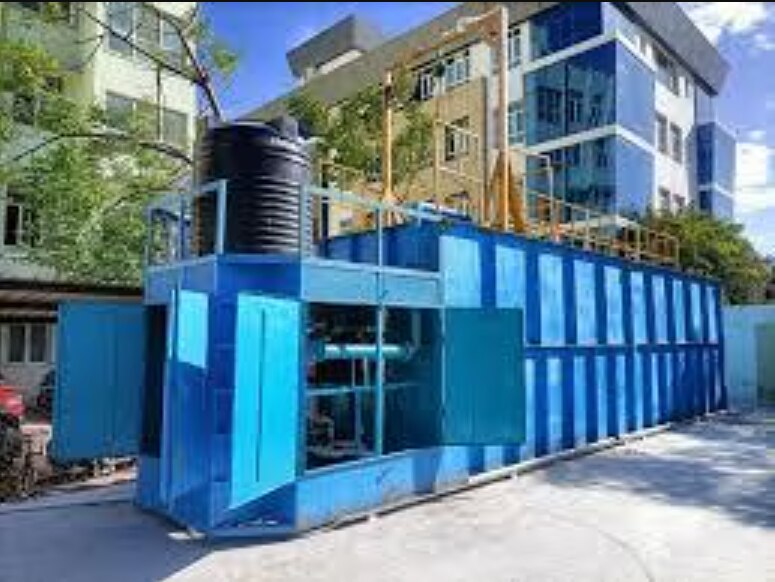
- Equipment supply: list screens, equalisation and process tanks, pumps, blowers, mixers, filters, membranes, RO skids, reject tanks, evaporator or crystalliser, sludge dewatering equipment and chemical-dosing systems.
- Civil works: state whether foundations, anchoring, bunds, weather protection, equipment room, lifting access, access platforms, ventilation, drainage, fire protection, chemical storage, laboratory facilities and a sludge-and-salt disposal area are included.
- Piping: include inlet and outlet pipelines, internal interconnections, valves, drains, overflow lines, raw-water and service-water connections, compressed-air piping and chemical lines.
- Electrical: specify MCCs or panels, cabling, earthing, lighting, electrical incomer, transformer capacity and connection to the owner’s supply.
- Instrumentation and controls: identify flow meters, level instruments, pressure gauges, online pH, conductivity and turbidity analysers, PLC, SCADA, alarms, historian and remote access.
- Interfaces: attach a battery-limit drawing naming owner-supplied utilities, civil interfaces, tie-in points and responsibilities for permits.
- Commissioning and operation support: include testing, commissioning consumables, operator training, manuals, critical spares, membrane-cleaning equipment, warranty attendance and defined emergency-bypass rules for toxic inflow, membrane failure or evaporator shutdown.
Ask the supplier to mark every item included, optional, excluded or offered as an alternative. Also state startup duration, staffing, performance tests and responsibility for operating records; otherwise civil and utility exclusions can appear only after the order.
How to verify ZLD performance and compare a Nagpur supplier
Acceptance is a pass only when each outlet has a written limit tied to its use. Set limits for pH, BOD, COD, TSS, ammonia, total nitrogen, total phosphorus, oil and grease, TDS, conductivity, chloride and microbiological quality; do not call water “reusable” without naming whether it serves flushing, gardening, floor washing or cooling-tower makeup.
| Stream | Acceptance evidence |
|---|---|
| Treated water and RO permeate | Laboratory results against the selected reuse limits |
| RO reject | Measured volume routed to concentration or evaporation; zero discharge |
| Evaporator condensate | Laboratory results and documented return to approved reuse |
| Sludge | Weighed quantity, dewatering result and lawful handling route |
| Recovered salt | Weighed crystallised product, storage method and disposal or reuse route |
Require calibrated flow meters at inlet, permeate, reject, condensate and final reuse points. Witness a water-and-salt mass balance over a defined operating period, not a short start-up demonstration, and verify that no reject, stormwater bypass or untreated stream reaches a drain.
Ask the modular sewage treatment plant supplier in Nagpur to guarantee RO recovery, evaporator feed rate and condensate quality, specific power and chemical consumption, cleaning frequency, membrane-life assumptions, evaporator availability, staffing, critical spares and upset responses for toxic inflow, shock loading or shutdown. Request references from comparable sewage ZLD plants.
For a modular STP scope in Nagpur, assign responsibility for Maharashtra Pollution Control Board consent, sewer or drainage permissions, reuse conditions, electrical approvals and operating records. S K ENTERPRISES belongs on the comparison list only when its proposal states these boundaries and guarantees clearly.
Related products
 | SEWAGE TREATMENT PLANT Modular sewage treatment plants are transforming the wastewater treatment industry by providing a flexible and efficient alternative to conventional... View product → |
 | SEWAGE TREATMENT PLANT An Underground Sewage Treatment Plant (USTP) is a compact sewage treatment system designed to be installed underground, offering a space-saving... View product → |
Frequently asked questions
What does zero liquid discharge mean in a modular STP?
ZLD prevents routine liquid effluent discharge within defined battery limits by reusing treated water, concentrating or evaporating RO reject, and documenting salt and sludge disposal.
What equipment is included in a base modular ZLD process train?
A base train can include screening, equalisation, biological treatment, clarification or membrane separation, tertiary filtration, RO, reject concentration or evaporation, and solids handling. Confirm each item in the equipment schedule.
What design data is required before sizing a modular ZLD STP?
Provide average and peak flow, wastewater sources, hourly variation, pollutant loads, temperature, pH, TDS, oil and grease, chemical contamination, reuse quality and wastewater segregation details.
What should STP plant installation inclusions state in a quotation?
The quotation should identify equipment supply, foundations, piping, electrical work, instrumentation, utilities, erection, commissioning, operator training, consumables, performance testing, warranties and sludge or salt disposal responsibilities.
How do you verify a ZLD STP supplier in Nagpur?
Compare the process guarantee, water-recovery and reject-management calculations, test protocol, exclusions, operating-energy assumptions, service coverage and documented performance results.
Keywords