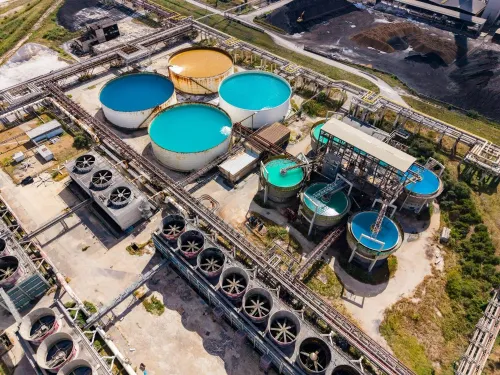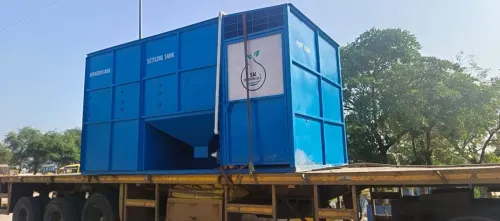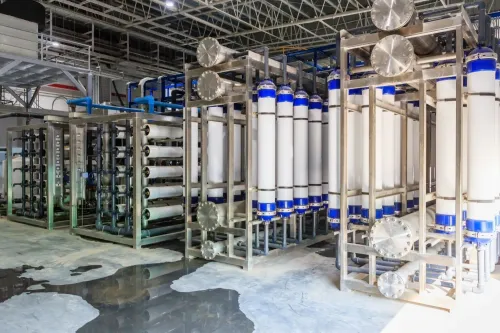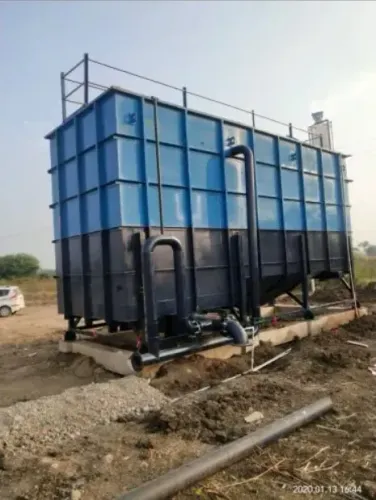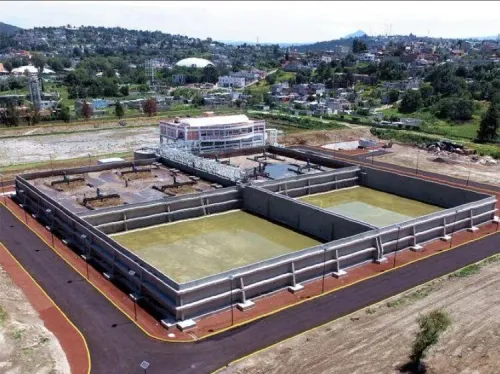
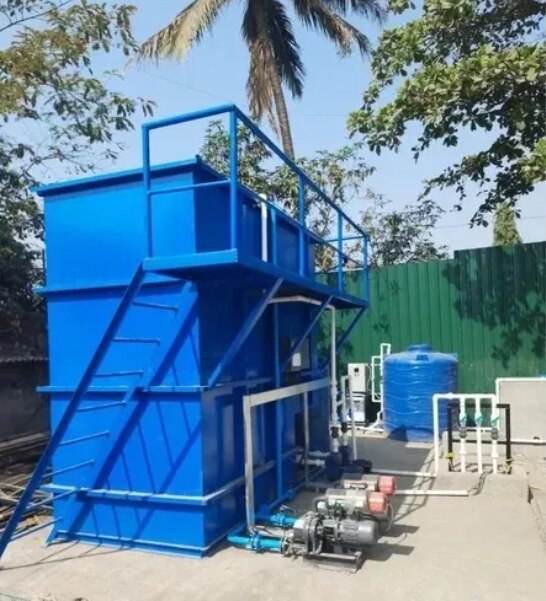
The choice is not simply between a small packaged unit and a large commercial plant. You need to match the treatment arrangement to wastewater flow, peak loading, available land, reuse goals, installation constraints and the skill available for daily operation.
Key takeaways
- Treat commercial and package STP as supply formats, not capacity classes.
- Size the plant using daily use, peak flow and wastewater strength.
- Check access, footprint, power supply and monsoon conditions before selecting layout.
- Specify discharge limits or reuse quality before comparing treatment technologies.
Commercial STP and package STP are supply formats, not capacity classes
“Commercial STP” describes the application: offices, hotels, hospitals, malls, institutions or campuses. “Package STP” describes factory-fabricated or modular construction. A package unit can serve a large property through multiple modules in parallel, while a site-built commercial plant can use factory-made tanks, blowers, screens and control panels.
| Dimension | Package STP | Site-built commercial STP |
|---|---|---|
| Capacity | One module or parallel modules; not inherently small | Large or unusual flows in one engineered arrangement |
| Footprint | Compact, with predictable equipment placement | More land for tanks, access and equalization |
| Installation | Faster assembly after delivery | Longer civil, piping and commissioning work |
| Civil work | Plinths, foundations, connections and tanks still required | Excavation, structural tanks and extensive interconnections |
| Expansion | Add modules if hydraulics and controls allow | Reserve land and expand tanks, trains or equipment |
| Controls | Preconfigured automation, sensors and panels | Custom controls for complex hydraulics and operating sequences |
| Maintenance | Compact layout can restrict access | Easier access to major equipment when designed well |
| Lifecycle cost | Lower construction time, but modules, membranes or proprietary parts can cost more | Higher initial civil work, with easier component replacement in an open layout |
Choose a package arrangement when speed, compactness and predictable assembly matter. Choose a site-built arrangement when you need unusual hydraulics, large equalization volume, phased expansion, deep excavation or generous maintenance access. This is the useful package STP versus commercial STP distinction—not small versus large.
Do not compare only quoted tank volume or installed price. Require the supplier to state:
- Design flow and peak hourly flow
- Standby pumps, blowers and other equipment
- Connected load and expected power demand
- Sludge handling method
- Expected service life
- Replacement items, intervals and sources
That information makes commercial STP or package STP in Nagpur bids comparable over the plant’s working life.
Size the plant from water use, peak flow and wastewater strength
1. Start with 12 months of water bills, borewell and tanker records, sub-meter readings, and occupancy data. Calculate supplied water for each month, then use CPHEEO practice as the starting point: sewage is commonly estimated at 80% of supplied water.
Do not size an STP plant for businesses in Nagpur from employee count or built-up area alone.
2. Adjust the estimate for visitors, toilet count, kitchen use, laundry, cooling systems, housekeeping and water sent to separate processes. Calculate average daily flow from the annual total, peak daily flow from the highest credible day, and peak hourly flow from timed readings or the busiest operating period.
Record low night-time flow, Monday or weekend surges, and seasonal occupancy.
3. Use an equalization tank to absorb those variations, with mixing or aeration to prevent septic conditions and controlled pumping into treatment. State clearly whether the proposed capacity refers to average daily, peak daily or peak hourly flow. A monsoon inflow through open manholes can otherwise overload the plant and wash solids from clarification.
4. Put a grease trap or interceptor upstream of a commercial sewage treatment plant in Nagpur for restaurants, food courts, hotels and hospitals. Stop and test any stream containing solvents, heavy metals, oils, toxic chemicals, high TDS, concentrated cleaners or high-strength process organics; segregate it for pretreatment or an ETP.
5. Test influent for pH, TSS, BOD, COD, ammonia, oil and grease, conductivity and temperature before final sizing.
Check Nagpur site conditions before choosing the equipment layout
Nagpur’s water scarcity can justify treated-water reuse for flushing, gardening, cooling-tower makeup or process applications. Define the reuse point before selecting equipment, then specify its limits for pH, TSS, turbidity, salinity, pathogens, nutrients and residual disinfectant.
Keep monsoon stormwater separate from sewage. Inflow through open manholes, damaged sewers or high groundwater can overload the inlet, dilute mixed liquor and wash settled solids from clarification.
Ask the designer to inspect:
- Groundwater level, soil bearing capacity, excavation depth and flood level
- Available plot, tanker turning radius and maintenance access
- Electrical supply reliability, backup power and future expansion space
Both options need foundations or equipment plinths, excavation, inlet and outlet piping, screens, pumps, electrical panels, ventilation, odour control, sludge dewatering or storage, treated-water tanks, safe walkways and maintenance clearances.
| Option | Factory work | Site work |
|---|---|---|
| Package STP | Modules, skids, panels and prefabricated pipe assemblies are tested before dispatch | Foundations, tanks, interconnections, cabling, commissioning and performance testing |
| Site-built commercial STP | Tanks, blowers, screens and panels can still be factory-made | Civil construction and equipment integration occur at the property |
Plan roughly 8 to 20 weeks after design approval. Civil works, utility readiness and consent conditions often control the handover date for a commercial STP or package STP in Nagpur.
Compare MBBR, SBR, MBR and conventional activated sludge by operating burden
Match the process to the building’s flow pattern and reuse target, not to the package label. Package STP versus commercial STP describes construction format; MBBR, SBR, MBR and activated sludge describe treatment processes.
| Process | Operating burden | Best fit and limitations |
|---|---|---|
| MBBR | Continuous flow; retained carrier media; downstream clarification or filtration. Moderate footprint and aeration demand; simple control; tolerates variable flow; sludge wasting remains necessary. | Offices, schools and mixed commercial sites needing robust operation and moderate-quality reuse. |
| SBR | Fill, react, settle and decant in timed cycles. Compact, but depends on level instruments, valves and programming; poor sequencing causes carryover. | Intermittent flows and limited land where operators can manage controls. |
| MBR | Biology plus membrane separation. Smallest footprint and clearest outlet, but highest aeration energy, cleaning, membrane-replacement and operator demands. | Flushing, cooling or process reuse requiring low suspended solids. |
| Conventional activated sludge | Flexible and familiar, with larger clarifiers, return-sludge pumps and sludge systems. Lower equipment complexity, but larger footprint and weaker peak-flow tolerance without equalization. | Sites with land, trained operators and stable hydraulic loading. |
Require every bid to state:
- Blower turndown, dissolved-oxygen control, standby pumps and blowers, and expected kWh per cubic metre.
- Sludge-wasting frequency, chemical consumption, low-load behaviour and shutdown recovery time.
SBR or MBBR is not automatically a package STP. Any process can be installed in a factory-fabricated package or a site-built commercial plant.
Disinfection is a separate barrier. UV needs low turbidity and lamp maintenance; chlorination needs controlled dose, contact time and residual monitoring. Include treated-water storage and a validated UV reactor or contact tank.
Use the final discharge or reuse route to select and tender the plant
Choose the treatment plant from its final discharge or reuse route, not from the lowest tank volume or capital quote. A commercial STP in Nagpur must be designed around where treated water goes and the limits that route imposes.
| Property type | Practical selection rule |
|---|---|
| School or office | Package modular system suits predictable daytime sewage and limited land. |
| Hotel, hospital or mall | Provide equalization, grease control, variable-flow handling and generous maintenance access. |
| Factory or mixed-use campus | Separate sewage and process-effluent networks; test process wastewater before specifying treatment. |
| Apartment-linked commercial property | Allow phased expansion and assign responsibility for shared pumps, tanks, power and utilities. |
Define whether water will enter a municipal sewer, surface water, gardening, flushing, cooling-tower makeup or process reuse. Put these limits in the tender: pH, TSS, BOD, COD, ammonia or total nitrogen, microbiological quality, turbidity, salinity and residual disinfectant where relevant. Gardening water is not automatically suitable for flushing or cooling makeup.
In Maharashtra, the owner remains responsible for consent, sewer connection, discharge or reuse conditions, sampling and operating records. A packaged sale does not transfer those duties.
Ask every bidder for a site survey, measured-flow basis, influent test, civil drawings, commissioning plan, operator training, spares list, performance guarantee and post-start-up support. Compare energy, sludge, consumables, replacement parts and maintenance access over the plant’s life.
S K ENTERPRISES belongs in the comparison for an STP plant for businesses in Nagpur only when its proposal documents those items as clearly as competing suppliers.
Related products
 | SEWAGE TREATMENT PLANT A packaged sewage treatment plant (PSTP) is a compact, pre-engineered, and self-contained system designed to treat wastewater from domestic or... View product → |
 | SEWAGE TREATMENT PLANT COMMERCIAL SEWAGE TREATMENT PLANT A commercial sewage treatment plant (STP) treats wastewater from businesses, industries, and commercial buildings to meet environmental regulations... View product → |
Frequently asked questions
What is the difference between a commercial STP and a package STP?
Commercial STP describes the application for properties such as offices, hotels, hospitals, malls and campuses. Package STP describes factory-fabricated or modular construction. A package plant can serve a large site through parallel modules, while a commercial plant can use site-built tanks with factory-made equipment.
How should a business size an STP in Nagpur?
Base sizing on actual water use, the sewage fraction, daily volume, peak hourly flow and wastewater strength. Do not select equipment from property size or a nominal capacity alone.
Which site conditions should you check before choosing an STP layout?
Check available footprint, vehicle and crane access, excavation conditions, groundwater, electrical supply, ventilation, odour control, monsoon drainage and space for sludge handling and maintenance.
How do MBBR, SBR, MBR and conventional activated sludge compare?
Compare them by operator involvement, footprint, aeration energy, controls, sludge handling, membrane maintenance and the consistency of the required treated-water quality. The lowest purchase price is not always the lowest operating burden.
How does the final discharge or reuse route affect STP selection?
Set the treatment target from the receiving route: toilet flushing, landscaping, cooling, process use, tanker disposal or discharge. Then write measurable influent assumptions, treated-water limits, testing requirements and acceptance tests into the tender.
Keywords