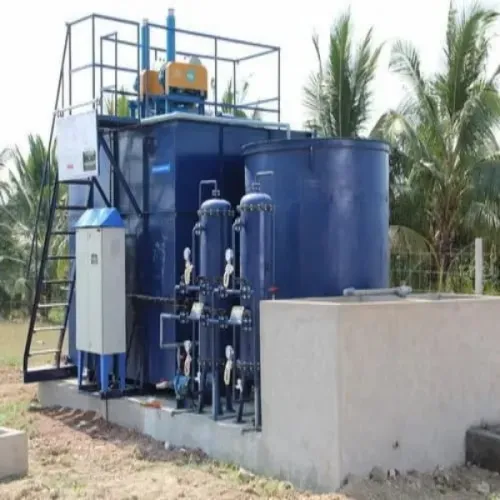
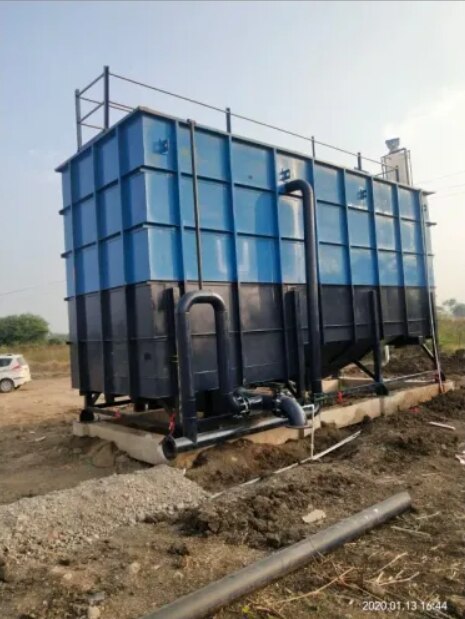
The right plant starts with measured wastewater flow, pollutant load, reuse requirements, and site constraints—not the supplier’s advertised user count or container quantity. By the end, you will have a practical basis for comparing processes, sizing the equipment, checking a Nagpur site, and writing performance terms into the purchase contract.
Key takeaways
- Base capacity on peak sewage flow, not only average daily use.
- Check container access, ventilation, heat removal, and corrosion protection.
- Select the process according to inlet quality and intended water reuse.
- Write performance tests, exclusions, utilities, and maintenance duties into the contract.
Start with the Design Basis, Not the Container
| Format | What it includes | Main consequence |
|---|---|---|
| Containerized STP | Treatment tanks, blowers, pumps, controls, and piping inside a weather-protected shipping container | Less site construction, but tighter access, ventilation, heat removal, and corrosion-control requirements |
| Packaged STP | Factory-assembled treatment equipment supplied as a complete package | The supplier may still require separate tanks, a shed, foundations, and utility rooms |
| Skid mounted STP plant | Equipment fixed to structural frames, usually without a complete enclosure | Easier inspection and cooling, but you must provide weather protection, tanks, buildings, and site connections |
| Conventional civil-built STP | Tanks and buildings constructed at the site | More civil work and construction time, but greater freedom for access, expansion, and equipment layout |
Size a containerized STP plant in Nagpur from wastewater flow and pollutant load, not a supplier’s user count. Calculate average daily flow as population × occupancy × daily water use × the wastewater-return fraction, then add measured infiltration and permitted trade effluent.
Convert this to average hourly flow by dividing by 24; peak hourly flow requires a documented peak factor or a measured flow profile. Separately calculate BOD load as flow in m3/day × BOD in mg/L ÷ 1,000.
A 100 KLD label is incomplete without guaranteed average and peak flow, BOD load, minimum operating flow, and turndown performance.
Before comparing containerized STP sizes, record:
- Present and five-year design population, occupancy pattern, daily water use, and wastewater fraction
- Average flow, peak hourly flow, infiltration, pH, temperature, BOD, COD, TSS, oil and grease, and ammonia
- Space for inlet screening, equalization, treated-water storage, sludge removal, electrical supply, and future expansion
- Delivery-road width, turning radius, lifting access, level plinth, anchoring, monsoon drainage, and high-summer ventilation needs
Match Containerized STP Sizes to the Nagpur Site
Choose a size by guaranteed flow and pollutant load, then test whether the complete installation fits the Nagpur site. A “100 KLD” label is insufficient: obtain guaranteed average flow, peak hourly flow, influent BOD in kg/day, minimum operating flow, and turndown performance.
| Size band | What to compare | Site check |
|---|---|---|
| Small | Tens of KLD; confirm peak flow does not overload pumps or screens | Door width, truck access, plinth area, and space for tanks |
| Medium | About 100 KLD or more; compare BOD load, not KLD alone | Crane reach, maintenance clearance, treated-water storage, and electrical room |
| Large | Several hundred KLD; check whether multiple modules improve redundancy | Road turning radius, foundation loading, desludging route, and future expansion |
Containerized STP sizes have no universal classification, so demand a general-arrangement drawing with container length, width, height, gross weight, lifting points, door widths, and clearances to remove pumps, blowers, membranes, diffusers, screens, and control-panel parts. Equipment that fits inside the shipping envelope can still be impossible to service.
For a containerized sewage treatment plant in Nagpur, check monsoon drainage, high summer heat, water-table conditions, anchoring against wind and flotation, cable and pipe routes, commissioning water, and proximity to residences.
A portable STP plant in Nagpur also needs a crane or forklift route; if lifting requires dismantling, it is modular or skid-mounted rather than genuinely portable.
- Reserve space for an inlet screen, equalization tank where required, treated-water tank, sludge removal, and safe electrical isolation.
Choose the Process from the Inlet and the Reuse Target
Fix the reuse target before selecting biology. A containerized sewage treatment plant in Nagpur still needs an inlet screen, receiving or equalization tank, treated-water tank, sludge access, foundations, power, and maintenance access; the container does not remove those civil works.
| Process | Choose it when | Watch for |
|---|---|---|
| MBBR | Loads vary and you need a compact, mechanically simple process for toilet flushing or landscaping | Provide secondary filtration and disinfection when reuse requires low solids or controlled microbial quality |
| SBR | Flow arrives in batches and you can operate timed fill, aeration, settling, and decant cycles | Confirm equalization volume, cycle timing, and standby capacity before accepting continuous or peak-flow claims |
| MBR | You need consistently low suspended solids and high-quality reuse in a restricted footprint | Specify membrane flux, cleaning chemicals, replacement interval, air demand, and power consumption; MBR does not remove salinity automatically |
| Other process | Select conventional activated sludge, IFAS, or a tertiary polishing train when land, energy, nutrient limits, or discharge conditions favour it | Demand a process flow diagram showing every treatment and bypass point |
Protect the biology before the first tank. Specify coarse and fine screening, grit removal, grease control for kitchens, flow equalization for surges, and an alarmed overflow route; solids and fats otherwise foul pumps, carriers, membranes, and UV equipment.
Write outlet guarantees as measurable conditions:
- Name the sampling point, flow and load, laboratory method, operating period, and limits for BOD, COD, TSS, nitrogen, phosphorus, faecal coliforms, pH, and residual chlorine where relevant.
- Tie each guarantee to toilet flushing, irrigation, cooling makeup, process reuse, or MPCB consent—not to vague “reuse quality.”
- Prohibit dilution or bypass, and specify the remedy if the plant fails continuous acceptance testing.
Specify the Enclosure, Utilities, and Maintenance Environment
A containerized STP plant in Nagpur needs a thermal and weather specification, not just a steel box. Select a raised, level plinth; sealed roof drainage; insulated wall and roof panels; and a corrosion-resistant internal coating. Keep the inlet chamber, equalization tank, treated-water tank, sludge storage, and desludging vehicle outside the container.
Specify these features before ordering:
- Ventilation sized for blower and motor heat, with filtered intake and exhaust fans; add air-conditioning for control panels if the calculation shows unsafe summer temperatures.
- Electrical panels with a stated IP rating, sunshade, proper cable glands, earthing, surge protection, emergency isolation, and phase-failure protection.
- Epoxy or polyurethane coating on carbon steel, stainless-steel fasteners in wet zones, and protected blower and instrument housings. Condensation and monsoon humidity will corrode unprotected components.
- Odour control at the screening and sludge points, with sealed covers and a carbon filter or scrubber where occupied areas are nearby.
- Vibration mounts, flexible connectors, and acoustic lining around blowers; record the guaranteed noise level at the property boundary.
- Clear access around pumps, blowers, membranes, valves, and control panels. A narrow container can turn a simple seal replacement into dismantling work.
A skid mounted STP plant may be easier to inspect and cool, but it still needs a weatherproof shed and civil tanks. Whether you engage S K ENTERPRISES or another integrator, require a maintenance drawing, lifting points, spare-parts schedule, wash-water connection, drain, lighting, and safe access for technicians.
Related product
 | SEWAGE TREATMENT PLANT Containerized sewage treatment plants are emerging as a sustainable, adaptable, and efficient solution for wastewater management. View product → |
Turn the Selection into a Verifiable Purchase Contract
Compare containerized STP sizes by guaranteed flow and pollutant load, not container count. A portable STP plant in Nagpur still needs foundations, inlet works, sludge access, electrical connections, and a safe lifting route.
| Supplier offer | Put in the contract | Reject the offer if |
|---|---|---|
| Capacity | Average and peak flow, BOD load in kg/day, minimum flow, maximum flow, and turndown | It states only “100 KLD” |
| Compliance | Maharashtra Pollution Control Board consent category, outlet location, monitoring duty, sampling point, standard, and test method | It promises “MPCB approval” without identifying the consent |
| Utilities | Screen, equalization, treated-water tank, sludge route, connected load, generator interface, and maintenance clearances | It prices only the container |
| Guarantee | Outlet limits, power, noise, odour, and remedy for dilution or bypass | It offers visual commissioning only |
- Sludge: name the wasting rate, storage volume, dewatering method, desludging vehicle access, disposal responsibility, and chemical consumption. A plant without a sludge route will stop even when its biology works.
- Power: specify connected and running load, automatic transfer to backup generation, restart sequence, alarm logging, and the equipment that remains live during an outage.
- Acceptance: run the plant for an agreed continuous period at defined influent flow and load. Record sampling results, laboratory methods, SRT or membrane flux, power, noise, odour, and treated-water quality; require operator training, spares, maintenance intervals, and a correction plan if limits fail.
Frequently asked questions
What should you define before choosing a containerized STP plant in Nagpur?
Define average and peak sewage flow, inlet BOD and TSS, operating hours, discharge limits, and the intended reuse quality before comparing equipment.
How do you choose between containerized STP sizes?
Match the plant to measured or calculated average and peak flows, then check hydraulic retention, standby capacity, future expansion, and available space at the Nagpur site.
Which treatment process suits a containerized sewage treatment plant?
Choose the process from the inlet strength, flow variation, discharge requirement, and reuse target; confirm whether the design needs biological treatment, tertiary filtration, disinfection, or membrane treatment.
What must a purchase contract specify for a containerized STP?
Specify guaranteed flow and treated-water limits, testing methods, power and water requirements, civil-work exclusions, delivery scope, commissioning duties, warranties, spares, and maintenance responsibilities.
Keywords