Choosing an STP starts with wastewater flow, site constraints and the quality of water you need to produce—not with a catalogue label. By the end, you will be able to compare plant formats and biological processes, calculate a defensible design basis, and shortlist the right option for a building in Nagpur.
Key takeaways
- Compare the package format separately from MBBR, SBR and MBR technology.
- Use measured flow, peak demand and sewage characteristics to size the STP.
- Check Nagpur space, power, water reuse and sludge-disposal constraints before selecting.
- Specify outlet limits, reuse quality, testing, controls and lifecycle duties in the tender.
Compare the plant format before comparing the technology
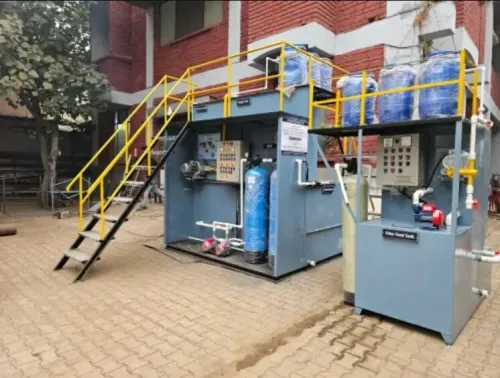
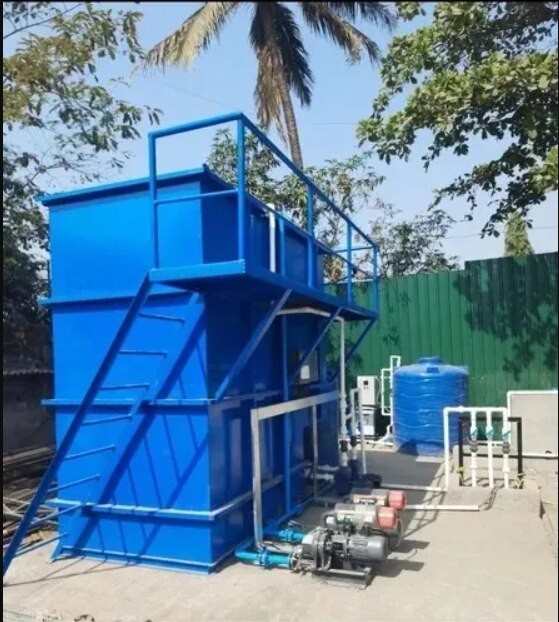
Choose the plant format before choosing MBBR, SBR or MBR. A package STP plant comparison starts with procurement: “package” describes factory-built equipment assembled for delivery, not the biological process inside it. A package unit can use MBBR, SBR, activated sludge or membranes, so compare aeration, polishing, sludge handling and controls separately.
| Option | Practical meaning | Best fit | Main trade-off |
|---|---|---|---|
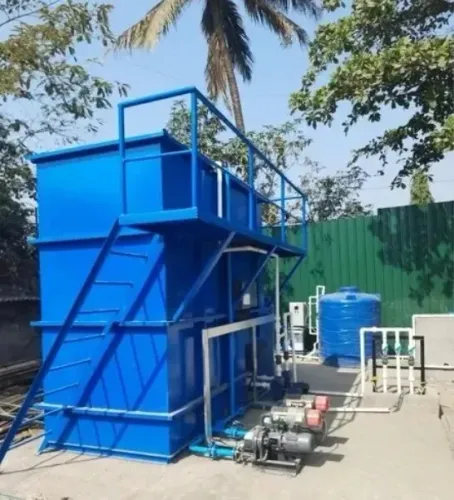
| Package | Factory-built tanks and equipment delivered as one system | Buildings needing faster installation and predictable fabrication | Transport, crane access, proprietary parts and after-sales support affect lifecycle cost |
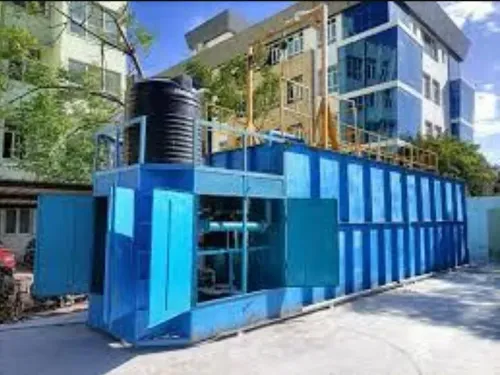
| Containerized | Treatment equipment installed inside a shipping container or similar enclosure | Temporary, remote or rapidly deployable sites | Internal space limits maintenance and heat or corrosion control |
| Modular | Multiple repeatable treatment trains that can operate together or expand later | Phased developments or uncertain future occupancy | More modules mean more valves, controls and maintenance points |
| Compact | A space-saving layout, not a defined treatment process | Sites with limited surface area | “Compact” does not prove capacity, energy use or treated-water quality |
| Underground | Tanks and equipment placed below grade | Sites protecting open space or controlling visual and odour impacts | Excavation, waterproofing, ventilation and desludging access raise risk |
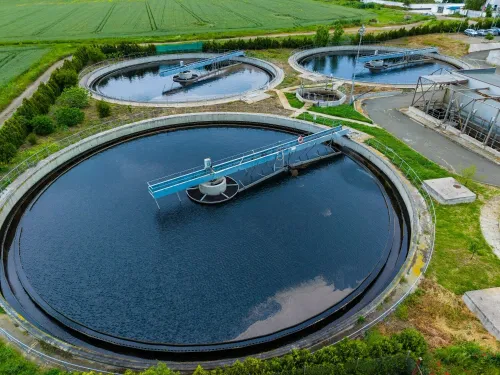
| Conventional civil-construction | RCC tanks built on site with separately installed equipment | Permanent plants with land, skilled contractors and long design life | Longer construction and commissioning, but easier future civil modifications |
Every format still needs screening, equalization, bypass and isolation, sludge storage, ventilation, sampling points, treated-water storage and safe desludging access. Omit them and a compliant-looking package plant can fail in daily operation. Compare the process only after confirming these site requirements, access, installation deadline and expansion plan.
Match the biological process to your operating reality
A package STP is an installation format, not a biological process. Package STP benefits depend on the process, equalization, controls, sludge line and polishing stage selected—not on the enclosure alone.
| Option | Footprint and power | Operator skill | Sludge handling and treated-water quality |
|---|---|---|---|
| Extended aeration | Largest biological footprint; continuous, moderate-to-high blower power | Lower skill, but aeration and wasting still need checks | More stabilized sludge; reliable secondary-quality water after clarification and polishing |
| MBBR | Compact tanks; moderate blower power | Moderate skill; protect media screens and diffusers | Separate sludge wasting; handles load variation well, with quality dependent on clarification |
| SBR | Compact because fill, react, settle and decant share a basin; moderate-to-high power | Higher skill for sensors, valves and cycle programming | Periodic sludge wasting; good quality, but equalization or multiple basins are needed for uninterrupted inflow |
| MBR | Smallest footprint; highest electrical demand | High skill for fouling control, chemical cleaning and membrane replacement | Wasting remains necessary; consistently low suspended solids suit flushing, cooling and landscaping reuse |
| Decentralised treatment | Distributed footprint avoids long sewers; power and land vary by process | Varies widely; remote sites need simple controls and dependable attendance | Sludge removal can be logistically difficult; quality varies unless aerobic treatment and polishing are controlled |
Choose extended aeration for forgiving operation and available land. Choose MBBR for variable occupancy, SBR for batch-based flows, and MBR where reuse quality justifies energy and maintenance. A decentralised scheme fails when desludging access, monitoring or operator responsibility is unclear. Include screening, equalization, treated-water storage, sampling points and sludge access in the package scope.
Size the system from measured demand, not a percentage
Use a measured water balance to size the STP, not the building’s installed water-supply capacity. The common assumption that sewage equals 80% of water consumption is only a preliminary estimate; reuse, low occupancy and separately metered outlets can make actual sewage flow substantially different.
Collect at least 30 days of operating data before fixing capacity:
- Daily and hourly water-meter readings, including weekday, weekend and seasonal variation.
- Actual occupied beds, residents, workers, students or visitors for each operating shift.
- Peak discharge rate and duration during laundry, bathing, kitchen and cleaning periods.
- Influent BOD, COD, TSS, pH, oil and grease, sampled during normal and peak conditions.
- Separate volumes for cooling-tower blowdown, RO reject, irrigation and rainwater.
- Kitchen wastewater routing and grease-trap performance, because grease can disrupt biological treatment.
Size the biological process for organic loading as well as flow. A low-flow building with high BOD can overload a plant that looks adequate in kilolitres per day, while a large building with intermittent occupancy can leave equipment underloaded and waste aeration power.
For sustainable water solutions for buildings, confirm the reuse balance before adding capacity. Match treated-water production to actual toilet flushing, gardening or cooling demand, then provide separate pipework, storage for variable production and cross-connection controls. Without that demand, an oversized STP creates surplus water, bypasses or disposal costs rather than conservation.
Test the package option against Nagpur site alternatives
Choose a municipal sewer connection in Nagpur when a confirmed connection point, compatible invert levels, available capacity and written discharge conditions exist. Otherwise, compare the site alternatives below rather than treating every building as a package STP candidate.
| Option | Choose it when | Principal caution |
|---|---|---|
| Package STP | Land is limited, installation must be fast, and a defined flow supports factory-built equipment | Package describes the format, not the process; verify MBBR, SBR, MBR or activated-sludge performance, power and sludge handling |
| Underground or conventional RCC plant | You have construction time, permanent civil works and enough land for tanks, access and future expansion | Civil construction disrupts the site and leaks are difficult to repair underground |
| DEWATS | A low-energy, decentralised system suits low-rise buildings, predictable flows and available land | It needs hydraulic balancing, maintenance and careful land planning |
| Septic tank and soak pit | Occupancy is low, soil infiltrates adequately, groundwater remains safely separated and no sewer exists | It is not equivalent to an STP for dense multi-storey buildings; poor soil or a high water table can cause failure and contamination |
| Municipal sewer | The authority accepts the connection and the network can receive the discharge | Manage grease, screenings, trade effluent and internal plumbing segregation before discharge |
A practical screen for stp plant alternatives in nagpur includes metered demand, peak discharge, soil testing and reuse demand. Use this package stp plant sustainable water for solutions comparison in nagpur to compare potable-water reduction, leak control, grease management, storage and separate non-potable piping—not just treatment equipment.
A large plant without reuse demand creates excess treated water and operating cost.
Write performance, reuse and lifecycle requirements into the tender
Put guaranteed treated-water limits in the tender, not just “100 KLD STP” or “as per CPCB.” State the influent design range for flow, BOD, COD, TSS, ammonia or total nitrogen, oil and grease, pH and temperature, then require performance testing at defined flow and loading.
1. Specify the effluent limit for each intended use. Use the consent conditions issued by the Maharashtra Pollution Control Board, environmental-clearance conditions and Nagpur local-authority requirements as the legal baseline. Add project targets such as BOD ≤10 mg/L, TSS ≤10 mg/L and fecal coliform ≤100 MPN/100 mL only where the reuse application demands them.
2. Name every item included in the supplier’s scope: inlet screen, bypass and isolation valves, equalization tank, flow meter, sampling points, treated-water tank, sludge storage or dewatering, desludging access, ventilation, odour control, chemical storage, control panel, alarms and standby equipment.
3. Specify the reuse balance. Show daily toilet-flushing, gardening or cooling-tower demand, separate non-potable pipework, storage volume for uneven production and a potable-water cross-connection safeguard. Otherwise, excess treated water will stagnate or be discharged.
4. Request a 10-year lifecycle price covering electricity in kWh per kilolitre, chemicals, sludge disposal, membranes or media, laboratory testing, consumables, operator hours, annual maintenance, spare parts and replacement intervals.
5. Make the contract state uptime, noise, odour, preventive-maintenance schedule, training, warranty, breakdown response time and liquidated damages for failed acceptance tests. S K ENTERPRISES can help compare these operating commitments against the equipment price rather than selecting on capital cost alone.
Related products
 | SEWAGE TREATMENT PLANT A packaged sewage treatment plant (PSTP) is a compact, pre-engineered, and self-contained system designed to treat wastewater from domestic or... View product → |
 | WASTE WATER TREATMENT A sewage treatment plant (STP) is a facility that treats wastewater, primarily from domestic and commercial sources, to remove contaminants and... View product → |
Frequently asked questions
What does package STP plant mean?
A package STP is factory-built equipment assembled for delivery and installation. The term describes the plant format, not its biological process; a package unit can use MBBR, SBR, activated sludge or membranes.
How should you compare a package STP plant with alternatives?
Compare civil-work requirements, footprint, installation time, access for maintenance, power demand, sludge handling, controls, expansion options and lifecycle cost before comparing treatment technologies.
How do you choose between MBBR, SBR and MBR?
Match the process to your operating reality. Assess flow variation, operator availability, required treated-water quality, reuse application, power reliability, footprint and tolerance for membrane cleaning or sludge-management work.
How should you size a sewage treatment plant?
Use measured water consumption and sewage flow records, then account for peak flow, occupancy, operating hours, infiltration and wastewater characteristics. Do not size the plant by applying an arbitrary percentage to building capacity.
What should an STP tender specify?
State inlet and outlet parameters, sampling and testing methods, reuse-water quality, design flow and peaks, equipment warranties, energy and chemical expectations, automation, sludge disposal, operator duties, commissioning tests and lifecycle support.
Related products
 | SEWAGE TREATMENT PLANT Containerized sewage treatment plants are emerging as a sustainable, adaptable, and efficient solution for wastewater management. View product → |
 | SEWAGE TREATMENT PLANT Modular sewage treatment plants are transforming the wastewater treatment industry by providing a flexible and efficient alternative to conventional... View product → |
 | SEWAGE TREATMENT PLANT COMMERCIAL SEWAGE TREATMENT PLANT A commercial sewage treatment plant (STP) treats wastewater from businesses, industries, and commercial buildings to meet environmental regulations... View product → |
 | SEWAGE TREATMENT PLANT COMPACT SEWAGE TREATMENT PLANT A compact sewage treatment plant (STP) is a small, self-contained unit that purifies wastewater in a small footprint, using physical, biological, and... View product → |
Keywords