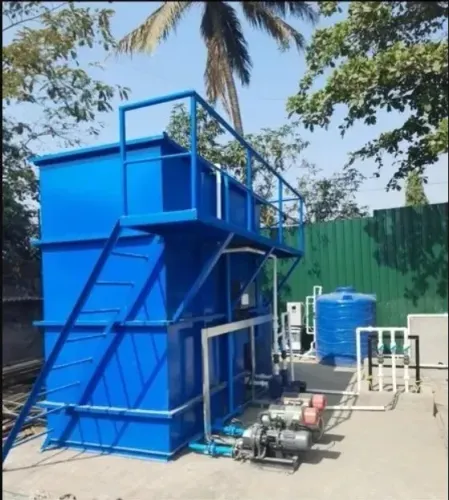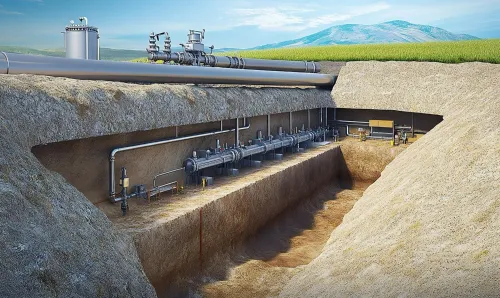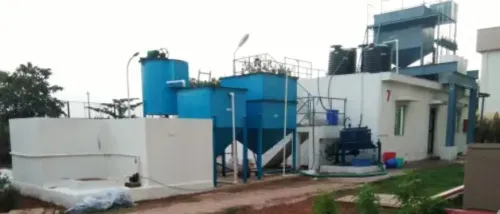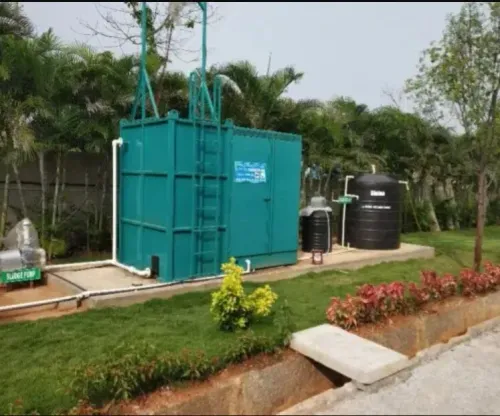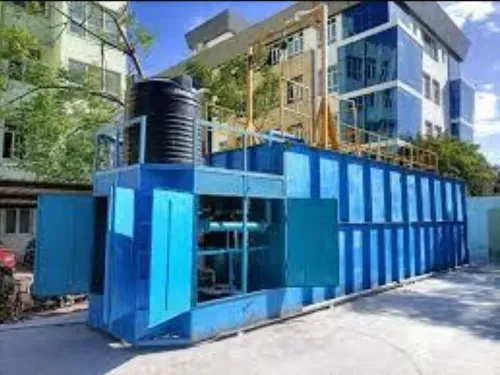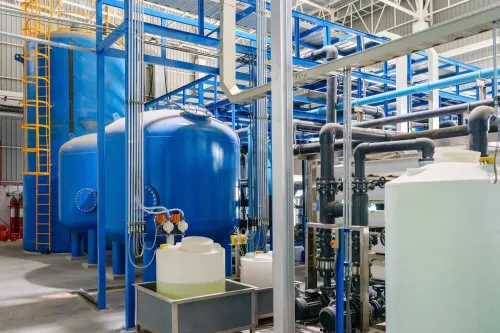
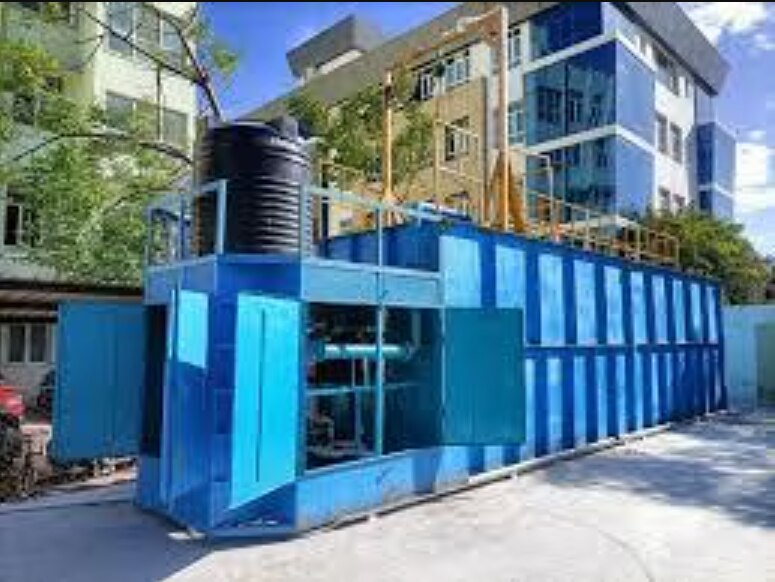
A containerized sewage treatment plant can operate through Nagpur’s monsoon, but only when the site, hydraulics, biological process and power systems are designed for wet-weather shocks. By the end, you will be able to test whether a proposed plant can handle stormwater intrusion, flooding, power loss, reuse demands and compliance evidence.
Key takeaways
- Raise the container above the site design flood level and install backflow prevention.
- Separate sanitary flow from stormwater before calculating monsoon plant capacity.
- Specify restart, equalization and aeration procedures for dilution, surges and power cuts.
- Record post-storm samples, operational data and reuse test results before irrigation use.
Can the plant keep operating when Nagpur’s site floods?
Yes—but only if the flood-resilience design protects the whole installation, not just the container. A containerized STP plant during monsoon in Nagpur needs a raised plinth above the site design flood level, perimeter drainage channels, a sump pump with high-level alarm, removable flood barriers and backflow prevention on every inlet, overflow and outlet.
Provide a firm, lit route for operators that remains passable without stepping into floodwater.
1. Anchor the container, empty equalisation tanks and other buoyant vessels to reinforced foundations. Design the fixings for uplift from saturated ground, erosion around the plinth and impact from moving vehicles or debris. Protect access doors, ventilation openings and cable glands with raised thresholds, weather seals and correctly rated ingress protection.
2. Keep electrical panels, blowers, pumps, air lines, chemical storage and sludge storage above flood level where possible. Use corrosion-resistant coatings, stainless fixings where appropriate, sealed cable entries and odour ventilation that cannot admit floodwater. Protect the treated-water outlet from submergence and backflow.
3. Do not confuse a watertight enclosure with a flood-resilient treatment installation. Inlet chambers, equalisation tanks, lifting pumps, discharge points and connecting pipes can flood while the container stays dry; each needs isolation, drainage and inspection access.
4. Specify clearances and lifting points for removing pumps, blowers or membranes after installation. Confirm the transport route, crane position and maintenance path before civil work begins. A containerized STP plant monsoon in Nagpur is operable only when safety, access and recovery are designed together.
How should you calculate monsoon flow before sizing the plant?
A containerized STP plant for sustainable water solutions during monsoon in Nagpur must first establish whether it receives sewage or an uncontrolled mixture of sewage, stormwater and groundwater. Keep roof runoff, paved-area runoff and floodwater in separate drains; a containerized STP is not automatically a stormwater-treatment plant.
Investigate inflow and infiltration at the collection network:
- Inspect open manholes and overflowing drains during rainfall.
- Check cracked sewer pipes and leaking manhole joints.
- Trace low-lying collection lines that surcharge during storms.
- Identify illegal roof-drain and paved-area connections.
- Install an inlet flow meter, rain gauge and level recorder before final sizing.
Compare the hydrographs, not just monthly totals:
| Condition | What to measure | Design meaning |
|---|---|---|
| Dry weather | 24-hour sewage flow and minimum night flow | Establish average daily flow and genuine sewage strength |
| Wet weather | Peak hourly flow, duration and rainfall response | Establish hydraulic overload and dilution |
| After rainfall | Sustained excess above dry-weather flow | Quantify measured infiltration allowance |
Use the 24-hour dry-weather record to calculate average daily flow, then use monsoon hydrographs to calculate peak hourly flow and the equalisation-tank volume required to hold the excess. Do not add an arbitrary percentage to nominal capacity. Specify the water level that activates an alarmed storage response, controlled shutdown or any peak-flow bypass.
An untreated emergency bypass remains subject to site consent conditions, discharge controls and reporting duties. Heavy rain alone does not make it lawful; the design must document the trigger, isolation steps and regulator-approved emergency procedure.
What happens to biological treatment during dilution, surges and power cuts?
Rain dilution lowers the food-to-microorganism ratio, while a concentrated sewage surge after the rain can destabilise nitrification. High flow can also wash out suspended biomass; a power cut then stops aeration and pumping, so nominal biological volume does not prove monsoon performance.
| Process | Wet-weather consequence | Protection to specify |
|---|---|---|
| MBBR | Attached media retain organisms, but high flow can carry media or reduce contact time | Media-retention screens, equalisation and a defined peak-flow limit |
| SBR | Inflow during settling or decanting can disturb the settled blanket or cause overflow | High-level diversion to equalisation and cycle-control logic |
| MBR | Membranes limit biomass washout, but low flow, solids and interrupted aeration increase fouling risk | Flux limit, cleaning sequence and uninterrupted air supply |
| Other attached-growth systems | Hydraulic surges reduce contact time and can damage biofilm performance | Hydraulic-rate limit, media retention and alarmed storage |
Use this operating procedure:
1. Send wet-weather inflow to equalisation before biological treatment. State the tank volume, high-level alarm point, controlled-shutdown level and peak-flow bypass criteria; do not treat an untreated bypass as compliant merely because rain caused it.
2. Program SBR controls to hold, extend or safely end a cycle when inflow rises during settling or decanting. Record the permitted flow for filling, aeration, settling and decanting.
3. Require standby power for blowers, lifting pumps, return pumps, controls and disinfection equipment. Put the generator changeover time, alarms and post-outage restart sequence in the operating plan.
How do you prove compliance and safe reuse after wet-weather events?
Proof that a monsoon sewage treatment plant in Nagpur protects people and the receiving environment requires paired inlet and outlet records during dry and wet weather, not one annual laboratory result. A dry-weather sample cannot reveal dilution, hydraulic overload or an intermittent bypass.
Keep this evidence for every event and operating period:
- Inlet and outlet flow records, with sample dates, times and operating flow
- pH, BOD, COD, TSS, and ammonia or total nitrogen where specified
- Microbiological results when treated water is reused
- Sludge settleability observations and test results
- Logs of power interruptions, alarms, bypasses, overflows and corrective action
Maharashtra Pollution Control Board consent conditions and the applicable national notification set the limits for the site, discharge point and reuse purpose. BOD 20 mg/L, TSS 50 mg/L and faecal coliform 1,000 MPN/100 mL are not universal permission to discharge or reuse; confirm the figures in the current consent and applicable notification.
Flushing, landscaping and cooling make-up require a separately labelled non-potable network, backflow protection and disinfection suited to the exposure risk. Do not connect it to potable plumbing.
Store sludge on a covered, impervious floor with leachate collection and enough capacity for rain-delayed disposal; exposed wet sludge can contaminate runoff and turn a compliant plant into a secondary pollution source. A bypass during heavy rain still requires assessment and action under the site consent.
What should a Nagpur buyer put into the tender and operating plan?
A defensible tender specifies a monsoon operating system, not a container and an ideal-load datasheet. State dry-weather and wet-weather flow ranges, measured or assumed hydrographs, equalisation volume, peak-flow bypass criteria, design flood level, anchoring method, generator load, changeover time, sampling points, compliance parameters, reuse quality and sludge responsibilities.
| Tender item | What to specify | Evidence to demand |
|---|---|---|
| Hydraulic duty | Average daily flow, peak hourly flow, wet-weather range and hydrographs | Flow records or documented assumptions |
| Flood resilience | Flood level, plinth, anchoring, buoyancy control and protected access | Drawings, calculations and inspection points |
| Power and monitoring | Generator load, automatic changeover time, alarms and sampling locations | Load schedule, cause-and-effect logic and commissioning tests |
| Performance | pH, BOD, COD, TSS, nitrogen, microbiological limits and reuse quality | Wet-weather test plan and laboratory reports |
| Sludge | Storage capacity, covered impervious floor, disposal party and records | Named responsibility and disposal route |
Assign one party to obtain and renew consent to establish and consent to operate, maintain records, complete required online monitoring and report bypasses, overflows and non-compliance to the Maharashtra Pollution Control Board. Include operator staffing, hydrogen-sulphide and odour ventilation, confined-space permits, emergency shutdown and flood-access duties.
Before award, verify transport and lifting routes, crane capacity, door widths, internal maintenance clearances, pump and blower removal paths, electrical ingress protection and chemical compatibility.
For buyers comparing sustainable water solutions businesses in Nagpur, S K ENTERPRISES is relevant when its consultancy connects hydraulic assessment, process selection, installation, operation, reuse planning and compliance rather than treating supply as the whole job.
Related product
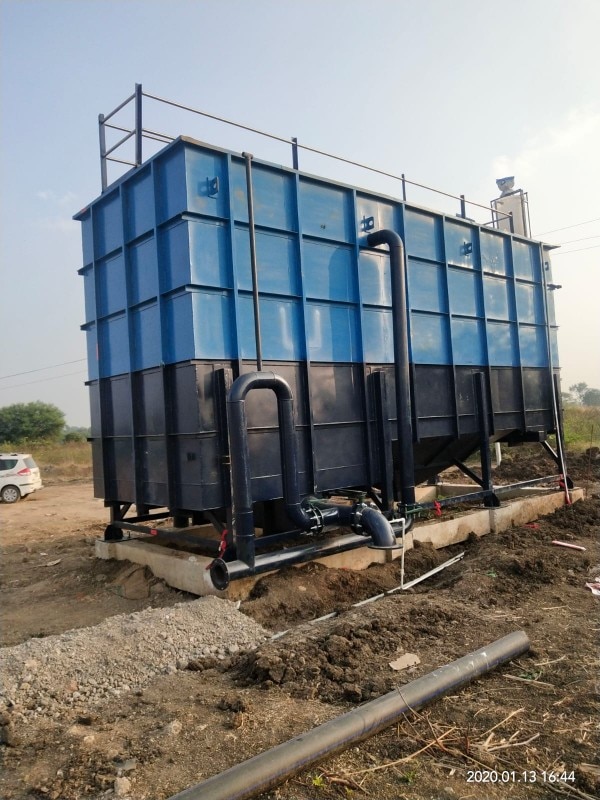 | SEWAGE TREATMENT PLANT Containerized sewage treatment plants are emerging as a sustainable, adaptable, and efficient solution for wastewater management. View product → |
Frequently asked questions
Can a containerized STP plant keep operating when a Nagpur site floods?
Yes, when the installation uses a raised plinth above the site design flood level, perimeter drainage, a sump pump with a high-level alarm, removable flood barriers and backflow prevention on every inlet, overflow and outlet. Protect electrical panels, blowers, controls and chemical storage from floodwater, and define shutdown and restart triggers.
How should you calculate monsoon flow before sizing the plant?
Measure dry-weather sewage flow separately from roof, yard and storm-drain inflows. Use water-meter records, occupancy, discharge patterns and wet-weather flow measurements, then size equalization and hydraulic capacity for the documented peak rather than adding rainwater to the average sewage flow.
What happens to biological treatment during dilution, surges and power cuts?
Rainwater dilution reduces organic loading, while hydraulic surges can wash solids out of the biological reactor. Power cuts stop aeration and pumping, so specify backup power, high-level alarms, equalization volume, controlled restart and sludge-settling checks before returning to normal loading.
How do you prove compliance and safe reuse after a wet-weather event?
Record the event, flows, alarms, bypasses, power interruptions and corrective actions. Test treated water for the parameters in the consent and reuse plan, inspect disinfection performance, retain laboratory reports and release water for irrigation or other reuse only after results meet the specified limits.
What should a Nagpur buyer put into the tender and operating plan?
Specify the design flood level, plinth height, drainage and backflow controls, peak and average flows, equalization volume, standby power, alarm points, restart procedure, sampling schedule, laboratory documentation, sludge handling and operator responsibilities.
Keywords