A package ETP and a DM plant are not interchangeable: one treats polluted effluent, while the other removes dissolved ions from clarified feed water to make process water. By the end, you will be able to match the plant to your wastewater data, define a defensible design basis, compare operating costs and identify when a hybrid or site-specific system is necessary.
Key takeaways
- Use a package ETP for contaminated effluent; use a DM plant for treated water polishing.
- Size the plant from flow records, peak discharge and laboratory wastewater analysis.
- Reject designs that quote capacity without inlet limits, outlet targets or sludge handling.
- Specify testing, commissioning, operator training, spares and compliance documents before purchase.
What problem are you actually trying to solve: effluent treatment or demineralised water?
A package ETP and a DM plant solve different problems. A package ETP treats contaminated wastewater containing suspended solids, oil and grease, biodegradable COD and BOD, metals, colour, toxic chemicals or variable process residues. Its train may include screening, equalisation, oil separation, pH neutralisation, coagulation-flocculation, biological treatment, clarification, filtration and sludge dewatering.
| Plant | Removes or produces | Correct feed and purpose |
|---|---|---|
| Package ETP | Pollutants and treatment sludge | Industrial wastewater for compliant discharge or reuse |
| DM plant | Dissolved ions and low-conductivity water | Filtered, clarified water for process use |
| Both systems | Treated effluent followed by ion removal | Low-conductivity reuse water |
A DM plant for industrial water uses cation exchange to remove positively charged ions, anion exchange to remove negatively charged ions, and a mixed-bed unit to polish conductivity. DM resin does not reliably remove high COD, BOD, oil, suspended solids or changing toxic chemicals; those contaminants foul resin and cause irreversible capacity loss.
Feed the DM system only after low-turbidity filtration and suitable pretreatment. Softening, activated carbon or reverse osmosis may precede the resin beds to control hardness, organics, silica, TDS and fouling. Include acid and caustic regeneration, rinse water and neutralisation waste in the operating-cost and waste-management calculation.
The decision rule for a package ETP plant or DM plant in Nagpur is direct: choose an ETP for contaminated wastewater, a DM plant for clarified water-quality production, or both when treated effluent must become low-conductivity reuse water.
Which wastewater data should determine the plant size and process train?
Base a package effluent treatment plant on measured loads, not the nameplate flow. Sample for at least seven consecutive operating days or representative production cycles, logging flow by shift and batch.
- Record daily flow in m3/day, hourly peak flow, operating hours, batch duration and production quantities.
- Use flow-proportional composite samples to measure average wastewater strength.
- Take grab samples during cleaning, start-up, product changeover and other shock events.
- Test pH, temperature, TSS, BOD, COD, oil and grease, conductivity or TDS, chloride, sulphate, relevant nutrients, colour, metals, solvents, phenols and toxicity indicators.
| Design input | What it reveals | Sizing or process consequence |
|---|---|---|
| Flow pattern | Average and hourly peaks | Equalisation volume, peak factor, pumps and pipework |
| Organic load | BOD, COD and biodegradability | Biological loading, aeration and hydraulic retention time |
| Shock discharge | Toxic, acidic, alkaline or salty batches | Segregation, equalisation and off-specification storage |
| Chemical response | Coagulation or metal precipitation | Chemical demand, sludge quantity and dewatering capacity |
A daily average can hide a two-hour toxic or high-salt discharge that inhibits biology. High TDS is not destroyed biologically; use source segregation, recovery, membranes, evaporation or another disposal route when salts control the design.
Run jar tests for coagulant, polymer and precipitation selection. Use respirometry or a pilot test for inhibitory chemicals, difficult COD, colour and fluctuating batches. These results protect the design from a laboratory average that looks acceptable while the actual process fails.
How should you compare package ETP configurations and recognise a poor fit?
Match the process to the pollutant mechanism, not to a standard tank arrangement. Among industrial wastewater treatment options, dissolved-air flotation (DAF) or oil separation suits free oil and suspended solids; chemical precipitation suits many metal loads; anaerobic treatment suits high-strength biodegradable COD; and SBR, MBBR or MBR suits biodegradable organic load.
| Option | Main mechanism | Best fit |
|---|---|---|
| DAF or oil separation | Floats or separates oil and solids | Free oil, grease and suspended solids |
| Chemical precipitation | Converts dissolved contaminants into settleable solids | Many metal loads |
| Anaerobic treatment | Converts biodegradable organics with low oxygen demand | Suitable high-strength biodegradable COD |
| SBR, MBBR or MBR | Aerobically removes biodegradable organics | BOD and COD needing biological treatment |
For a package etp plant comparison, check average and peak hydraulic capacity, equalisation and storage volume, footprint, civil-work requirement, tank material, installation access, automation, chemical dosing, blower power, membrane or media replacement, sludge quantity, expansion capacity and operator skill.
Judge the offer by guaranteed outlet quality at stated battery limits, not tank volume or process-stage count.
Treat these as poor-fit warnings: highly variable batch effluent, strong solvents, shock toxic loads, high salinity, difficult sludge, very large flows, restricted land, inadequate access for tank placement or near-zero liquid discharge. Use source segregation, a hybrid or site-specific design, pilot testing, RO, evaporation or another residuals strategy instead of a catalogue skid.
A compact package still needs sludge handling, chemical storage, safe access, electrical capacity and laboratory control. Equalisation cannot neutralise a solvent or salt problem, and biological treatment does not destroy dissolved salts.
What must the purchase specification cover beyond capacity and outlet claims?
A purchase specification must define the wastewater the plant will receive, not just its nameplate capacity and promised outlet. State influent ranges, average and peak flow in m³/day, operating hours, temperature, pH, pollutant loads, outlet limits, sampling method, testing frequency and the consequence of a missed performance guarantee.
Specify these operating and site requirements:
- Power consumption, chemical consumption, sludge production and noise limit
- Civil loads, footprint, access and control philosophy
- Equalisation, pH-control, dosing, blower, filtration, dewatering and off-specification storage capacities
For a useful package ETP comparison, require guaranteed results at stated battery limits.
| Item | Package ETP | DM plant for industrial water |
|---|---|---|
| Design basis | Flow, BOD, COD, TSS, oil, metals and toxicity | Feed conductivity, TDS, hardness, silica and turbidity |
| Complete train | Equalisation, treatment, filtration and sludge handling | Pretreatment, filtration, softening or antiscalant, RO where justified, cation and anion beds, mixed-bed polishing |
| Residuals | Sludge, filter media and hazardous-waste handling | Resin capacity, regeneration frequency, acid and caustic storage, rinse-water volume and neutralisation |
Calculate lifecycle cost from electricity, chemicals, resin or media replacement, membranes, sludge dewatering, hazardous-waste handling, laboratory testing and operator time. A DM plant’s acidic and alkaline regeneration waste needs neutralisation capacity.
Schedule VI inland-surface-water limits include pH 5.5–9.0, BOD 30 mg/L, COD 250 mg/L, suspended solids 100 mg/L and oil and grease 10 mg/L. Industry limits and MPCB consent conditions can be stricter. Confirm the permitted receiving environment before selecting the outlet.
What is the most defensible choice for a Nagpur industrial site?
Choose a package ETP for contaminated wastewater, a DM plant for clarified water that must become low-conductivity process water, or both when treated effluent needs further polishing. The defensible package ETP plant or DM plant in Nagpur decision starts with stream segregation, not catalogue capacity.
1. Separate domestic sewage, cooling-tower blowdown, boiler blowdown, wash water, process effluent, concentrated brines and hazardous chemical streams. Test each stream for flow, pH, temperature, TSS, COD, BOD, oil and grease, TDS, chloride, sulphate, metals, colour and toxicity. Do not dilute a toxic batch into the daily average and call it representative.
2. Define the receiving or reuse target: MPCB-approved discharge, sewer acceptance, common effluent treatment facility acceptance, internal reuse, boiler feed, cooling make-up or near-zero liquid discharge. A DM train does not replace an ETP for high COD, BOD, oil, suspended solids or inhibitory chemicals.
3. Treat the MPCB consent under the Water (Prevention and Control of Pollution) Act as the controlling document. It specifies the permitted discharge point, flow, limits, monitoring and reporting; a generic catalogue result does not authorise connection to a sewer, land or surface water.
4. Before ordering, require a site survey, representative sampling, treatability testing for variable or inhibitory effluent, mass balance, P&ID, equipment list, civil-load schedule, commissioning plan, operator training and performance-guarantee protocol. Include sludge handling and regeneration waste in the design.
For a Nagpur buyer, S K ENTERPRISES can help evaluate industrial wastewater treatment options against site constraints rather than selecting a standard unit. The outcome may be an ETP, an ETP-plus-RO DM polishing train or a purpose-built hybrid.
Related product
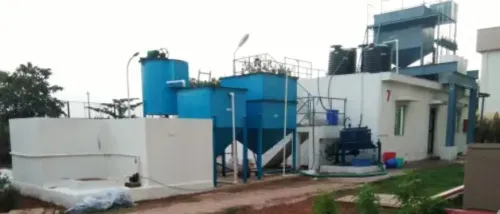
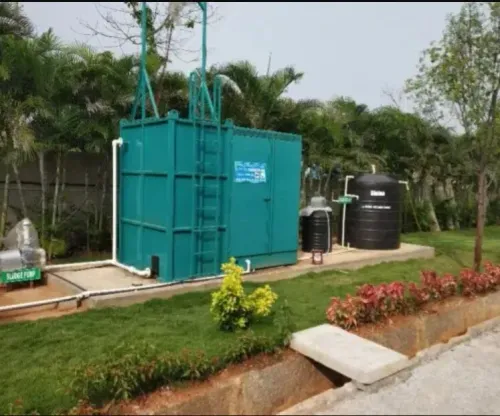
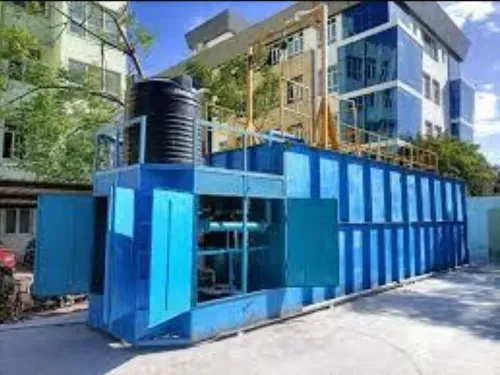
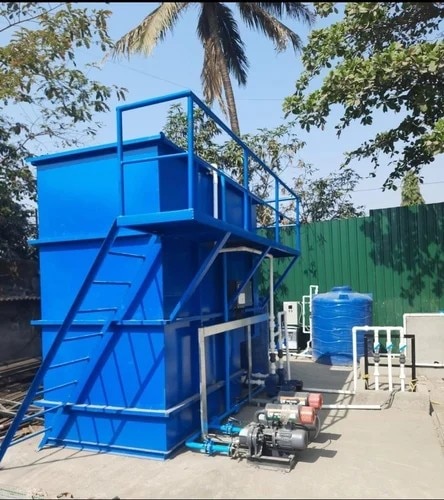 | EFFLUENT TREATMENT PLANTS A package ETP (Effluent Treatment Plant) is a compact, pre-engineered, and often skid-mounted wastewater treatment system designed for quick... View product → |
Frequently asked questions
What problem does a package ETP solve compared with a DM plant?
A package ETP treats contaminated industrial wastewater containing pollutants such as suspended solids, oil and grease, biodegradable BOD and COD, metals, colour or process chemicals. A DM plant removes dissolved ions from relatively clean, pretreated water to produce demineralised water.
Which wastewater data should determine a package ETP plant size?
Use measured average and peak flow, operating hours, batch-discharge patterns and laboratory results for pH, TSS, BOD, COD, oil and grease, conductivity, metals and other process-specific pollutants. Include equalisation volume and sludge production in the design.
How can you recognise a poor package ETP configuration?
Treat a design as a poor fit when it uses generic inlet assumptions, omits equalisation for variable flows, ignores toxic or non-biodegradable COD, provides no sludge route, or promises an outlet quality without test conditions and sampling details.
What should a package ETP purchase specification include?
Specify design flow, inlet ranges, outlet limits, process guarantees, tank and equipment materials, automation, power demand, chemical consumption, sludge dewatering, civil and utility interfaces, commissioning tests, operator training, spares, warranties and compliance records.
When is a DM plant appropriate for a Nagpur industrial site?
Choose a DM plant when your process needs low-conductivity water and the feed has already received suitable clarification, filtration and other pretreatment. Do not use a DM plant as a substitute for treating raw industrial effluent.
Keywords