A containerized sewage plant does not achieve zero liquid discharge by biological treatment alone. You need a measured treatment train, disciplined operating routines, separate handling for incompatible waste, and records that reconcile every liquid and solid leaving the site. By the end, you will be able to define the equipment, checks, sampling and service scope required for reliable ZLD operation in Nagpur.
Key takeaways
- Document every water and solids stream in the ZLD mass balance.
- Trigger maintenance from pressure, flow, conductivity and recovery readings.
- Control wet-weather inflow before it overloads the treatment train.
- Demand sampling records, compliance files and defined emergency response times.
Build the ZLD train and prove the mass balance
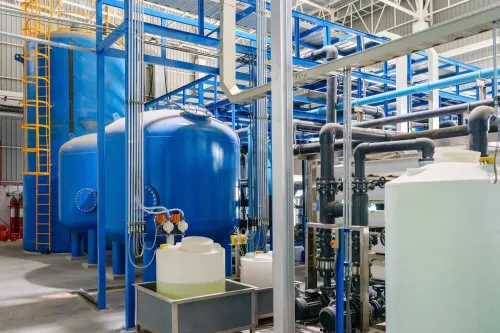
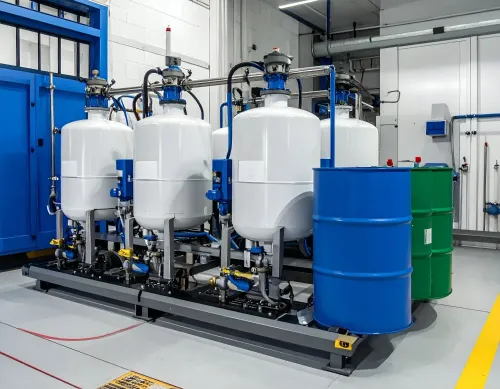
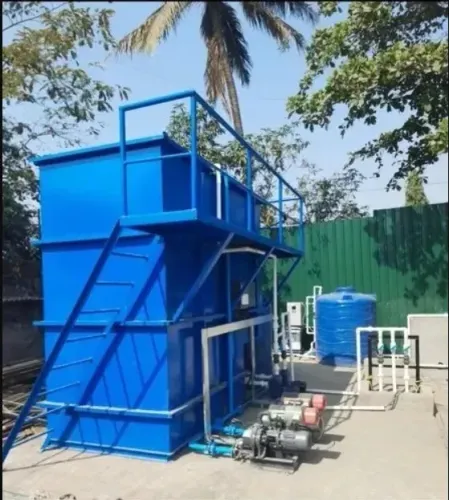
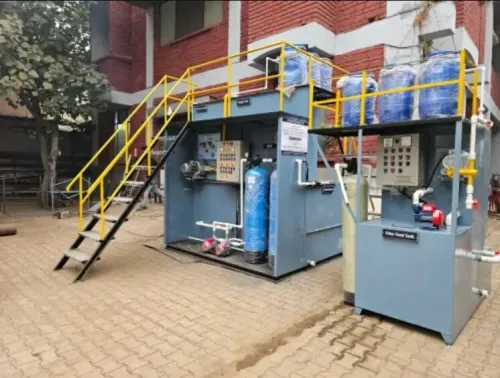
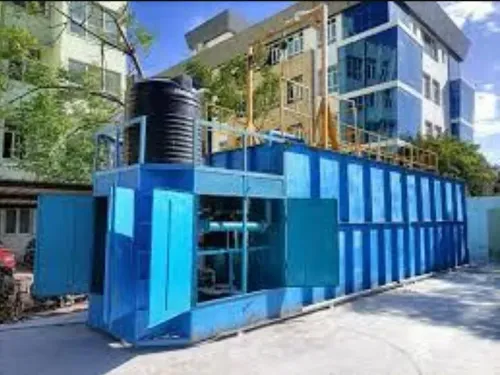
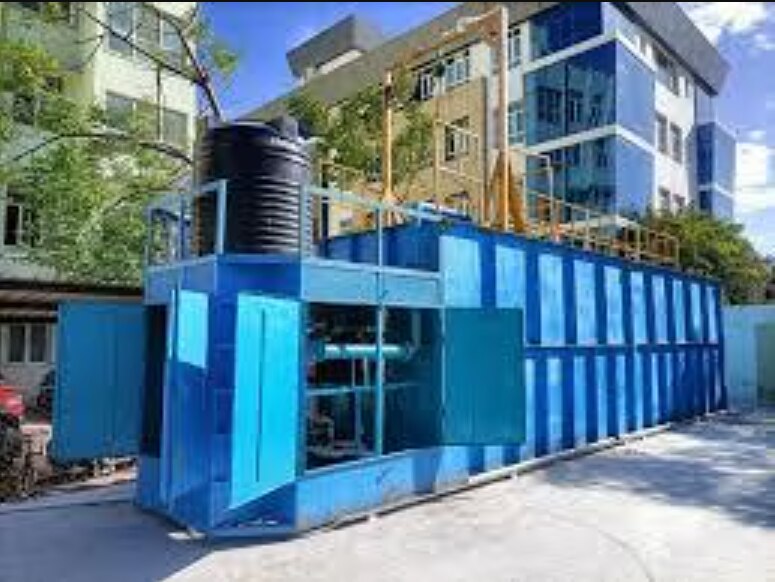
A containerized STP plant for care and zero liquid discharge in Nagpur needs more than a biological reactor. Its train must carry sewage through tertiary filtration, ultrafiltration, reverse osmosis, and a brine concentrator or evaporator, followed by a crystallizer or approved salt-handling system. Sludge dewatering and authorized removal complete the solids route.
Sending RO reject to a drain, sewer, stormwater line or soak pit disqualifies the claim.
Install calibrated flowmeters on every principal liquid stream and reconcile them each day:
- Sewage influent entering the plant
- Treated water sent for reuse
- RO permeate and RO reject
- Evaporator condensate and evaporator blowdown
- Filter backwash and membrane-cleaning waste
- Sludge, concentrated brine and recovered salts
A zero liquid discharge STP in Nagpur needs holding tanks and interlocks for high inflow, power failure, RO or evaporator shutdown, membrane cleaning and off-specification water. Recirculate or hold failed-quality water; never rely on the tank itself as proof of ZLD.
Keep daily flow totals, tank-level trends, conductivity, laboratory results, chemical consumption, bypass events, breakdowns, corrective actions, sludge manifests and ZLD-solid transfer receipts. Reconcile the water balance: influent must equal reuse, evaporation or condensate, retained inventory, sludge-associated moisture and authorized solids handling. An occasional compliant sample cannot explain an unmetered reject stream.
A level foundation, ventilation, earthing, drainage, chemical storage, fire protection and maintenance clearance remain necessary despite containerization.
Set a Nagpur operating schedule around measurable triggers
Run the plant from measured triggers, not calendar visits. For containerized STP maintenance in Nagpur, record the biological reactor, membranes, pumps, blowers, dosing equipment and ZLD train separately. A low dissolved-oxygen alarm, rising membrane pressure or falling evaporator condensate flow needs action before treated water goes off-specification.
| Interval | Checks and records | Action trigger |
|---|---|---|
| Daily | Log influent and reuse flow, pH, tank levels, leaks, odour, blower sound and discharge pressure. Check DO at 2–4 mg/L, chemical levels, pump seals, RO permeate conductivity, TMP, recovery, evaporator temperature, condensate flow and salt-bin level. | Investigate a DO deviation, abnormal noise, visible leak, conductivity rise, blocked strainer or falling condensate flow the same shift. |
| Weekly | Inspect diffusers, air headers, pumps, dosing lines, valves, cartridge filters and electrical alarms. Measure MLSS, sludge blanket depth, turbidity and membrane feed pressure. | Clean a fouled diffuser or filter; adjust wasting only against MLSS and blanket results, not appearance. |
| Monthly | Calibrate pH, DO, conductivity, flow and level instruments against certified references. Inspect panels, earthing, insulation, corrosion under insulation and evaporator tubes. Trend normalized permeate flow and TMP. | Clean membranes when normalized flow falls 10–15% or TMP rises 15%; schedule descaling when inspection or heat-transfer loss confirms fouling. |
| Seasonal | Before monsoon, trace stormwater entry, test drainage, standby power and holding capacity. Before summer, verify ventilation, cooling, chemical storage and evaporator protection. | Divert or hold off-specification water during hydraulic overload, RO shutdown or evaporator shutdown; never use a holding tank as proof of ZLD. |
Keep calibration certificates, cleaning records and trend graphs with the shift log. Two consecutive trigger breaches require a root-cause check rather than another routine service visit.
Control influent, startup, shutdown and wet-weather events
Put every abnormal load behind equalization and an interlock, not directly into the biological reactor. Measure influent flow, pH, conductivity and temperature; isolate a tanker, solvent, disinfectant, oil or high-salinity waste outside the approved sewage envelope. Divert it to a labelled quarantine tank for identification and authorized disposal.
Do not dilute incompatible waste and call it treatment.
During STP plant operation in Nagpur, treat monsoon inflow as a hydraulic event, not proof of low organic loading. Check manholes, roof drains, leaks and unauthorized stormwater connections before changing sludge wasting or adding feed. Use high-level alarms and automatic diversion to a holding tank; off-specification water must return to treatment or remain contained.
- On startup, fill equalization first, start screening and biological aeration, confirm stable pH and dissolved oxygen, then enable filtration, RO and evaporation in sequence. Open the ZLD train only after turbidity and conductivity meet design limits.
- If power fails or RO, evaporator or cleaning systems stop, close the discharge path and hold or recirculate every affected stream. Record separate volumes for RO reject, backwash, cleaning waste and condensate.
- Before shutdown, stop feed, reduce biological loading gradually, keep aeration and mixing on for retained biomass, and flush membranes with approved water and preservative. Drain or preserve evaporator circuits as specified; stagnant concentrate accelerates scaling and corrosion.
A restart requires leak checks, instrument verification and gradual loading. Never route reject, blowdown or off-specification water to a drain, stormwater line or soak pit; a holding tank protects ZLD temporarily but does not create ZLD by itself.
Verify treatment performance with samples and compliance records
A zero liquid discharge STP in Nagpur proves compliance through a reconciled evidence trail, not one passing sample. Collect time-stamped samples from treated-water reuse, RO permeate, evaporator condensate and final solids, using clean containers, chain-of-custody forms and laboratory reports that identify the sampling point, method and detection limit.
- Test treated and reuse streams against the MPCB consent and the intended reuse condition: pH, suspended solids, BOD, COD, conductivity or TDS, residual chlorine and microbiological indicators. Add parameters named in the consent, such as oil and grease, nutrients or specific metals.
- Record chlorine dose with chlorine demand, contact time, pH, residual chlorine and suspended solids. A dose alone cannot prove disinfection; verify UV transmittance and sleeve condition where UV is installed.
- Fit and archive flowmeter readings for sewage influent, reuse water, RO permeate and reject, evaporator condensate and blowdown, filter backwash, sludge and chemical-cleaning waste. Reconcile inputs, recoveries and outputs every reporting period.
- Weigh sludge, salts and crystallizer solids, then retain transporter receipts, authorised disposal or reuse records and hazardous-waste documents where applicable. An unaccounted liquid stream defeats the ZLD claim.
Keep MPCB Consent to Establish, Consent to Operate, calibration certificates, laboratory reports, online logs, bypass alarms, breakdowns, corrective actions and off-specification diversion records together. Holding tanks protect compliance during failures; they do not prove ZLD unless every held stream is later recovered or lawfully managed.
Specify the service contract beyond a monthly visit
A monthly visit is not a ZLD maintenance plan. Your contract should assign responsibility for biological treatment, membranes, pumps, blowers, dosing, instruments and evaporation equipment separately, with scheduled work and response times for each system.
Ask the provider to include:
- Daily remote review or operator verification of flow, pH, dissolved oxygen, tank levels, conductivity, turbidity, permeate flow, membrane pressure and leaks.
- Weekly inspection and cleaning of strainers, diffusers, dosing lines, pumps, blower filters and electrical connections.
- Monthly calibration or verification of pH, flow, pressure, level and conductivity instruments, with calibration certificates and recorded corrective action.
- Quarterly membrane cleaning, valve exercising, panel checks and electrical earthing inspection; define replacement criteria for fouled membranes, failed seals, diffusers and sensors.
- Planned evaporator inspection, tube descaling and corrosion-under-insulation checks, rather than waiting for falling condensate quality or rising power use.
- Consumables and critical spares by name: chemicals, filter elements, pump seals, belts, sensors, blower parts and membrane-cleaning chemicals.
- Sampling and laboratory testing, including chain-of-custody records, plus logs for RO reject, condensate, blowdown, sludge and ZLD solids.
- Monsoon checks for stormwater entry, equalization capacity and bypass prevention; define what happens during power failure, RO or evaporator shutdown and off-specification water.
- Sludge dewatering, transport and lawful disposal, with weighment or receiving records.
A quote for containerized sewage plant service in Nagpur that excludes these items is incomplete. S K ENTERPRISES should state each inclusion, exclusion, visit frequency and emergency response time in writing; containerized stp maintenance in nagpur is only as reliable as those boundaries.
Related product
 | SEWAGE TREATMENT PLANT Containerized sewage treatment plants are emerging as a sustainable, adaptable, and efficient solution for wastewater management. View product → |
Frequently asked questions
What equipment belongs in a containerized ZLD STP train?
The train carries sewage through biological treatment, tertiary filtration, ultrafiltration, reverse osmosis, brine concentration or evaporation, and crystallization or an approved salt-handling system. Sludge dewatering and authorized removal complete the solids route.
How should you schedule containerized STP maintenance in Nagpur?
Base the schedule on measurable triggers such as differential pressure, permeate flow, conductivity, recovery, chemical consumption and equipment alarms, rather than relying only on a monthly visit.
What records prove zero liquid discharge performance?
Keep flowmeter readings for each major stream, daily operating logs, laboratory sample results, calibration records, chemical and sludge records, reject or salt dispatch documents, alarm reports and corrective-action records.
What should a containerized sewage plant service contract include?
Specify visit frequency, remote monitoring, response times, operator duties, preventive-maintenance tasks, spare-parts responsibility, sampling and laboratory scope, emergency call-outs, reporting formats and exclusions.
Keywords