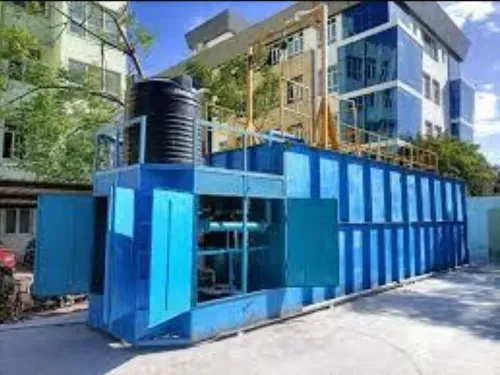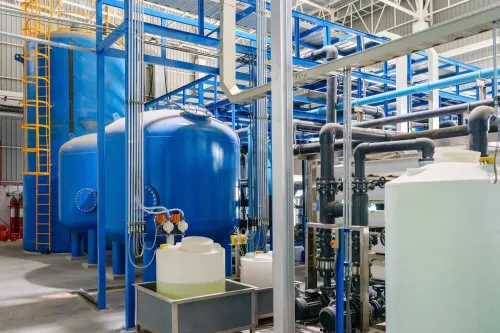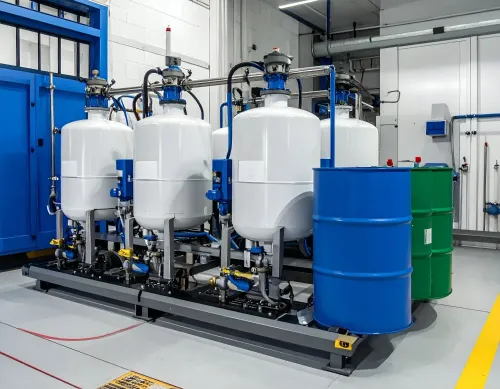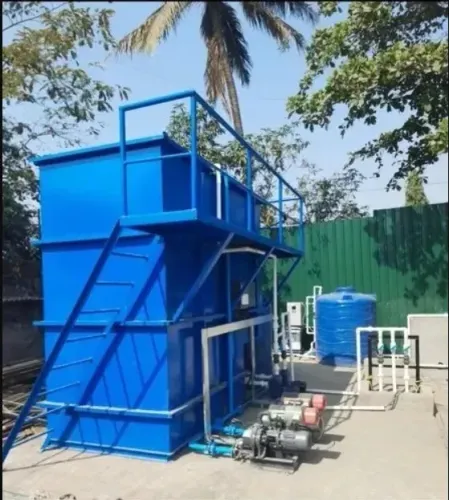
An MBR produces a low-solids biological effluent, but zero liquid discharge requires additional desalination, concentration and residue management. By defining the institution’s wastewater sources, reuse targets, local consent conditions and complete water balance, you can decide whether an MBR belongs in the treatment train and specify equipment that can operate through Nagpur’s occupancy and seasonal changes.
Key takeaways
- Map evaporation, RO, MBR and residue handling before sizing membranes.
- Use occupancy, operating hours and wastewater sources to set the design basis.
- Control oil, solids, chemicals and salinity before they reach the membranes.
- Specify water-quality targets separately for flushing, cooling, gardening and reuse.
Map the complete ZLD train before choosing the MBR
An MBR is only one step in a zero liquid discharge ETP. Map the full train before selecting membrane area, flux or blower capacity:
| Stage | Required outcome | Failure if omitted |
|---|---|---|
| Source segregation, fine screening, grease removal and equalisation | Keep wipes, fibres, plastics, grit, oil and flow shocks away from biology | Membrane fouling, toxicity or hydraulic overload |
| Biological treatment and MBR filtration | Remove biodegradable organics, nutrients, suspended solids and biomass | Poor permeate quality and unstable operation |
| Reverse osmosis | Separate dissolved salts and produce reusable water | MBR permeate still carries most TDS, hardness and chloride |
| Evaporator, crystalliser or accepted recovery route | Manage RO reject and recover condensate or salts | Reject becomes an unauthorised liquid discharge |
MBR membranes retain suspended solids and microorganisms, but most dissolved salts pass through. An MBR effluent treatment plant is therefore not itself a ZLD system, and an MBR ETP for zero liquid discharge in Nagpur needs downstream brine management.
Treat ZLD as a mass-balance claim. Require meters and records for influent, permeate, RO product, RO reject, evaporator condensate, sludge, crystallised salts, wash water, bypasses, drain connections and trucked waste. Include chemical-cleaning solutions, concentrated brine, sludge dewatering liquor and every overflow.
Obtain the written Maharashtra Pollution Control Board consent condition, environmental clearance or project requirement that mandates ZLD. Do not assume every Nagpur institution needs thermal evaporation; specify it only when the accepted compliance route requires it.
Build the Nagpur institutional design basis from people, hours and sources
Size an MBR ETP plant for institutions from people, operating hours and wastewater sources, not from a nominal KLD label. The design basis for Nagpur must reflect hospitals, colleges, hostels, hotels and multi-building campuses.
1. Record resident occupants, day visitors, staff, hospital beds, hotel rooms, kitchen covers, laundry loads and laboratory schedules. Separate weekday, weekend, holiday, examination, vacation, summer and monsoon operation.
2. Measure 24-hour inflow profiles and report average daily flow, maximum daily flow, peak hourly flow, minimum turndown flow and required equalisation volume. Use conservative, documented assumptions where meters or sampling records are missing; otherwise, a low-occupancy period can starve biology while a kitchen or laundry surge overloads it.
3. Sample each source for pH, BOD, COD, TSS, oil and grease, ammonia, total nitrogen, total phosphorus, conductivity, TDS, hardness, chloride, sulphate, silica and pathogen indicators. Test toilet sewage, kitchen wastewater, laundry wastewater, laboratory wastewater and cooling-tower blowdown separately.
4. Keep stormwater in its own drainage system. Isolate laboratory, workshop, swimming-pool and hospital streams when disinfectants, solvents, metals, pharmaceuticals or concentrated chemicals could inhibit biomass or damage membranes.
5. Use the resulting profile to specify screens, equalisation, biological capacity and standby equipment for an MBR effluent treatment plant. An MBR ETP plant for institutions needs a source-by-source mass balance before its permeate can feed the downstream ZLD system.
Specify pretreatment around the contaminants that damage membranes
A coarse bar screen does not protect an MBR effluent treatment plant. Hair, fibres, wipes, plastics, grit and kitchen grease can block pumps, foul membranes and upset the biological reactor before the system reaches its design load.
1. Specify a fine screen that captures hair, fibres, wipes and plastics, with automatic cleaning and accessible screenings disposal. Add grit removal when sand, silt or mineral solids enter the collection network.
2. Route kitchen wastewater through a sized grease trap or dissolved-air flotation unit. A coarse bar screen cannot remove emulsified oil and grease. Use equalisation with mixing and controlled pumping to absorb laundry surges, cleaning discharges and low-occupancy periods.
3. Set pH control, nutrient balance and chemical dosing from measured influent results. Isolate streams containing disinfectants, pharmaceuticals, solvents or laboratory chemicals; oils and toxic chemicals can inhibit biomass, while saline feed can make an MBR the wrong first choice.
4. Before RO, require cartridge filtration and select softening, antiscalant, dechlorination or other treatment from hardness, alkalinity, silica, sulphate, chloride, TDS and organic-loading data. High hardness and silica scale membranes; high chloride accelerates corrosion, and high TDS reduces recovery while increasing reject volume.
5. Put cleaning chemistry, cleaning frequency, allowable flux decline and recovery after cleaning into the tender. Define these for the complete zero liquid discharge ETP, not in a supplier brochure. A predominantly saline or toxic stream needs separate treatment before you reassess its biological fraction.
Match each institutional reuse point to a water-quality target
One MBR permeate specification cannot prove fitness for every reuse point. Institutional wastewater reuse must match water quality to the exposure, equipment and receiving environment.
1. Toilet flushing and floor washing require reliable pathogen control, low turbidity and odour control. Use separate treated-water storage, colour-coded non-potable pipework and backflow prevention; document a disinfectant residual or an equivalent pathogen barrier.
2. Gardening requires limits for salinity, sodium, chloride and nutrients. Excess salts accumulate in soil, while sodium can damage soil structure and reduce infiltration. Test irrigation water and soil, not just the MBR outlet.
3. Cooling-tower makeup needs tighter control of conductivity, hardness, silica and chloride, plus corrosion, scaling, cycles of concentration and biological growth. RO may be necessary for cooling makeup even when toilet flushing needs only disinfected MBR permeate.
4. Laundry and process use need application-specific limits for hardness, colour, residual disinfectant and chemicals that affect fabric, equipment or product. A water suitable for flushing can still stain textiles, corrode equipment or contaminate production.
Sample at the point of use, not only in the MBR tank. The tender for an MBR ETP plant for institutions must identify each reuse point, target parameters and sampling frequency.
“BOD below 10 mg/L” does not establish fitness for every use or replace the Nagpur installation’s Maharashtra Pollution Control Board consent conditions. Cross-connection protection remains essential even after a compliant laboratory result.
Compare lifecycle performance, guarantees and residue routes
Do not award an mbr etp for zero liquid discharge in nagpur on its brochure BOD value. Make acceptance testing cover low occupancy, normal occupancy and peak load, with independent samples and recorded flows.
| Condition | Tender guarantee | Evidence to demand |
|---|---|---|
| Low occupancy | Stable operation, permeate quality and low-load start-up | Flux, pressure, blower energy and alarm records |
| Normal occupancy | Treated-water quality, membrane-area or permeate-flux basis | Laboratory results and online trends |
| Peak load | Reject volume, RO recovery and evaporator availability | Mass balance, power or steam readings and crystallised-salt quantity |
Specify cleaning recovery, cleaning frequency, thermal energy or electrical demand, corrosion allowance, and consequences for missed guarantees. State evaporator capacity against actual RO reject flow, not nominal plant capacity.
Require these installed and documented:
- Online flow, pH, conductivity, turbidity and pressure instruments, calibrated before acceptance
- Standby pumps and blowers, spare membranes, operator staffing, training and alarm-history access
- Guaranteed RO product quality, RO recovery, evaporator condensate quality and start-up performance
- A full water balance covering influent, permeate, RO product, reject, condensate, wash water, bypasses, biological sludge, thickening, dewatering, storage and lawful disposal
ZLD does not eliminate waste activated sludge. Require credible, consent-compatible routes for RO reject, salts and spent cleaning chemicals; an overflow to stormwater invalidates the claim.
S K ENTERPRISES can translate operating data, reuse targets and consent conditions into performance-based procurement, but retain independent sampling, acceptance testing and failure remedies in the contract.
Related product
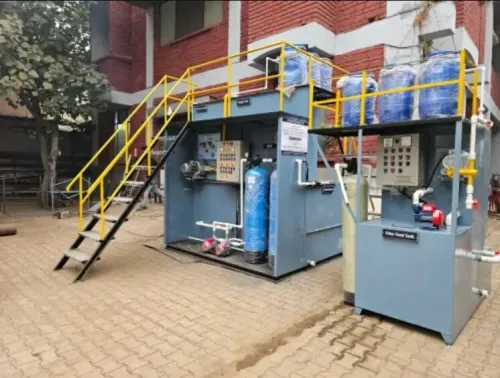
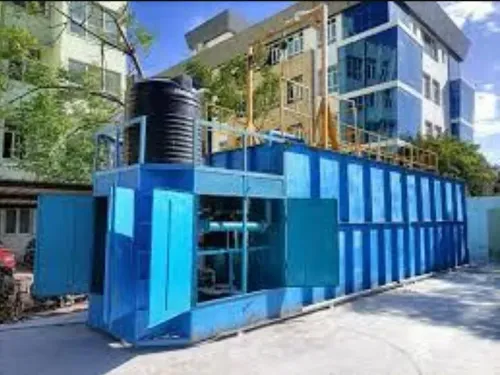
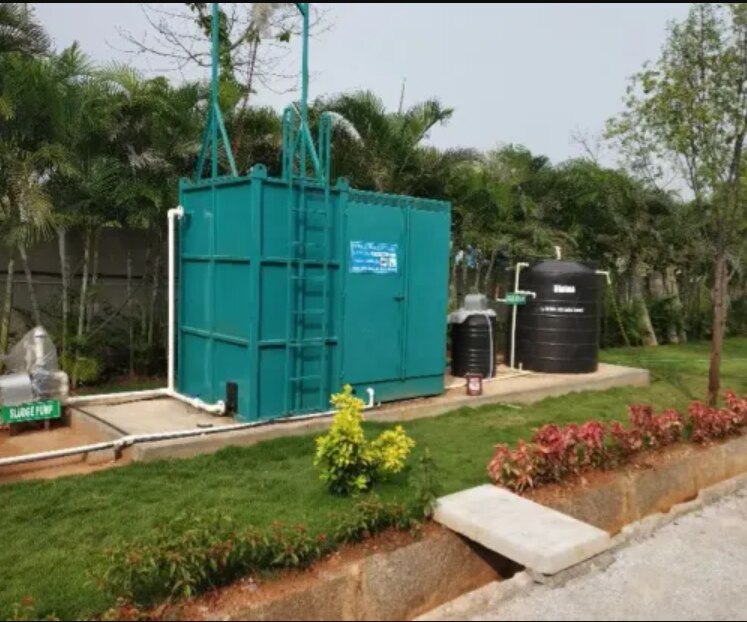
 | EFFLUENT TREATMENT PLANTS MBR ETP (MEMBRANE BIO REACTOR) PLANT An MBR ETP is a Membrane Bioreactor Effluent Treatment Plant. View product → |
Frequently asked questions
Why must you map the complete ZLD train before choosing an MBR?
An MBR is one biological treatment step. Map equalisation, pretreatment, MBR, RO, evaporation, crystallisation and residue handling before setting membrane area, flux or blower capacity.
What belongs in a Nagpur institution’s MBR design basis?
Record occupancy, operating hours, peak flows, seasonal variation and wastewater sources such as toilets, kitchens, laundries, laboratories and cooling systems.
Which contaminants require pretreatment before an MBR?
Screen and control fats, oils and grease, grit, hair, fibres, toxic chemicals, high salinity and suspended solids before biological treatment and membrane filtration.
How should an institution set reuse targets for treated water?
Set a separate water-quality target for each use, including toilet flushing, cooling towers, gardening, cleaning and other institutional applications.
How should you compare MBR ETP proposals for ZLD?
Compare lifecycle power, chemicals, membrane replacement, cleaning frequency, guaranteed outlet quality, sludge and concentrate handling, and the legal route for final residues.
Keywords