A 25 KLD unit is not automatically suitable for a factory producing 25 m³ of wastewater per day: hourly peaks, batch discharges and pollutant concentration can change the design completely. By the end, you will be able to calculate a realistic capacity range, identify the treatment stages your wastewater needs, and compare containerized, skid-mounted, civil-built and modular options before requesting a quotation.
Key takeaways
- Size the plant from measured peak flow and pollutant load.
- A 100-KLD rating does not support every 100-m³ batch discharge.
- Choose treatment stages from wastewater chemistry and reuse targets.
- Specify performance, civil work, controls and commissioning before comparing suppliers.
How to Choose Among 25, 50, 100, 250 and Higher KLD Options
Choose the size from measured flow peaks and pollutant load, not from the factory’s water bill. A 100-KLD containerized ETP sizes label means roughly 100 m³/day of nominal hydraulic treatment, but it does not guarantee capacity for a 100-m³ batch discharge or heavily contaminated wastewater.
| Option | Nominal hydraulic capacity | Suitable starting point |
|---|---|---|
| 25 KLD | 25 m³/day | Small, steady streams with limited batch variation |
| 50 KLD | 50 m³/day | One-shift operations or moderate daily discharge |
| 100 KLD | 100 m³/day | Larger steady flows after hourly monitoring |
| 250 KLD | 250 m³/day | Multiple production lines with equalization |
| Higher | Above 250 m³/day | Expansion, multiple trains, or high-volume operations |
- Calculate average discharge: total wastewater per operating day divided by operating hours. Record hourly flow for at least several representative production days.
- Compare the maximum hourly flow and largest batch volume with the inlet and equalization capacity. Cleaning cycles, shift changes and tanker unloading need storage rather than a permanently oversized biological reactor.
- Calculate pollutant mass loading: flow in m³/day × concentration in mg/L ÷ 1,000 equals kilograms per day. Check COD, BOD, TSS, oil and grease, TDS, pH, temperature and metals separately.
For a containerized ETP plant in Nagpur, reserve capacity for documented production growth, but do not solve every peak by selecting the next larger box. Equalization, screening, power, chemical storage, sludge handling and treated-water storage can determine the real footprint of your chosen containerized ETP sizes.
Why the Same KLD Rating Can Require a Different Plant
A 100 KLD plant receiving 500 mg/L COD must remove 50 kg of COD daily; at 100 mg/L, it removes only 10 kg. The hydraulic rating is identical, but the biological reactor, blower capacity, chemical consumption and sludge production are not.
Calculate each pollutant’s daily mass load as flow in m³/day × concentration in mg/L ÷ 1,000. Use that result alongside peak hourly flow, operating hours and batch discharges. A cleaning cycle or tanker unloading event can send a short, concentrated load that overwhelms a plant sized from the daily average.
Check these differences before selecting a containerized effluent treatment plant in Nagpur:
- High BOD or COD requires more aeration capacity, reactor volume and oxygen-transfer control; toxic solvents or salinity can inhibit the biology and require separate treatment.
- Oil and grease demands screening, an oil separator or dissolved-air flotation before biological treatment, or the oil will foul membranes and reduce oxygen transfer.
- Metals, extreme pH or colour can require neutralisation, coagulation-flocculation and chemical precipitation, increasing dosing pumps, storage and sludge production.
- Higher TSS, precipitated metals and chemical solids require larger sludge storage, thickening or dewatering equipment.
- Uneven hourly flow requires equalization sized from the measured inflow and concentration profile, not simply from KLD.
A smaller-flow factory with difficult wastewater can therefore need more chemical storage, a larger blower and heavier sludge handling than a higher-flow factory with readily biodegradable effluent. The correct comparison is pollutant load and discharge target, not KLD alone.
Match the Treatment Train to Your Wastewater and Site Constraints
Influent data determines whether a container can house the treatment train or only the mechanical and electrical equipment. Test pH, BOD, COD, TSS, TDS, oil and grease, temperature, colour, salinity, solvents and heavy metals across representative production batches.
Record peak hourly flow, batch discharge volume and the reuse or discharge target; consent limits depend on your industry, outlet and MPCB conditions.
Before selecting a portable ETP plant in Nagpur, obtain:
- A flow profile showing average daily flow, peak flow, operating hours and batch releases.
- Laboratory results for pH, BOD, COD, TSS, TDS, oil and grease, temperature and colour.
- Metal-specific results for chromium, nickel, copper, zinc, iron, lead and mercury when process chemicals could introduce them.
- Solvent, salinity and toxicity information where biological treatment could be inhibited.
- The required final quality for reuse, sewer discharge, surface-water discharge or zero-liquid-discharge treatment.
| Treatment stage | What it handles | When it needs external equipment |
|---|---|---|
| Equalization and screening | Flow surges, rags and grit | Use an external tank when batch volume or required retention exceeds container volume. |
| pH correction and chemical pretreatment | Acidity, alkalinity, oil, colour and metals | Add external reaction tanks, flash mixers or clarifiers for high chemical demand or sludge production. |
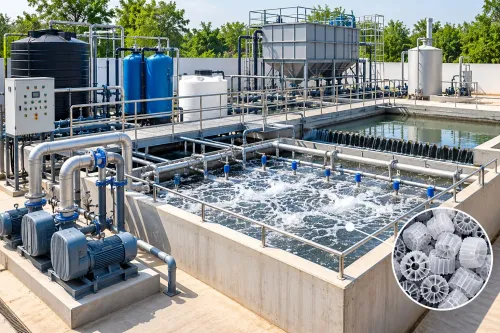
| Biological aeration | BOD and biodegradable COD | External aeration tanks are needed when pollutant loading requires long retention or large blower capacity. |
| Clarification, filtration and sludge handling | Biomass, suspended solids and chemical sludge | Provide external clarifiers, filter presses, sludge tanks and treated-water storage when maintenance access or storage volume will not fit. |
A 20-foot container has about 5.9 metres of internal length and a 40-foot unit about 12 metres, before walkways, panels and removal clearances reduce usable space. Expect external tanks, bunded chemical storage, ventilation, power, piping and safe discharge connections.
Containerized, Skid-Mounted, Civil-Built or Modular: Which Option Fits?
The fastest installation is usually containerized, but the lowest lifecycle cost is often civil-built when the plant will stay on one site for years. Compare the complete installed system, not the number of boxes.
| Option | Installation and relocation | Expansion, civil work and access | Lifecycle cost |
|---|---|---|---|
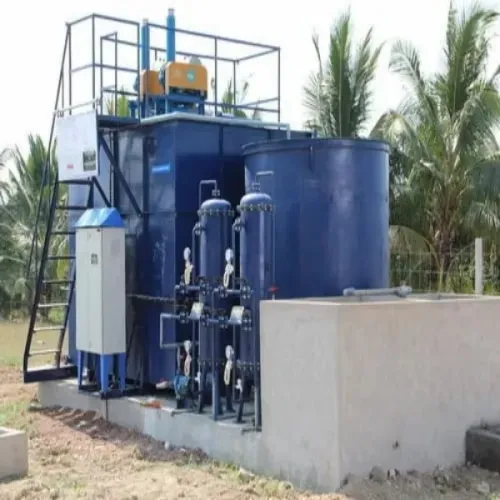
| Containerized | Factory-assembled; fastest commissioning and easiest relocation by crane or truck | Needs a level foundation, external tanks, piping, power, chemical storage and sludge handling; narrow doors restrict maintenance removal | Higher transport and space costs, but less site construction |
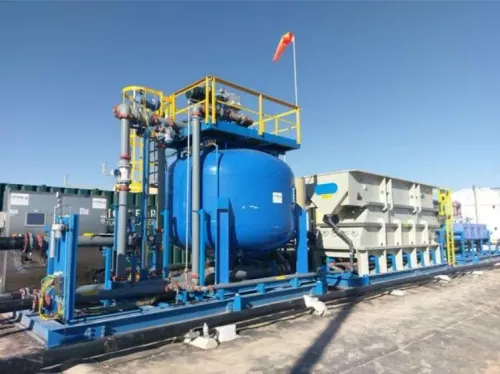
| Skid-mounted | Quick equipment placement; relocation is practical after disconnecting services | Requires site-built tanks, shelter, pipe racks and walkways; access is good if the layout is not crowded | Competitive for phased projects; civil additions increase the final cost |
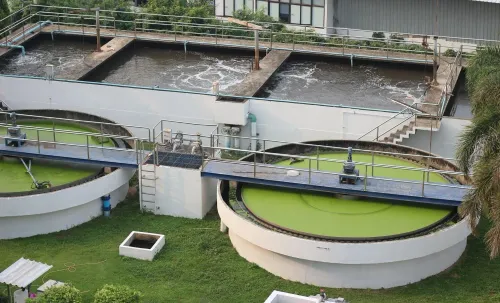
| Civil-built | Slowest because excavation, concrete curing, piping and commissioning occur on site | Best access, headroom and flexibility; expansion needs reserved land and tie-in planning | Often lowest cost per KLD at steady, long-term operation |
| Modular | Parallel process trains shorten additions and preserve operating redundancy | Common equalization, dosing, sludge, treated-water and discharge systems can bottleneck; provide service clearances | Expansion is predictable, but shared-system upgrades can erase the saving |
A modular industrial ETP plant should add a complete biological train rather than overload one reactor. Check the quotation for maximum hourly flow, pollutant mass load, equalization volume, connected electrical load, chemical use, sludge generation, membrane reject and civil exclusions.
A portable ETP plant in Nagpur is transportable, not plug-and-play. Budget for sampling access, maintenance lifting space, safe discharge or reuse piping and future relocation work. Containerized ETP sizes also impose layout limits: a 20-foot unit has about 5.9 metres of internal length and 2.35 metres of width.
What to Put in the Specification Before Selecting a Nagpur Supplier
Require a supplier to price the actual site, not only a nominal KLD module. For a containerized ETP plant in Nagpur, provide the plot dimensions, level foundation, inlet and outlet elevations, electrical supply, operating hours, access for cranes and maintenance, sludge route, chemical-storage area, and future expansion space.
| Detail | Put in the quotation | Put in the performance guarantee |
|---|---|---|
| Site | Equipment footprint, external tanks, utilities and civil work | Design loads, power demand and exclusions |
| Compliance | MPCB consent basis, discharge or reuse route and sampling point | Treated-water limits, test methods and averaging period |
| Performance | Influent flow, peak hourly flow, batch volume, pH, COD, BOD, TSS, TDS, oil and grease, temperature, colour, metals, solvents and salinity | Outlet values at the stated influent envelope and permitted bypass conditions |
| Relocation | Dismantling, lifting points, transport dimensions and reconnection scope | Performance after relocation, recommissioning tests and responsibility for site changes |
Do not accept “meets norms” as a guarantee. Identify the applicable Maharashtra Pollution Control Board consent conditions and Environment (Protection) Rules standard; online monitoring belongs in the specification only when your industry or consent requires it.
Make pretreatment explicit: screens, grit removal, oil separation, pH correction, coagulation-flocculation and metal precipitation must follow the analysis. S K ENTERPRISES should also state which items remain outside the container.
A portable ETP plant in Nagpur still needs piping, power, chemical storage, sludge handling and a safe discharge connection. Confirm these interfaces before treating a containerized effluent treatment plant in Nagpur as relocatable.
Frequently asked questions
How do you choose between 25, 50, 100, 250 and higher KLD options?
Use measured daily flow, peak hourly flow, batch volumes and pollutant load. A KLD rating describes nominal daily hydraulic capacity, not automatic suitability for high-strength or batch wastewater.
Why can two plants with the same KLD rating be different?
Wastewater strength, pH, oil, suspended solids, biological oxygen demand, chemical oxygen demand, toxicity and discharge targets determine tank volumes, equipment and treatment stages.
When is a containerized or skid-mounted ETP better than a civil-built plant?
Containerized and skid-mounted systems suit restricted sites, faster deployment and relocations. Civil-built systems suit larger footprints, permanent installations and designs requiring substantial tank volume.
What should you include in an ETP specification before selecting a Nagpur supplier?
State inlet flow and analysis, peak and batch conditions, outlet limits, reuse goals, power availability, footprint, civil scope, automation, testing, commissioning and operator support.
Keywords