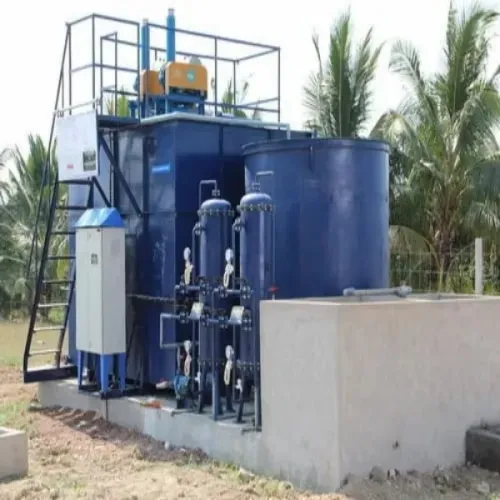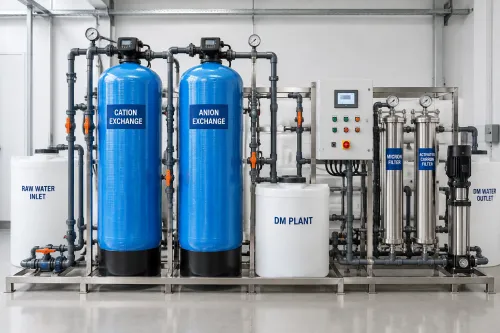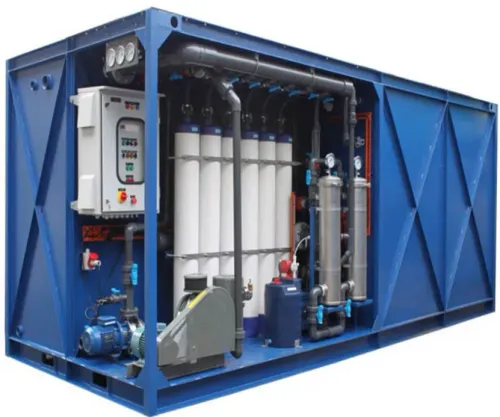
Nagpur factories can lose production time and water quality when borewell hardness, monsoon silt, iron, seasonal variation, or limited freshwater supply is treated with the wrong equipment. By the end, you will be able to match each contaminant and reuse target to a treatment train, calculate the information a supplier needs, and compare benefits such as lower scale, fewer shutdowns, and reduced freshwater intake.
Key takeaways
- Test hardness, iron, manganese, TDS, turbidity, and microbiology before selecting equipment.
- Match pretreatment and filtration media to the contaminant affecting your process.
- Document flow, water balance, recovery, reject volume, and target outlet quality.
- Demand pilot results, maintenance requirements, and performance guarantees from suppliers.
Why Nagpur Factories Gain from Site-Specific Filtration
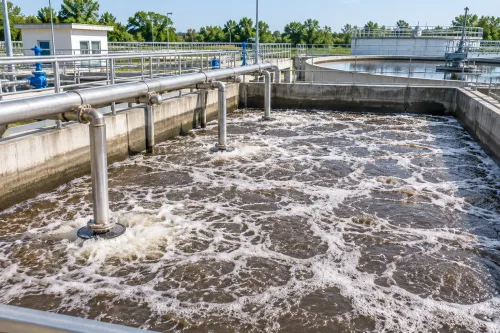
A borewell can supply reliable volume while carrying hardness, iron, manganese, or elevated TDS that gradually damages factory equipment. Factories assessing an industrial water filtration plant for benefits in Nagpur need a site-specific design, because one citywide water-quality assumption cannot represent every borewell, supply line, or production area.
Local conditions make the treatment value measurable:
- Seasonal rainfall can change turbidity and suspended solids, forcing more frequent cleaning of downstream equipment.
- Hard borewell water can form scale in heat-transfer surfaces, reducing efficiency and increasing chemical descaling.
- Water scarcity raises the value of treated-water reuse, particularly for cooling makeup, washing, or process utility duties.
- Batch discharge, cooling-tower blowdown, CIP events, and future production increases can briefly exceed the average flow.
- An equalization tank and duty/standby pumps can prevent those peaks from turning treatment into a production bottleneck.
An industrial water filtration plant in Nagpur should use recent site testing plus seasonal samples, not a generic “Nagpur water quality” figure. TDS, hardness, alkalinity, silica, iron, manganese, turbidity, SDI, microbiology, and process contaminants determine whether the factory needs clarification, softening, carbon, UF, or RO.
Filtration protects and conditions water; it does not replace an ETP for biodegradable BOD or COD, toxic compounds, or consented wastewater discharge. Define each outlet against the equipment OEM, process chemistry, reuse target, and Maharashtra Pollution Control Board consent conditions.
Match the Water Problem to the Right Treatment Plant
A high TDS result calls for reverse osmosis, not a sand filter. Match the plant to the contaminant and the reuse point; otherwise, you can spend on equipment that treats the wrong problem.
| Option | Solves | Do not confuse it with |
|---|---|---|
| Filtration plant | Removes suspended solids through media, bag, or cartridge filters | It does not reliably remove dissolved salts, hardness, or TDS |
| Water treatment plant (WTP) | Treats raw water with clarification, filtration, and disinfection | It is not an effluent treatment plant for factory wastewater |
| Softener | Exchanges calcium and magnesium to control hardness scale | It does not lower TDS, remove microbes, or replace RO |
| Activated carbon | Reduces chlorine, odour, colour, and many organic compounds | It is not a hardness remover or complete disinfection barrier |
| Ultrafiltration or microfiltration | Produces low-turbidity feed and removes suspended particles and many microbes | It does not remove dissolved salts like RO |
| Reverse osmosis (RO) | Reduces TDS and dissolved salts for boiler or process-water reuse | It does not replace pretreatment, and its reject still needs management |
| Demineralisation (DM) plant | Removes ions for very low-conductivity water | It is not a softener; untreated hardness can exhaust resin quickly |
| Effluent treatment plant (ETP) | Treats process wastewater for reuse or compliant discharge | It is not a WTP for incoming water |
| Sewage treatment plant (STP) | Treats domestic sewage from toilets and kitchens | It is not designed for production chemicals or high-TDS effluent |
These industrial water treatment system benefits are application-specific: lower boiler scale, steadier cooling performance, and reduced freshwater intake occur only when treated water meets the defined end-use limit. Use a recent, seasonal analysis of TDS, hardness, iron, silica, turbidity, and microbiology to select the treatment train.
Build the Design Basis Before You Choose Equipment
A recent site water analysis, not a citywide “Nagpur water quality” assumption, must anchor the design. Collect samples in pre-monsoon, monsoon, and post-monsoon conditions; one clear sample can hide seasonal hardness, turbidity, iron, or microbial changes.
Collect these records and documents before comparing water filtration equipment for factories:
- Twelve months of borewell, tanker, municipal, and recycled-water test reports, including TDS, hardness, alkalinity, silica, iron, manganese, turbidity, SDI, pH, microbiology, and factory-specific contaminants.
- Daily water-meter readings, shift-wise demand, batch discharge logs, cooling-tower blowdown, CIP events, and planned production expansion.
- Boiler, cooling-tower, process, washing, and product-contact water specifications from equipment OEMs and process engineers.
- The MPCB consent, required sampling points, flow-meter requirements, online-monitoring conditions where applicable, and the approved route for sludge, reject, and backwash disposal.
| Input to verify | Figures or documents to collect | Why it controls selection |
|---|---|---|
| Raw water | Seasonal laboratory results and source history | Identifies pretreatment and membrane risks |
| Flow | Design flow, average flow, peak flow, operating hours, and 24-hour production | Prevents a bottleneck during batches or blowdown |
| Reuse target | Required quality for boiler, cooling, process, or wash water | Sets the treatment endpoint |
| Waste stream | Reject and backwash volume, chemistry, and disposal route | Tests whether recovery is practical |
| Plant resilience | Duty/standby requirement, equalization volume, and expansion forecast | Keeps treatment controllable during surges |
Define guaranteed permeate quality, recovery, feed-pressure range, cleaning frequency, and membrane-replacement assumptions before accepting a quotation. Specification against IS 10500 alone is inadequate for factory process water.
Compare Filtration Equipment by Measurable Factory Outcomes
Compare water filtration equipment for factories by the result it delivers at the point of use, not by nameplate flow alone. Record outlet turbidity, hardness, conductivity, recovery, pressure drop, cleaning frequency, chemical use, and reject or backwash volume.
| Option | Measurable factory outcome | Maintenance demand |
|---|---|---|
| Multimedia filter | Lowers turbidity and suspended solids before membranes | Backwash when pressure loss or turbidity rises; provide sufficient backwash water |
| Cartridge filter | Protects pumps and membranes from fine particles | Frequent replacement when differential pressure increases; cartridges create solid waste |
| Activated carbon | Removes chlorine and many organic compounds, improving process-water quality | Monitor chlorine breakthrough and pressure loss; backwash or replace exhausted media |
| Iron-removal filter | Reduces dissolved iron and staining at fixtures, boilers, and process equipment | Requires oxidation, media backwash, and disposal of iron-rich wastewater |
| Softener | Reduces hardness scaling in boilers, cooling circuits, and heat exchangers | Regenerates with brine; track salt use, hardness leakage, and wastewater volume |
| UF | Produces low-turbidity feed and removes suspended solids and many microorganisms | Requires backwash and chemical cleaning; compare normalized flux decline and membrane life |
| RO | Reduces TDS for boiler feed, process reuse, and sensitive production | Needs pretreatment, antiscalant, cleaning, membrane replacement, and reject management |
| Polishing stage | Achieves final low conductivity or silica limits after RO | Resin or EDI performance needs monitoring; plan regeneration chemicals or module replacement |
The industrial water treatment system benefits become credible when the supplier guarantees outlet quality, recovery, pressure range, and cleaning intervals. Compare design flow with peak batch demand, and include duty/standby equipment so one fouled stage does not stop production.
Choose a Nagpur Supplier That Can Prove the Water Balance
A credible industrial filtration plant supplier in Nagpur hands you a water-balance schedule, not only an equipment quotation. It must show design flow, average flow, peak flow, 24-hour production, raw-water intake, each reuse stream, reject volume, backwash volume, evaporation losses, and final discharge.
| Document | What to verify | Why it matters |
|---|---|---|
| Reuse quality | Limits for cooling-tower makeup, boiler makeup, process rinsing, utilities, or flushing; include TDS, hardness, silica, iron, turbidity, and microbiology where relevant | Poor-quality reuse causes scale, corrosion, or product contamination |
| Reject and backwash | Daily volume, contaminant load, storage capacity, drain route, and ETP or authorised disposal connection | A plant that saves freshwater can still overload your wastewater system |
| MPCB conditions | Consent to Establish or Operate conditions, discharge limits, sampling points, flow-meter requirements, and online monitoring obligations stated in your consent | An acceptable design must match your site’s written MPCB conditions |
| Automation | PLC logic, automatic valves, level and pressure alarms, conductivity control, interlocks, data logging, and instrument-calibration duties | Operators find failures before a batch or membrane is damaged |
| Expansion | Equalization-tank allowance, duty/standby pumps, spare train capacity, tie-in points, footprint, and electrical load | Batch discharge, CIP, blowdown, or expansion will not become a bottleneck |
Ask the supplier to model abnormal flows separately; averaging them away hides the tank volume you need. S K ENTERPRISES should provide these schedules for any industrial water filtration plant in nagpur, alongside a sampling plan that covers seasonal raw-water changes rather than assuming one “Nagpur water quality” result.
Related product
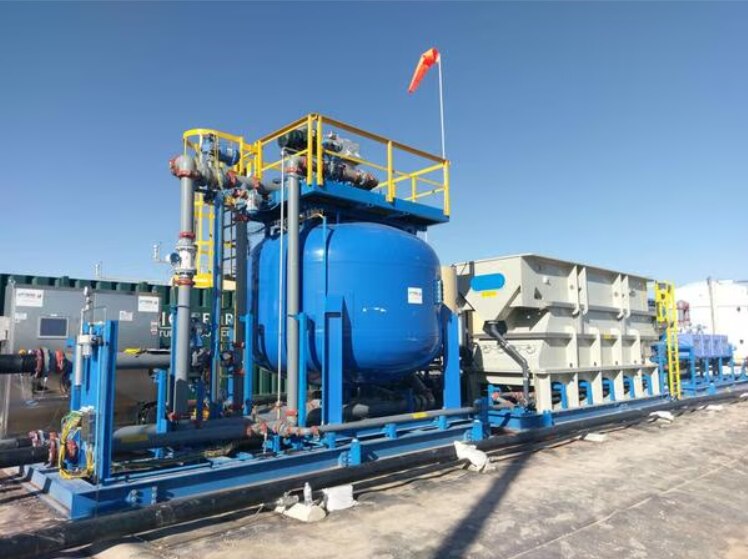
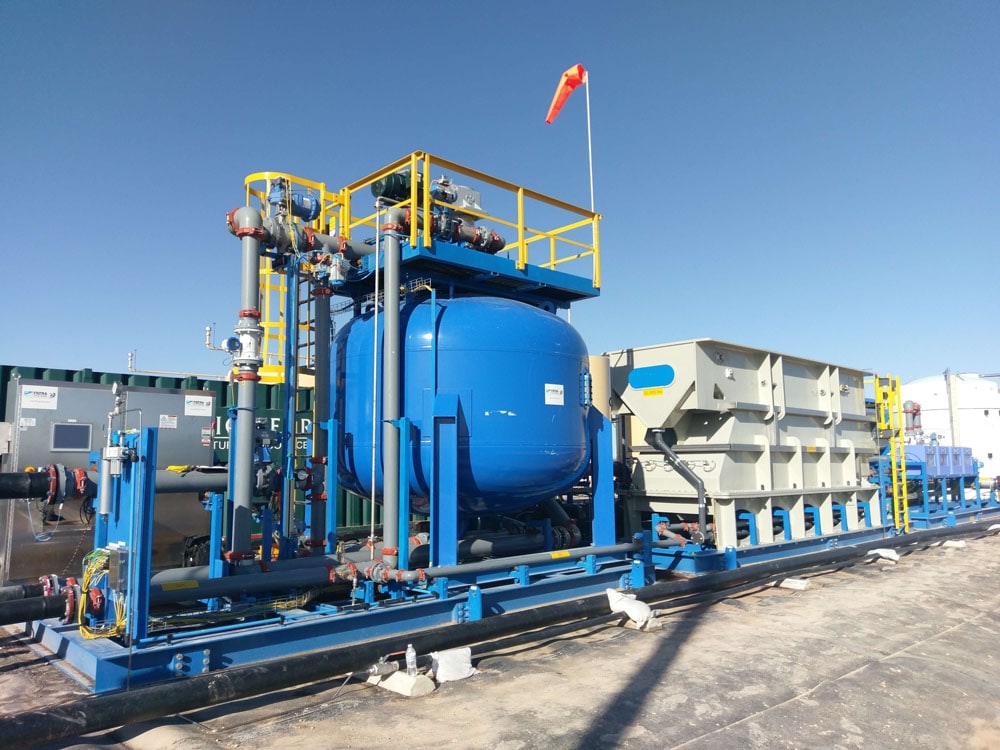 | WATER TREATMENT INDUSTRIAL WATER FILTRATION PLANT Industrial water filtration systems are essential for removing contaminants, suspended solids, and dissolved minerals from process water or... View product → |
Frequently asked questions
Why does Nagpur need site-specific industrial water filtration design?
Borewells and supply lines across Nagpur can differ in hardness, iron, manganese, TDS, turbidity, and microbiological quality. Test your source and process water instead of relying on a citywide assumption.
How do you match a water problem to the right treatment plant?
Use laboratory results and process requirements to select equipment. Multimedia filters address suspended solids, iron and manganese systems target those metals, softeners reduce hardness, and reverse osmosis reduces dissolved salts and TDS.
What information belongs in an industrial filtration plant design basis?
Record source-water test results, flow rate, operating hours, peak demand, required outlet quality, recovery target, reject handling, cleaning needs, available footprint, and future expansion.
How should factories compare water filtration equipment suppliers?
Compare outlet-water quality, flow at design conditions, recovery, reject volume, energy use, media life, maintenance tasks, automation, commissioning tests, and documented performance guarantees.
Keywords