A quoted MBBR ETP price is not meaningful until you know the treatment flow, pollution load, outlet standard and site scope behind it. By the end, you will be able to identify the equipment included, separate supplier work from civil and electrical exclusions, and compare Nagpur quotations on a like-for-like basis.
Key takeaways
- Request equipment lists, process guarantees, drawings, and commissioning scope.
- Separate standard supply from optional civil works, automation, and sludge handling.
- Compare electricity, media replacement, chemicals, labour, and sludge disposal costs.
- Confirm inlet analysis, outlet limits, land, flow, and installation responsibilities.
What equipment and treatment stages are included in an MBBR ETP?
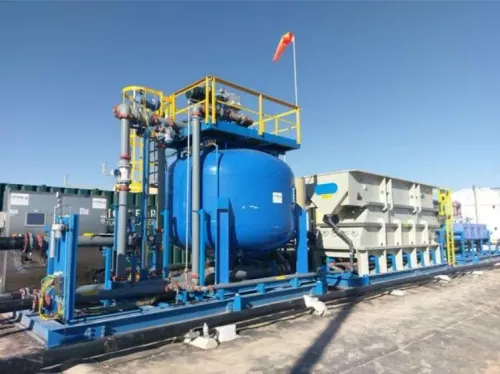
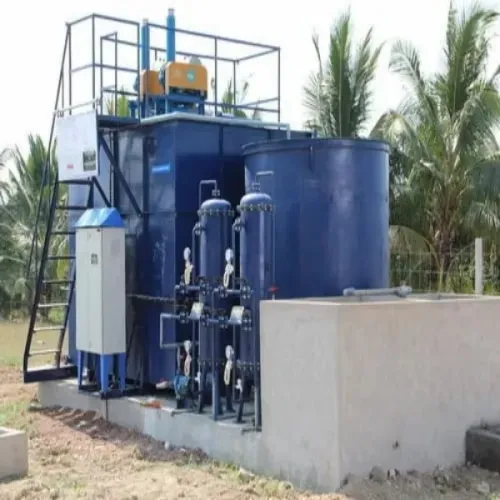
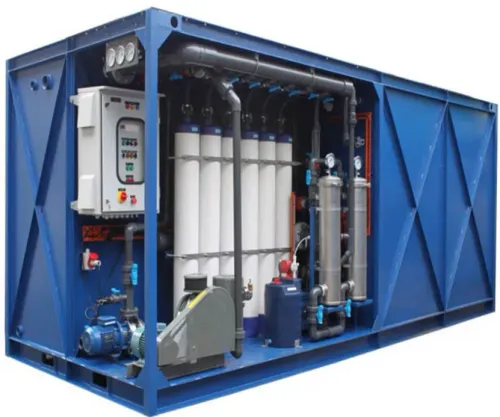
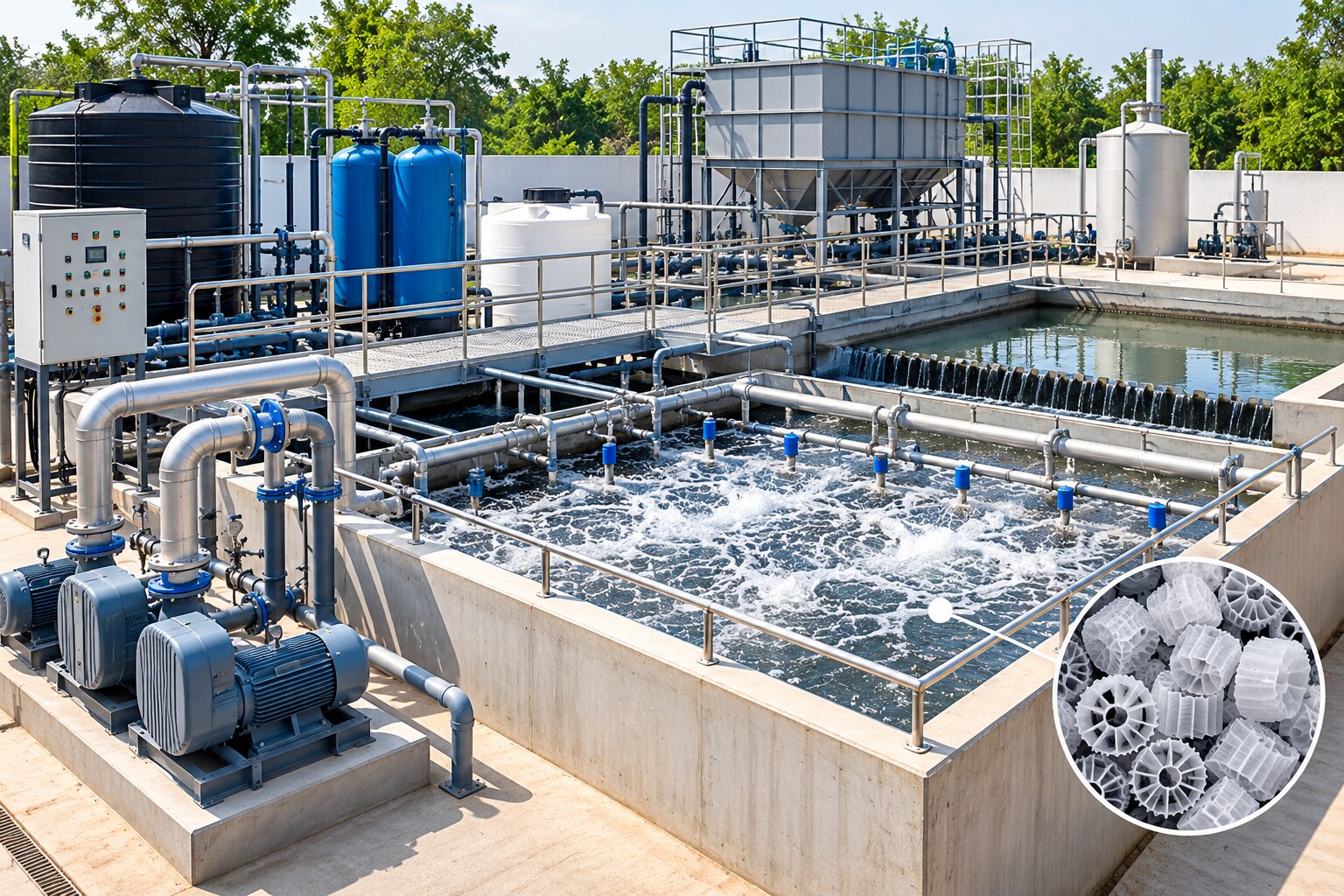
Raw effluent moves through screening, equalization, pretreatment, biological treatment, solids separation and storage; that is what is included in mbbr etp when the scope is complete.
1. An inlet screen removes rags, plastic and coarse solids that could block pumps, pipes or diffusers. The flow then enters a collection or equalization tank, which smooths production surges and prevents shock loading.
2. Add oil-and-grease removal where floating oils are present. Primary treatment can include settling, pH correction, coagulation and flocculation. Oily, solvent-bearing, high-TDS or toxic effluent needs physico-chemical pretreatment because these contaminants can inhibit biology or remain untreated in an MBBR.
3. The MBBR reactor contains plastic carriers on which biofilm grows. Air blowers deliver oxygen through air headers and diffusers, while pumps, valves and instruments control movement and operation. Reactor volume depends on BOD, COD, ammonia, temperature and biodegradability—not flow alone.
4. A secondary clarifier settles detached biofilm and suspended solids. Carriers do not replace solids separation: use clarification, filtration, dissolved-air flotation or another downstream process, then withdraw settled sludge for handling.
5. Clarified water enters a treated-water tank, from which transfer or reuse pumps deliver it through interconnecting piping. A complete package also identifies the electrical panel, controls, level and pH instruments, access arrangements and operating alarms.
Which items are standard supply and which are quotation options?
Read each quotation line by line; “standard supply” does not mean “included in the delivered MBBR effluent treatment plant price.” It means only what the supplier has listed inside its battery limits.
| Quotation line | Treat it as included when it names | Verify separately |
|---|---|---|
| Equipment package | Fabricated tanks or tank connections, carriers, retention screens, blowers, diffusers, pumps, valves, instruments, access platforms and control panel | Tank material, capacities and duty-standby quantities |
| Piping and electrical | Interconnecting piping within battery limits and panel wiring | Cable laying, termination, earthing and incoming supply |
| Installation | Erection of listed equipment and tank internals | Unloading, freight to Nagpur, rigging, foundations, painting, calibration and trial operation |
| Treatment extras | Nothing unless itemised | Dosing, filter press, sludge pumps, sand filter, activated-carbon filter, disinfection, laboratory equipment and automation |
Ask the supplier to price these exclusions individually:
- Civil tanks, foundations, shed, civil drains, inlet and outlet pipelines
- Unloading, freight, erection, operator training and commissioning
- Performance testing, commissioning chemicals, sludge disposal and annual maintenance
Treat “complete plant,” “ready-to-operate” and “turnkey” as incomplete descriptions. The MBBR ETP plant price is comparable only when GST, transport, installation, performance testing and every exclusion appear as priced line items. A low lump sum often transfers civil work, electrical work or tertiary treatment to you.
What design information determines the MBBR ETP plant cost in Nagpur?
A defensible MBBR ETP plant cost in Nagpur starts with wastewater data, not a catalogue flow rate. Two factories discharging 100 kilolitres per day can require very different reactor volumes and blower power because pollutant loading, toxicity and biodegradability differ.
Give the supplier:
- Daily flow in kilolitres per day, peak hourly flow, operating hours and flow variation.
- pH range, BOD, COD, TSS, oil and grease, temperature, salinity and ammonia.
- Toxicity, solvents, surfactants, trade-specific chemicals, shock loads and the required treated-water limits.
State whether the outlet goes to a sewer, inland surface water, irrigation or internal reuse, then match the design to the applicable Maharashtra Pollution Control Board consent conditions.
| Cost driver | What the supplier must size or state |
|---|---|
| Biology | Number of MBBR stages, organic loading, ammonia loading and assumed biodegradability |
| Carriers | Media type, protected surface area, retention screens and 30–60% carrier fill fraction where applicable |
| Aeration | Blower duty and standby capacity, operating pressure, turndown, dissolved-oxygen control and diffuser type |
| Construction | Mild steel versus stainless steel or FRP tanks, plus foundations and civil work |
| Separation | Clarifier area, sludge withdrawal, dewatering equipment and disposal route |
| Controls | Manual controls, instruments, alarms and automation level |
| Finishing | Tertiary treatment such as filtration, carbon treatment, disinfection or polishing |
Request inlet analysis and guaranteed outlet concentrations before comparing quotations. A low initial price can conceal undersized aeration, inadequate clarification or omitted tertiary treatment.
How should you compare the delivered price and lifetime cost?
Compare quotations on the same battery-limit scope, tax basis and capacity. The phrase MBBR effluent treatment plant price means little if one bid excludes civil work and another excludes freight.
| Cost block | Normalise this item |
|---|---|
| Equipment | Fabrication, carriers, blowers, diffusers, tanks, pumps, piping and panel |
| Site works | Civil construction and foundations, listed separately |
| Installation | Freight to Nagpur, unloading, crane or rigging, erection and commissioning |
| People and compliance | Operator training and statutory testing |
| Operation | Aeration electricity, pumping, chemicals, sludge dewatering and disposal |
| Renewals | Diffuser or pump replacement and other consumables |
| Support | Operator attendance and annual maintenance |
Request each bidder to state GST, exclusions, design flow, operating hours, power tariff and sludge quantity. Calculate a five- or ten-year total: purchase scope plus installation, energy, chemicals, labour, maintenance, replacement parts and disposal. A low MBBR ETP plant cost in Nagpur can become expensive if blowers are inefficient or tertiary treatment is omitted.
Accept guarantees as outlet concentrations, not removal percentages alone. Specify inlet flow and BOD, COD, TSS, ammonia, pH and temperature; sampling points; laboratory test methods; operating hours; and the acceptance-run duration. State the remedy if results fail.
Name the final route: sewer, inland surface water, irrigation or internal reuse. Verify the Maharashtra Pollution Control Board consent conditions for that route before accepting the design, limits or performance guarantee.
What should you ask an MBBR supplier before installation in Nagpur?
Before appointing an MBBR ETP supplier in Nagpur, make the purchase order define every boundary between supplied equipment and site work. Do not accept “installation included” without itemised costs for unloading, rigging, erection, tank internals, piping, cabling, calibration, commissioning and testing.
Request these documents and figures:
- Process-flow diagram, equipment schedule, tank drawings and footprint.
- Carrier-media type, protected surface area, fill percentage and retention-screen details.
- Blower operating pressure and flow, air-flow turndown, duty-and-standby arrangement, diffuser details and total power consumption.
- Spare-parts list, warranty exclusions and commissioning protocol.
- Confirm site access, transport route, crane requirements, local fabrication, available electrical supply, foundations, soil and groundwater conditions, monsoon drainage and dewatering.
- Define cable laying and termination, piping limits, insulation or painting, sampling responsibility, instrument calibration, biological start-up, operator training and performance testing.
- Ask who maintains permissions, Maharashtra Pollution Control Board records, laboratory reports and compliance submissions.
| Scope point | Supplier must state | Site decision |
|---|---|---|
| Installation | Unloading, erection, piping, cables and panel work | Who provides labour, crane and foundations |
| Start-up | Wet commissioning, gradual feed, calibration and acceptance run | Sampling method, duration and outlet limits |
| Operation | Pumps, mixers, tertiary equipment and standby capacity | Actual connected load and backup power |
For MBBR ETP installation in Nagpur, compare S K ENTERPRISES with other local suppliers only after its scope, guarantees and Nagpur site responsibilities are documented in the purchase order.
Related product
 | EFFLUENT TREATMENT PLANTS An MBBR ETP is an Effluent Treatment Plant that uses Moving Bed Biofilm Reactor (MBBR) technology to treat wastewater. View product → |
Frequently asked questions
What equipment and treatment stages are included in an MBBR ETP?
A complete system commonly includes screening, grit or oil removal where required, equalization, feed pumps, pH correction, MBBR aeration tanks with carrier media and blowers, secondary clarification, sludge handling, treated-water storage, disinfection where required, piping, electrical controls, and instrumentation.
Which MBBR ETP items are standard supply and which are quotation options?
Tanks, pumps, blowers, media, diffusers, panels, piping, and basic instruments belong in the stated process scope. Civil foundations, sheds, chemical dosing, tertiary filtration, reverse osmosis, online monitoring, remote control, standby equipment, sludge dewatering, freight, and annual maintenance need separate confirmation.
What design information determines MBBR ETP plant cost in Nagpur?
Cost depends on daily flow, peak flow, inlet BOD, COD, TSS, oil and grease, pH, temperature, toxicity, required outlet limits, reuse target, available land, tank construction, automation level, power supply, installation access, and sludge-disposal method.
How should you compare delivered price and lifetime cost?
Compare the same treatment guarantee and scope, then add freight, civil work, installation, commissioning, electricity, chemicals, media replacement, membrane or filter replacements, operator time, maintenance, laboratory testing, and sludge disposal over the planned operating period.
What should you ask an MBBR supplier before installation in Nagpur?
Ask for the process flow diagram, equipment datasheets, design calculations, inlet assumptions, outlet guarantee, media fill fraction, blower power, warranty, spares list, commissioning plan, operator training, exclusions, statutory documents, and named responsibility for civil, electrical, and connection work.
Keywords