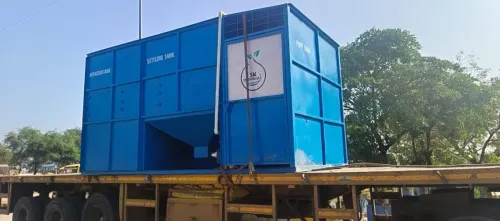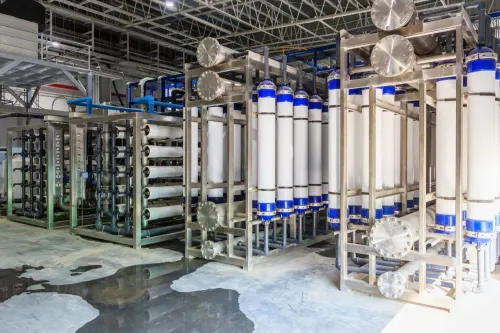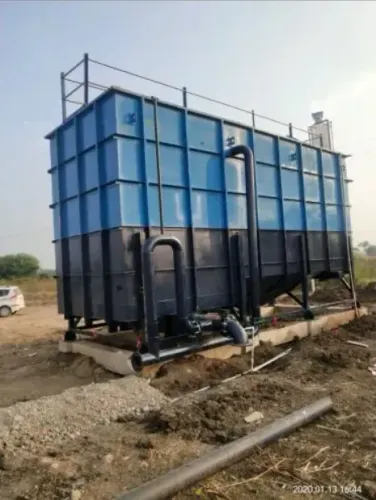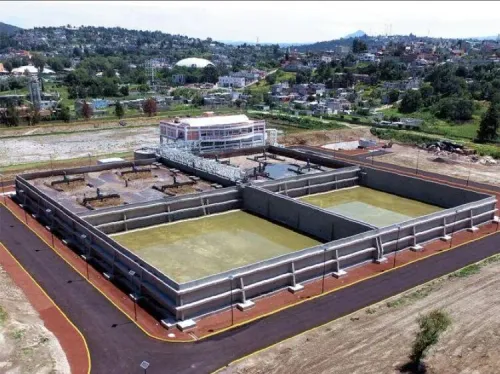
Water used by industrial, commercial, healthcare, hospitality, and institutional facilities can come from different sources and contain very different impurities.
Selecting a WTP Plant therefore begins with understanding the incoming water and the quality required by the final application.
SK Enterprises provides water-treatment solutions in Nagpur for businesses and institutions with varying source-water conditions and operational requirements.
Identify the Source First
Water may be obtained from:
- Municipal supply
- Borewells
- Surface sources
- Tankers
- Multiple sources
Each source can present different treatment challenges.
Borewell water may have mineral-related issues, while surface water can experience changes in turbidity and suspended matter.
Water quality may also vary during different seasons.
Get the Water Analysed
Important parameters depend on the intended application but may include:
- Turbidity
- Hardness
- Dissolved solids
- Iron
- Alkalinity
- Suspended matter
- Organic contaminants
- Microbiological characteristics
Testing provides the foundation for treatment selection.
Without representative analysis, equipment may be overdesigned or insufficient for the actual water problem.
Define the Required Water Quality
Different uses require different standards.
Water used for general cleaning does not necessarily require the same treatment as water used in manufacturing, boilers, laboratories, hospitals, food-related facilities, or specialized industrial processes.
Businesses should define the end-use specification before selecting treatment equipment.
Understand Daily and Peak Demand
Daily consumption alone does not provide enough information for capacity planning.
A facility should also consider:
- Peak hourly requirement
- Number of operating shifts
- Storage capacity
- Seasonal demand
- Future expansion
This information helps determine treatment capacity and storage requirements.
Evaluate Operating Costs
Treatment equipment has ongoing requirements.
Businesses should consider electricity, chemicals, consumables, filter-media replacement, testing, maintenance, and operator involvement.
A lower-priced system may not always provide lower lifecycle costs.
Make Maintenance Practical
Filters, pumps, valves, tanks, and control equipment need periodic attention.
The plant should provide adequate access for inspection, cleaning, servicing, and replacement.
Maintenance requirements should also be clearly documented for operators.
Consider Changes in Source Water
Facilities using more than one source may experience substantial changes in incoming water quality.
The treatment system should be evaluated against these possible variations rather than designed around a single ideal sample.
SK Enterprises works with industrial, commercial, hospitality, healthcare, and institutional customers in Nagpur and Maharashtra to evaluate water-treatment requirements based on source quality and intended use.
Choosing a WTP Plant becomes much easier when businesses answer three questions first: what is in the incoming water, how much treated water is required, and what quality does the final application need?
Those answers provide a stronger foundation for selecting capacity, treatment stages, controls, storage, and maintenance requirements.
Keywords