Wastewater containing biodegradable organic matter can often be treated using microorganisms. These microorganisms consume organic contaminants and convert them into forms that can subsequently be separated from the treated water.
The Activated Sludge Process(ASP) is one of the established biological approaches used for this purpose.
SK Enterprises works with wastewater-treatment requirements in Nagpur where biological processes may be considered according to wastewater characteristics, treatment objectives, available space, and operational conditions.
How the Process Works
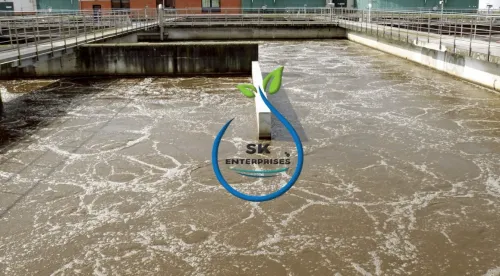
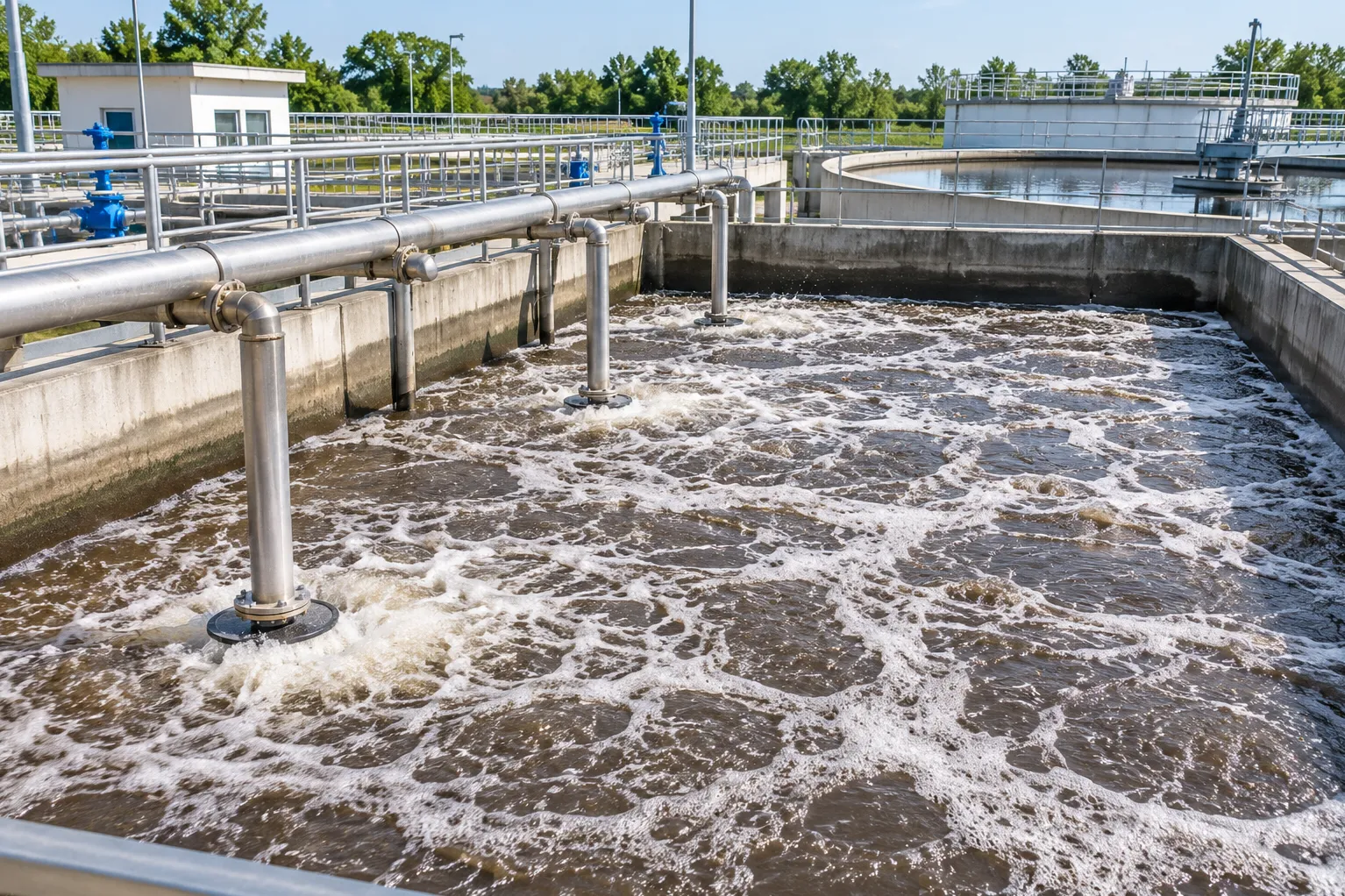
Wastewater enters an aeration tank containing an active population of microorganisms.
Air is supplied to maintain conditions needed for biological activity.
As microorganisms consume biodegradable material, biological flocs develop.
The mixture then moves into a settling stage where biological solids separate from the treated water.
A controlled portion of settled biomass is maintained within the process, while excess solids are removed.
Why Oxygen Matters
Microorganisms require suitable environmental conditions.
Insufficient oxygen can reduce biological activity and contribute to treatment problems and odour.
Excessive aeration, however, can unnecessarily increase energy consumption.
Aeration should therefore be managed according to actual biological requirements.
Flow Variations Can Affect Stability
Wastewater does not always enter a treatment facility at a constant rate.
Residential properties, hotels, hospitals, commercial facilities, and institutions can experience significant variations during different times of the day.
Sudden changes in flow and organic load can disturb biological performance.
Good hydraulic planning can help moderate these variations.
Watch Sludge Behaviour
The appearance and settling behaviour of biological solids can provide useful information about process health.
Operators should watch for:
- Poor settling
- Excessive foam
- Unusual colour
- Strong odour
- Solids escaping with treated water
- Sudden changes in sludge quantity
These symptoms may indicate changing process conditions that require investigation.
Routine Monitoring Is Essential
Operators should maintain records of important operating parameters.
Useful observations can include flow, pH, aeration conditions, settling behaviour, equipment status, and treated-water quality.
Trend records often reveal gradual deterioration earlier than visual inspection alone.
Equipment Maintenance Still Matters
Although treatment is biological, mechanical equipment supports the process.
Blowers, pumps, diffusers, piping, valves, and settling equipment need routine inspection.
A blocked diffuser or poorly performing pump can eventually affect the biological environment.
SK Enterprises supports wastewater-treatment projects in Nagpur and Maharashtra where process selection and operating requirements need to be matched with actual site conditions.
Successful Activated Sludge Process(ASP) operation depends on maintaining the balance between wastewater loading, microorganisms, oxygen, solids, and equipment performance.
When operators understand these relationships and maintain consistent monitoring, biological wastewater treatment becomes easier to control and troubleshoot over the long term.
Keywords