Many water-treatment problems are caused by substances that ordinary filtration cannot adequately remove. Water may appear clear while still containing significant concentrations of dissolved salts and other constituents that can affect industrial processes and equipment.
Reverse Osmosis(RO) is commonly considered when the required water quality involves substantial reduction of dissolved substances.
SK Enterprises provides water-treatment solutions in Nagpur for industrial, commercial, institutional, and other applications where source-water characteristics determine whether this technology is appropriate.
How Does Reverse Osmosis Work
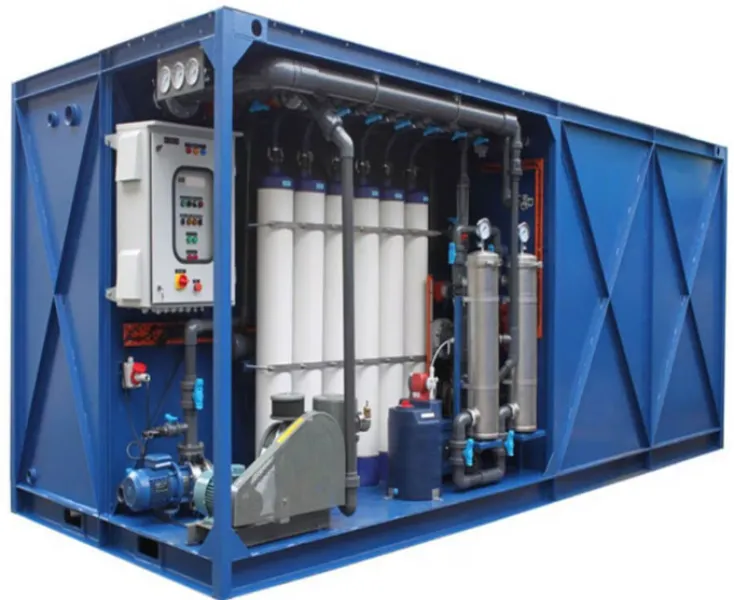
The process uses pressure to move water through a semi-permeable membrane.
A portion of the incoming water passes through as treated water, while many dissolved constituents are retained and concentrated in another stream.
This separation can help produce water with significantly reduced dissolved-solids levels.
When Should Businesses Consider It
Potential applications can include:
- Industrial process water
- Boiler-related applications
- Manufacturing utilities
- Commercial water systems
- High-quality rinsing
- Selected recycling applications
The decision should be based on laboratory analysis and the quality required by the intended application.
Clear-looking water alone does not indicate whether this level of treatment is necessary.
Pretreatment Can Determine Performance
Feed-water quality has a major influence on membrane operation.
Potential concerns include hardness, suspended solids, iron, organic matter, and scaling compounds.
Without suitable pretreatment, these substances can accumulate on membrane surfaces and reduce performance.
Pretreatment should therefore be selected according to water analysis rather than using the same arrangement for every project.
Understand Recovery
Not all incoming water becomes treated product water.
The process produces a concentrated stream containing substances rejected by the membrane.
Businesses should therefore understand:
- Feed-water quantity
- Product-water requirement
- Expected recovery
- Concentrated-stream quantity
- Appropriate management arrangements
Attempting to maximize recovery without considering feed-water chemistry can increase scaling risk.
Consider Operating Expenses
Ongoing costs may include:
- Electricity
- Pretreatment
- Cartridge replacement
- Chemicals
- Membrane cleaning
- Membrane replacement
- Water-quality testing
- Maintenance
Comparing systems solely by equipment price can therefore provide an incomplete financial picture.
Monitor System Performance
Pressure, flow, recovery, and treated-water quality provide useful information about system condition.
Changes in these parameters can indicate fouling, scaling, pretreatment problems, or membrane deterioration.
Routine records make these changes easier to identify.
SK Enterprises works with customers in Nagpur and across Maharashtra to evaluate source-water characteristics, water demand, and treatment objectives before equipment selection.
Reverse Osmosis(RO) is most effective when it addresses a clearly identified water-quality requirement.
By understanding feed water, required output, pretreatment, recovery, operating costs, and maintenance before installation, businesses can determine whether the technology genuinely fits their application rather than adopting it simply because it is widely used.
Keywords