Wastewater-treatment infrastructure affects far more than environmental management. It can influence production planning, utilities, manpower, chemical consumption, maintenance requirements, site layout, and operating expenses.
An ETP Plant should therefore be selected according to the actual wastewater generated by an industrial facility rather than simply purchasing a standard system based on capacity.
SK Enterprises provides treatment solutions for industrial businesses in Nagpur with different wastewater characteristics and operating requirements.
Measure Actual Wastewater Generation
Businesses should determine both average and peak wastewater quantities.
Production processes may discharge wastewater unevenly because of:
- Shift schedules
- Batch production
- Cleaning cycles
- Equipment washing
- Process changes
- Seasonal production
Designing solely around an average daily figure can overlook these fluctuations.
Analyse the Wastewater
Before selecting equipment, representative wastewater samples should be tested.
Relevant parameters may include pH, organic load, suspended matter, dissolved substances, oil, grease, and industry-specific contaminants.
The results help determine which treatment stages are necessary.
Different manufacturing processes can require significantly different treatment approaches even when daily wastewater quantities are similar.
Review the Proposed Process Carefully
Every major treatment stage should have a clear purpose.
Businesses should ask the provider to explain:
- What enters each stage
- What contaminants are addressed
- What operating inputs are required
- What comes out of the stage
- How performance will be monitored
This makes proposals easier to compare.
Check Available Installation Space
The plant needs room for more than tanks.
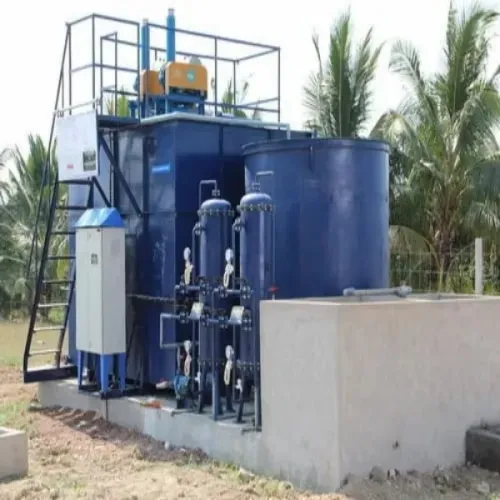
Pumps, pipelines, dosing systems, electrical controls, access routes, maintenance areas, and residual-handling arrangements all require space.
A compact layout should still allow operators to inspect and maintain equipment safely.
Calculate Long Term Costs
Initial purchase price provides only part of the financial picture.
Operating expenses can include electricity, chemicals, consumables, testing, manpower, maintenance, replacement components, and residual handling.
These costs should be estimated before investment.
Think About Production Expansion
Industrial operations can change significantly over time.
If production is expected to increase, treatment requirements may also change.
Reasonable future capacity and layout flexibility should be considered during planning rather than waiting until the existing system becomes overloaded.
Evaluate Support After Commissioning
Operator training, documentation, maintenance guidance, troubleshooting, and spare-part availability can influence long-term performance.
For businesses in Nagpur and Maharashtra, access to practical service support is also useful when operating conditions change.
SK Enterprises works with industrial customers to evaluate wastewater requirements and develop treatment systems around site-specific conditions.
Investing in an ETP Plant should ultimately begin with wastewater data rather than an equipment catalogue.
When industries understand flow, contaminant characteristics, space, operating costs, maintenance, and future requirements before purchasing, they can make a more informed infrastructure decision and reduce the risk of expensive modifications after commissioning.
Keywords